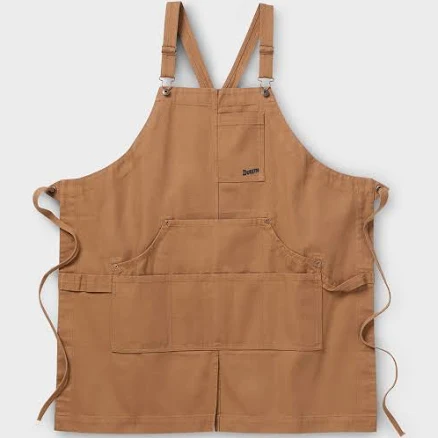
Duluth Trading Company Fire Hose Everyday Apron
Lower risk from untreated cotton canvas, though brand transparency is absent.
Duluth Trading's fire hose apron is plain 100% cotton canvas without water-repellent or stain-resistant finish, making PFAS use unlikely. The brand offers no PFAS disclosure.
Still want this one anyway? Check the price on Amazon. We’d swap it.
Material
100% cotton canvas (Fire Hose fabric)
Lab data
No public lab test
You may also be interested in
Top-graded picks in the categories readers replace first, every one scored on the same rubric.

- polypropylene filter housing, carbon/sediment cartridge
- We found no PFAS statement from the brand
- Bacterial growth in spent cartridges
3 hazards checked on this product, all on its full breakdown.

Aquasure
Premier Series 75 GPD Under Sink Reverse Osmosis Water Filtration System
- RO membrane, carbon filters, stainless steel housing
- We found no PFAS statement from the brand
- Bacterial and microbial growth in housing and filters
4 hazards checked on this product, all on its full breakdown.

Avocado
Vegan Mattress
- organic cotton, natural latex, coconut coir, recycled steel coils
- The brand calls it PFAS-free, which we have not verified
- Heavy metals
2 hazards checked on this product, all on its full breakdown.
What Duluth Trading Company Fire Everyday Apron is made of, ingredients and materials
The Fire Hose Everyday Apron is constructed from 100% cotton canvas, a tightly woven natural fiber with no synthetic coatings or chemical water repellency treatments applied (based on publicly available product specs). Cotton canvas is inherently durable and does not shed microplastics or leach synthetic additives into food or skin. The absence of polyester blends, synthetic dyes in industrial quantities, or flame retardant finishes means exposure to formaldehyde resins, azo dyes, or brominated compounds is not a typical concern with this specific product.
What’s concerning
Category baseline
The starting point for this type of product, before anything specific to this product is counted.
No PFAS disclosure
No public statement from the brand about PFAS in this product.
Azo dyes (synthetic dye residue)
Cotton canvas typically uses standard industrial dyes that may include azo-based colorants. Duluth Trading does not disclose dye chemistry or testing standards. Skin contact risk is minimal unless apron is worn without undergarment and dye migrates; washout occurs over first few launders.
Formaldehyde / VOCs
New cotton textiles may retain formaldehyde from fabric sizing or wrinkle-resistance treatments applied at manufacture. Levels are typically low and dissipate with washing. No product-specific testing or treatment claims are disclosed by the brand.
Source, ATSDR ↗What’s reassuring
Base material not linked to PFAS
The main material recorded for this product is not one associated with PFAS.
Heavy metals
No recalls or independent testing has flagged lead, cadmium, or other metals in Duluth Trading aprons. Cotton canvas and thread are low-risk vectors compared to ceramics or layered fabrics, but brand does not publish metal testing data.
Source, FDA ↗Microplastic shedding
100% cotton does not shed microplastics. Synthetic blends or polyester alternatives pose this risk; this product avoids it entirely.
Flame retardants
No flame retardant treatment is stated or visible in product materials. Work aprons are not typically required to meet flammability standards unless marketed as flame-resistant; this one is not. Cotton is naturally lower-flaming than synthetics but will burn.
Source, EPA ↗How is this PFAS grade calculated?
The brand's record and disclosure
Duluth Trading Company does not publish detailed transparency reports on chemical testing, certifications, or third-party audits for this apron. The brand markets itself as durability-focused and US-manufactured, but provides no OEKO-TEX, GOTS, or other chemical-safety certification documentation visible in product literature. No recalls or safety incidents specific to this apron model have been publicly reported. The silent stance on PFAS and other chemical use contrasts with competitors who explicitly claim treatment-free or certified organic cotton.
How it compares in its category
Work aprons range from untreated canvas (lower hazard) to synthetic blends and nylon with water-repellent coating coatings (higher PFAS/microplastic risk). This apron sits in the lower-risk segment due to its plain cotton construction. Competitors using treated canvas, polyester, or water-repellent finishes introduce dye and chemical coating hazards that are absent here. However, it lacks third-party certification that some organic or sustainably sourced work aprons offer, making traceability harder to verify.
If you buy it
Wash before first use to remove any residual dyes or processing agents, then launder in warm water with mild detergent. Cotton canvas will soften with repeated washing and may shrink slightly (expect up to 5% loss if dried hot). No special heat restrictions apply to cotton; machine dry on medium heat or air-dry. Inspect seams and hardware annually for wear; canvas itself is durable but rivets and stitching may need reinforcement after heavy use in construction or kitchen environments.
What is not known about PFAS in this product?
- Basis
- Model estimate, 78% confidence, not a lab result
- Lab test
- None on record for this exact product
- Brand statement
- Duluth Trading has made a specific claim
Formulations change between production runs, so check the current label. How we grade.
More work aprons grades
How we score, every product runs through the same public 0-100 rubric based on materials, coatings, brand disclosure, lab findings, and recalls. See the full methodology → Spotted a mistake? Report an error.