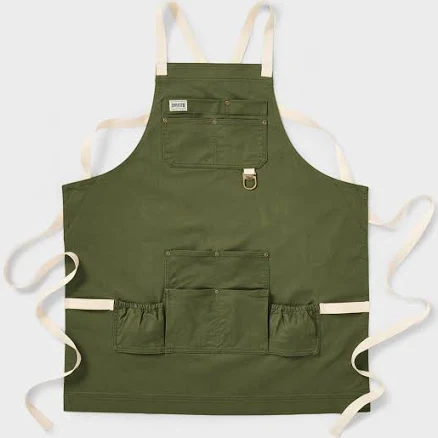
BBQ Grilling Apron - Green Onesize - Duluth Trading Company
Moderate PFAS risk from standard water-repellent coating; Duluth provides limited chemistry detail.
BBQ aprons typically use water-repellent coating to resist grease and spills, historically made with PFAS. Duluth Trading does not disclose whether its finish is PFAS-based or PFAS-free.
Still want this one anyway? Check the price on Amazon. We’d swap it.
Material
Cotton/polyester blend with water-repellent water-repellent coating finish
Lab data
No public lab test
You may also be interested in
Top-graded picks in the categories readers replace first, every one scored on the same rubric.

- polypropylene filter housing, carbon/sediment cartridge
- We found no PFAS statement from the brand
- Bacterial growth in spent cartridges
3 hazards checked on this product, all on its full breakdown.

Aquasure
Premier Series 75 GPD Under Sink Reverse Osmosis Water Filtration System
- RO membrane, carbon filters, stainless steel housing
- We found no PFAS statement from the brand
- Bacterial and microbial growth in housing and filters
4 hazards checked on this product, all on its full breakdown.

Avocado
Vegan Mattress
- organic cotton, natural latex, coconut coir, recycled steel coils
- The brand calls it PFAS-free, which we have not verified
- Heavy metals
2 hazards checked on this product, all on its full breakdown.
What BBQ Grilling Apron - Green Trading Company is made of, ingredients and materials
This apron is a cotton-polyester blend treated with a water-repellent coating (water-repellent coating) finish. water-repellent coating treatments historically used PFOA and PFOS, though newer formulations may substitute other fluorochemicals or non-fluorinated alternatives. The specific chemistry of Duluth's water-repellent coating is not publicly disclosed. Cotton and polyester themselves are relatively stable; the risk centers on the finish applied to achieve water resistance.
What’s concerning
Category baseline
The starting point for this type of product, before anything specific to this product is counted.
No PFAS disclosure
No public statement from the brand about PFAS in this product.
Waterproof / stain-resistant treatment
Water-repellent coating treatments have historically used PFAS.
PFAS
Water-repellent treatments on cotton-polyester blends commonly use fluorochemicals, though the exact family is not disclosed by Duluth. Migration to skin or food during use is low under normal conditions, but bioaccumulation is a long-term health concern.
Source, ATSDR ↗Antimony in polyester fibers
Polyester production may use antimony trioxide as a catalyst; residual antimony can leach in small amounts. Risk is low in finished textiles worn externally, and no specific testing for Duluth products has been published.
What’s reassuring
Formaldehyde / VOCs
No evidence of formaldehyde-releasing resins reported for Duluth work aprons. Cotton-polyester blends occasionally use formaldehyde-based wrinkle-resistant finishes, but no such finish is noted here.
Source, ATSDR ↗Heavy metals
The green color and dyeing process are not publicly detailed. No recalls or documented contamination with restricted azo dyes or heavy metals in Duluth aprons is on record.
Source, FDA ↗Microplastics
Polyester-blend textiles shed microfibers when laundered. This is an environmental concern rather than a direct user safety hazard, but reflects product durability; Duluth aprons are marketed for longevity, implying lower shedding than cheap alternatives.
Source, EPA ↗How is this PFAS grade calculated?
The brand's record and disclosure
Duluth Trading does not publicly disclose detailed chemical composition, third-party testing results, or PFAS-free certifications for this product. The brand has not published a public commitment to phasing out PFAS in textile treatments. This silence is notable given growing retailer transparency in the outdoor and workwear space. No recalls or safety incidents are on record for Duluth aprons.
How it compares in its category
Work aprons with water-repellent finishes are common; most carry similar PFAS uncertainty unless the maker certifies PFAS-free treatment or uses bluesign-certified materials. Duluth's lack of transparency is slightly worse than competitors who explicitly state non-fluorinated water-repellent coating (e.g., some brands use wax or polyurethane alternatives). Cotton aprons without water-repellent coating are available but less durable in wet kitchens or outdoor use.
If you buy it
Wash separately from other garments before first use to reduce any loose finish residue. Use cool to warm water and mild detergent; very hot water may degrade the water-repellent coating. Expect the water-repellent property to fade after 20-40 washes depending on care. If water-repellent coating degradation bothers you, you can refresh it with commercial water-repellent coating spray (which often contains PFAS), or simply accept reduced water resistance as the apron ages.
What is not known about PFAS in this product?
- Basis
- Model estimate, 62% confidence, not a lab result
- Lab test
- None on record for this exact product
- Brand statement
- Duluth Trading has made a specific claim
Formulations change between production runs, so check the current label. How we grade.
What are the PFAS-free alternatives to BBQ Grilling Apron - Green Onesize - Duluth Trading Company?
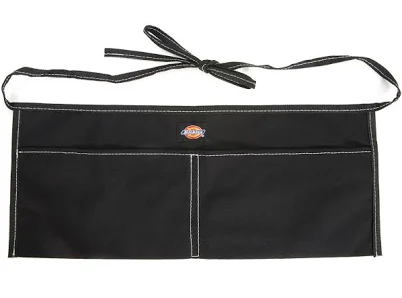
- 100% canvas cotton, uncoated
- We found no PFAS statement from the brand
- Formaldehyde / VOCs
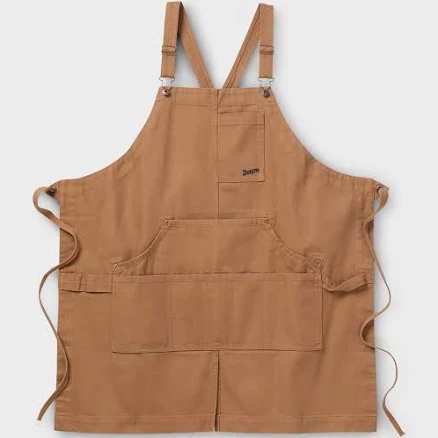
- 100% cotton canvas (Fire Hose fabric)
- Azo dyes (synthetic dye residue)
2 hazards checked on this product, all on its full breakdown.
Find an alternative on Amazon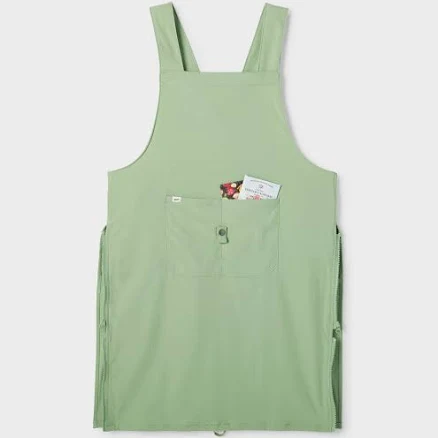
- Cotton canvas apron, no waterproof or stain-resistant coating disclosed
- Azo dyes and color fugacity
3 hazards checked on this product, all on its full breakdown.
Find an alternative on AmazonMore work aprons grades
How we score, every product runs through the same public 0-100 rubric based on materials, coatings, brand disclosure, lab findings, and recalls. See the full methodology → Spotted a mistake? Report an error.