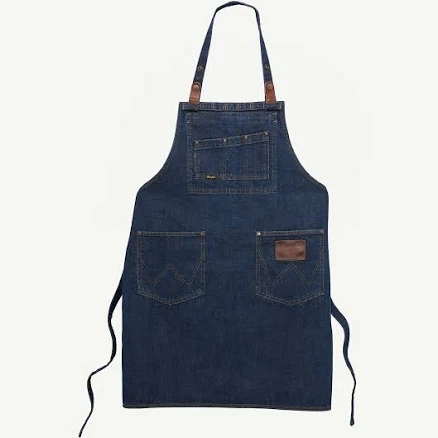
Wrangler Made In Apron Rinse Wash Size One
Lower risk from untreated denim; Wrangler offers no transparency.
This Wrangler apron is standard cotton denim with rinse wash finish, requiring no water-repellent or stain treatment. Untreated denim carries lower PFAS risk than treated textiles.
Still want this one anyway? Check the price on Amazon. We’d swap it.
Material
cotton denim (rinse wash)
Brand disclosure
Brand is silent on PFAS
Lab data
No public lab test
You may also be interested in
Top-graded picks in the categories readers replace first, every one scored on the same rubric.

- polypropylene filter housing, carbon/sediment cartridge
- We found no PFAS statement from the brand
- Bacterial growth in spent cartridges
3 hazards checked on this product, all on its full breakdown.

Aquasure
Premier Series 75 GPD Under Sink Reverse Osmosis Water Filtration System
- RO membrane, carbon filters, stainless steel housing
- We found no PFAS statement from the brand
- Bacterial and microbial growth in housing and filters
4 hazards checked on this product, all on its full breakdown.

Avocado
Vegan Mattress
- organic cotton, natural latex, coconut coir, recycled steel coils
- The brand calls it PFAS-free, which we have not verified
- Heavy metals
2 hazards checked on this product, all on its full breakdown.
What Wrangler Made In Apron Rinse Wash Size One is made of, ingredients and materials
This apron is cotton denim in rinse wash, meaning it has undergone a light laundering process that reduces indigo dye bleeding without heavy chemical treatment. Rinse wash typically involves minimal synthetic finishes compared to performance-treated workwear. The absence of water-repellent or stain-resistant coatings (which would likely contain PFAS) is the primary safety advantage here. Cotton fiber itself is chemically inert when used without additional functional treatments.
What’s concerning
Category baseline
The starting point for this type of product, before anything specific to this product is counted.
No PFAS disclosure
No public statement from the brand about PFAS in this product.
Azo dyes and residual unfixed indigo
Denim indigo dye is not inherently azo-based, but rinse-wash processes do not guarantee complete dye fixation. Unfixed indigo particles can migrate to skin or sweat; concern is primarily dermal irritation or allergic sensitization in susceptible individuals, not systemic toxicity. Laundering before use substantially reduces this risk.
Heavy metals
Indigo dyeing may involve metal-salt auxiliaries (chromium, nickel, or tin compounds) used in the dyeing process itself. These are typically rinsed away during manufacture, but trace residues are difficult to rule out without testing. Post-purchase laundering reduces any residual exposure further.
Source, FDA ↗Dye-related skin sensitization or allergic contact dermatitis
Indigo and other dyes used in denim can trigger contact dermatitis in a small percentage of users, especially with prolonged skin contact or if the apron is worn directly against broken skin. Risk is lower in rinse-wash fabrics than in deeply saturated dyes and decreases with pre-laundering.
What’s reassuring
Base material not linked to PFAS
The main material recorded for this product is not one associated with PFAS.
Formaldehyde / VOCs
Rinse-wash denim typically avoids heavy resin finishes used in wrinkle-resistant or permanent-press treatments. No public record of formaldehyde-based finishes in Wrangler's standard denim aprons; however, Wrangler does not disclose finishes, so residual cross-contamination from shared production is not ruled out.
Source, ATSDR ↗Antimony in polyester or synthetic blends
This product is listed as cotton denim; no polyester content is specified, so antimony catalyst concern does not apply unless undisclosed synthetic fibers are present in the weave.
How is this PFAS grade calculated?
The brand's record and disclosure
Wrangler, owned by Kontoor Brands, does not publicly disclose chemical management policies, restricted substance lists, or third-party certifications for its apparel lines. The brand has no documented controversies specific to workwear chemical safety, but also provides no transparency into dye sourcing, residual metal catalysts, or finish formulations. Absence of evidence of harm is not the same as evidence of absence of risk.
How it compares in its category
Work aprons in this price and material tier typically share similar chemical profiles, untreated or minimally treated cotton or cotton-blend denim. Competitors like Carhartt and Dickies similarly avoid detailed chemical disclosure but rely on basic denim processing standards. A rinse-wash denim apron from any established workwear brand represents a lower-risk choice compared to heavily coated performance aprons or synthetic blends with water-resistant finishes.
If you buy it
Launder before first use to remove any loose indigo dye and reduce skin contact with unfixed dye particles. Wash in cool water with mild detergent; hot water may speed residual dye migration. Air dry to preserve fabric and avoid heat-driven dye release. Replace when fabric tears or becomes structurally compromised, typically after 1-3 years of regular use depending on work conditions. No special storage precautions are necessary for untreated denim.
What is not known about PFAS in this product?
- Basis
- Model estimate, 72% confidence, not a lab result
- Lab test
- None on record for this exact product
- Brand statement
- Wrangler has made none
Formulations change between production runs, so check the current label. How we grade.
More work aprons grades
How we score, every product runs through the same public 0-100 rubric based on materials, coatings, brand disclosure, lab findings, and recalls. See the full methodology → Spotted a mistake? Report an error.