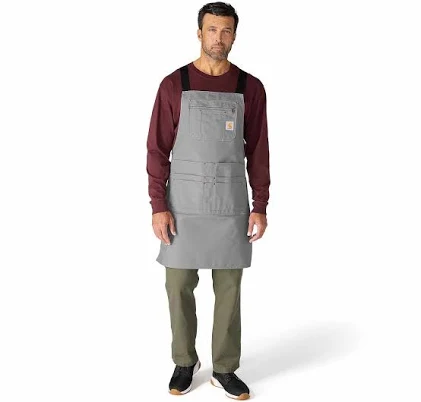
Carhartt Men's Firm Duck Apron
Duck apron is common workwear; Carhartt stays silent on PFAS in water-repellent coating.
Carhartt's cotton duck apron has a water-repellent coating water-repellent finish, typically made with fluorochemicals. The brand provides no public statement on whether PFAS is part of that water-repellent coating.
Still want this one anyway? Check the price on Amazon. We’d swap it.
Material
100% cotton duck fabric with water-repellent coating (water-repellent coating) finish
Brand disclosure
Brand is silent on PFAS
Lab data
No public lab test
You may also be interested in
Top-graded picks in the categories readers replace first, every one scored on the same rubric.

- polypropylene filter housing, carbon/sediment cartridge
- We found no PFAS statement from the brand
- Bacterial growth in spent cartridges
3 hazards checked on this product, all on its full breakdown.

Aquasure
Premier Series 75 GPD Under Sink Reverse Osmosis Water Filtration System
- RO membrane, carbon filters, stainless steel housing
- We found no PFAS statement from the brand
- Bacterial and microbial growth in housing and filters
4 hazards checked on this product, all on its full breakdown.

Avocado
Vegan Mattress
- organic cotton, natural latex, coconut coir, recycled steel coils
- The brand calls it PFAS-free, which we have not verified
- Heavy metals
2 hazards checked on this product, all on its full breakdown.
What Carhartt Men's Firm Duck Apron is made of, ingredients and materials
This apron is 100% cotton duck, a tightly woven heavyweight fabric chosen for abrasion and tear resistance in work environments. Cotton duck itself is inert and well-tolerated; the hazard lies in the water-repellent coating (water-repellent coating) finish applied post-manufacture. water-repellent coating treatments historically relied on PFAS-based chemistry (perfluorocarbons), though newer formulations exist. Carhartt does not publicly specify which chemistry they use, which is standard industry silence on this point.
What’s concerning
Category baseline
The starting point for this type of product, before anything specific to this product is counted.
No PFAS disclosure
No public statement from the brand about PFAS in this product.
Waterproof / stain-resistant treatment
Water-repellent coating treatments have historically used PFAS.
PFAS
Carhartt does not disclose the water-repellent coating formulation. Modern alternatives to PFAS (fluorine-free polyurethane, silicone-based, wax) exist but are less common in legacy workwear. If PFAS-based (likely given age of product line and industry practice), migration risk is low during normal wear but increases with washing.
Source, ATSDR ↗Degradation and microfiber shedding during use and washing
Cotton duck is durable but will shed fine fibers over many wash cycles; this is normal for all cotton textiles and not a toxicological hazard, though microfiber pollution is an environmental concern. The water-repellent coating finish, if it includes binders or polymers, may flake or degrade into the wash water; no data exists on Carhartt's specific finish stability.
What’s reassuring
Formaldehyde / VOCs
Cotton duck for workwear typically uses minimal synthetic dye or resin finishing compared to apparel textiles. No recalls or reports of formaldehyde hazard in Carhartt aprons exist. Standard industrial cotton processing does not require formaldehyde, though trace residues from fabric mills are possible but not documented as a concern in this category.
Source, ATSDR ↗Heavy metals
Carhartt aprons in classic tan/brown are dyed with well-established disperse or vat dyes used for workwear. No recalls or restrictions on dye chemistry in Carhartt products are on record. Heavy metal content in cotton duck dyes is not a recognized hazard in published safety literature for this brand or category.
Source, FDA ↗Skin irritation or allergic reaction
Cotton duck is hypoallergenic and does not typically cause irritation. Residual dye, finish chemicals, or chlorine bleach from manufacturing could theoretically irritate sensitive skin, but no adverse events are documented for this product. A single prewash in cool water minimizes any risk.
How is this PFAS grade calculated?
The brand's record and disclosure
Carhartt is a legacy workwear manufacturer with no major product safety recalls tied to chemical hazards in apparel. The company does not publish chemical disclosure statements, sustainability reports, or certifications (e.g., Oeko-Tex, GOTS) for this product line, which is typical of traditional workwear brands. Carhartt has not publicly committed to disclosing the specific chemicals used in its water-repellent coating finish or to avoiding PFAS in that application. This silence reflects industry norm rather than unique concern, but it means you cannot verify the specific water-repellent coating formulation.
How it compares in its category
Work aprons are a conservative category; most competitors (Dickies, Wells Lamont, local workwear) also use cotton duck with opaque water-repellent coating finishing. Premium alternatives (e.g., Duluth Trading) occasionally disclose non-PFAS treatments but remain the exception. Unfinished 100% cotton duck aprons are available but offer no water resistance. Carhartt's price and durability reputation place it in the mainstream; you are not uniquely exposed by choosing this brand versus similar aprons.
If you buy it
Wash separately from other textiles in cool water to limit any potential migration of finish chemicals; avoid hot water and dryers for the first 3-5 washes, when water-repellent coating coatings are most labile. Do not dry-clean, as solvents may degrade the finish unpredictably. Expect the water-repellent coating to diminish after 50-100 washes; replacement is reasonable at that point rather than attempting re-treatment. Store in a dry place to avoid mold growth in the dense weave.
What is not known about PFAS in this product?
- Basis
- Model estimate, 55% confidence, not a lab result
- Lab test
- None on record for this exact product
- Brand statement
- Carhartt has made none
Formulations change between production runs, so check the current label. How we grade.
What are the PFAS-free alternatives to Carhartt Men's Firm Duck Apron?
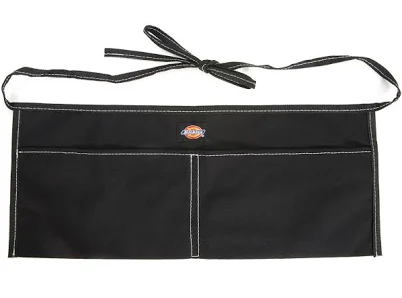
- 100% canvas cotton, uncoated
- We found no PFAS statement from the brand
- Formaldehyde / VOCs
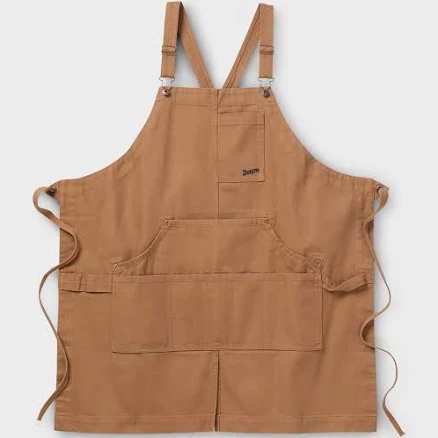
- 100% cotton canvas (Fire Hose fabric)
- Azo dyes (synthetic dye residue)
2 hazards checked on this product, all on its full breakdown.
Find an alternative on Amazon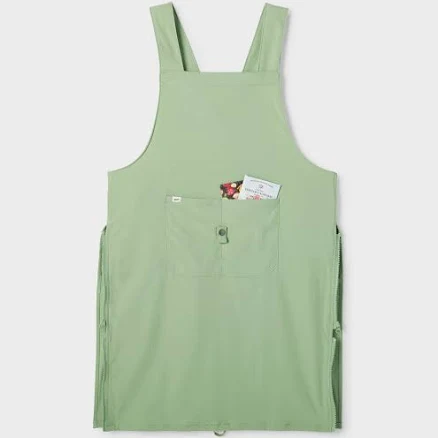
- Cotton canvas apron, no waterproof or stain-resistant coating disclosed
- Azo dyes and color fugacity
3 hazards checked on this product, all on its full breakdown.
Find an alternative on AmazonMore work aprons grades
How we score, every product runs through the same public 0-100 rubric based on materials, coatings, brand disclosure, lab findings, and recalls. See the full methodology → Spotted a mistake? Report an error.