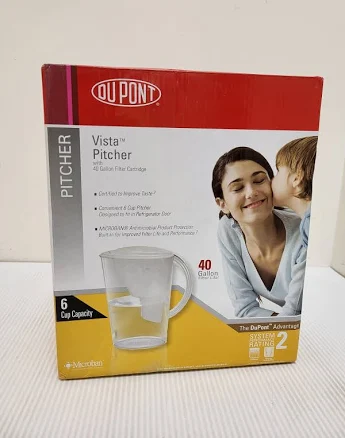
DuPont Vista Water Filter Pitcher
Lower concern water filter pitcher with no PFAS-related disclosures on record.
DuPont Vista Water Filter Pitcher uses activated carbon filter media and plastic housing. The brand has no public PFAS statement on record, and no water-repellent finish or PFAS-linked coating appears in available product information.
We flunk more products than we pass. This one earned its grade. How we grade
Material
Activated carbon filter media, plastic pitcher housing
Brand disclosure
Brand is silent on PFAS
Lab data
No public lab test
You may also be interested in
Top-graded picks in the categories readers replace first, every one scored on the same rubric.

Aqua Pure
3M Aqua-Pure AP802B Whole House Filter Housing
- polypropylene filter housing, carbon/sediment cartridge
- We found no PFAS statement from the brand
- Bacterial growth in spent cartridges
3 hazards checked on this product. See all of them.

Aquasure
Premier Series 75 GPD Under Sink Reverse Osmosis Water Filtration System
- RO membrane, carbon filters, stainless steel housing
- We found no PFAS statement from the brand
- Bacterial and microbial growth in housing and filters
4 hazards checked on this product. See all of them.

Avocado
Vegan Mattress
- organic cotton, natural latex, coconut coir, recycled steel coils
- The brand calls it PFAS-free, which we have not verified
- Heavy metals
2 hazards checked on this product. See all of them.
What DuPont Vista Water Filter Pitcher is made of, ingredients and materials
The DuPont Vista uses activated carbon filter media, which works by adsorption (trapping contaminants in pores) rather than chemical reaction. The pitcher housing is plastic, typically polypropylene or similar food-grade resin. Activated carbon itself is inert and does not leach into water under normal use. The plastic housing is the only material that could theoretically leach, but food-contact plastic pitchers are regulated and rarely pose acute risk if kept at room temperature.
What’s concerning
No PFAS disclosure
No public statement from the brand about PFAS in this product.
Bacterial growth in filter media
Activated carbon, once saturated, can become a growth medium for bacteria if filters are not replaced on schedule. DuPont does not publicly claim antimicrobial treatment of Vista filters. Risk is low with normal use but rises significantly if filters are reused beyond manufacturer lifespan.
Activated carbon dust or particulates
New filters may shed fine carbon powder into the first few pitches of water. This is cosmetic and not a health hazard, but can be reduced by rinsing the filter cartridge before first use, a step not always highlighted in instructions.
Filter housing cracking and bypassing
Plastic pitcher housings are prone to stress fractures if dropped or subjected to temperature shock, allowing unfiltered water to bypass the media entirely. DuPont Vista design is not noted as more robust than competitors in this regard. User should inspect housing for cracks regularly.
What’s reassuring
Base material not linked to PFAS
The main material recorded for this product is not one associated with PFAS.
BPA & bisphenols
Food-contact plastic pitchers are typically manufactured to avoid BPA and phthalate plasticizers, but DuPont does not explicitly confirm material certification or testing for the Vista. No recall or contamination report exists. Standard regulatory compliance is assumed but not independently verified in public record.
Source, FDA ↗The full breakdown
The brand's record and disclosure
DuPont has a long history in water filtration and material science but does not publicly disclose detailed safety testing results for the Vista pitcher specifically. The company has faced historical litigation over PFOA (a PFAS) contamination of drinking water supplies, but that does not directly implicate this consumer product. No recalls or safety advisories for the Vista pitcher are on public record. Transparency on activated carbon sourcing and plastic material composition is typical industry minimum, not exceptional.
How it compares in its category
Water filter pitchers occupy the lowest-risk end of home water treatment. Unlike reverse osmosis or ion-exchange systems, they require no plumbing or electrical components. Activated carbon is a commodity material used across brands with no significant safety differentiation. The Vista sits in the mainstream market position, effective for chlorine and taste reduction, less effective for heavy metals or bacteria, comparable to Brita or PUR in design and material risk.
If you buy it
Replace filters every 2-3 months or per manufacturer guidance to prevent bacterial growth in saturated carbon media. Do not expose the pitcher to direct heat or freezing, which could crack plastic and alter water flow. Store at room temperature away from sunlight. Wash the housing with mild soap and dry thoroughly before refilling; standing water between uses increases biofilm risk. Do not use for non-potable water sources.
What we don’t know
- Basis
- Model estimate, 72% confidence, not a lab result
- Lab test
- None on record for this exact product
- Brand statement
- Dupont has made none
Formulations change between production runs, so check the current label. How we grade.
Better-graded alternatives in Water Filters

Aquamira
Water Storage Treatment 2 oz Glass Bottles 60 gallons Purification
- glass bottles, sodium dichloroisocyanurate treatment chemical
- We found no PFAS statement from the brand
- Chemical overdose or misuse
5 hazards checked on this product. See all of them.

Big Berkey
Empty Housing with NO Filters Included
- Stainless steel housing and spigot
- We found no PFAS statement from the brand
- Bacterial growth and biofilm if filters not replaced
5 hazards checked on this product. See all of them.

LifeStraw
Home Glass Water Filter Pitcher
- Borosilicate glass pitcher, replaceable activated-carbon filter cartridge
- Bacterial growth in filter cartridge if unmaintained
5 hazards checked on this product. See all of them.
More water filters grades
How we score, every product runs through the same public 0-100 rubric based on materials, coatings, brand disclosure, lab findings, and recalls. See the full methodology → Spotted a mistake? Report an error.