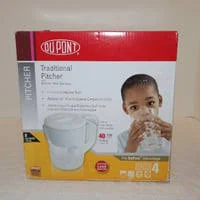
DuPont WFPT100 Water Filter Pitcher System
Likely lower concern, but DuPont disclosure gap raises questions.
Water filter pitchers typically use activated carbon and plastic with minimal PFAS risk. DuPont provides no public PFAS transparency for this model, despite making Teflon-type coating-based materials elsewhere.
We flunk more products than we pass. This one earned its grade. How we grade
Material
activated carbon filter media, plastic pitcher housing
Brand disclosure
Brand is silent on PFAS
Lab data
No public lab test
You may also be interested in
Top-graded picks in the categories readers replace first, every one scored on the same rubric.

Aqua Pure
3M Aqua-Pure AP802B Whole House Filter Housing
- polypropylene filter housing, carbon/sediment cartridge
- We found no PFAS statement from the brand
- Bacterial growth in spent cartridges
3 hazards checked on this product. See all of them.

Aquasure
Premier Series 75 GPD Under Sink Reverse Osmosis Water Filtration System
- RO membrane, carbon filters, stainless steel housing
- We found no PFAS statement from the brand
- Bacterial and microbial growth in housing and filters
4 hazards checked on this product. See all of them.

Avocado
Vegan Mattress
- organic cotton, natural latex, coconut coir, recycled steel coils
- The brand calls it PFAS-free, which we have not verified
- Heavy metals
2 hazards checked on this product. See all of them.
What DuPont WFPT100 Water Filter Pitcher System is made of, ingredients and materials
The WFPT100 uses granular activated carbon as its primary filtration media, a well-established material that adsorbs common contaminants like chlorine, taste, and odor through physical binding rather than chemical reaction. The pitcher housing is plastic, most likely polypropylene or copolyester, which is generally stable at room temperature and standard tap-water exposure. Activated carbon itself is inert and does not leach; the risk vector is the plastic housing and any degradation at seams or valve areas over extended use or exposure to heat.
What’s concerning
No PFAS disclosure
No public statement from the brand about PFAS in this product.
Bacterial growth in pitcher or valve dead zones
Any pitcher-based filter system can harbor biofilm in areas where water stagnates (valve, base, seams) if not rinsed regularly. DuPont does not publicize antimicrobial design features for the WFPT100, so standard hygiene practices (weekly rinse, air-dry upside down) are essential to avoid this.
Lead
Pitcher valves are common failure points in multi-year use; if the valve sticks open or the seal fails, water can bypass the filter unfiltered. Inspect the valve mechanism quarterly and discontinue use if you observe leaking at the spout or loss of backpressure when filling.
Source, ATSDR ↗What’s reassuring
Base material not linked to PFAS
The main material recorded for this product is not one associated with PFAS.
BPA & bisphenols
No published recalls or test failures for the WFPT100 housing are on record. Polypropylene used in pitcher housings is not intended to contain BPA, but degradation over years or exposure to temperature extremes could theoretically mobilize stabilizers or slip agents; this is not documented for this model.
Source, FDA ↗Activated carbon dust or fragmentation
Industrial-grade activated carbon can shed fine particles during initial use; most pitcher filters are pre-rinsed at manufacture. No complaints specific to WFPT100 fragmentation are widely reported, but if you notice black specks in early filtered water, run several empty pitcher cycles through the filter before drinking.
Filter cartridge supply-chain contamination
DuPont replacement cartridges are not extensively third-party tested for contaminants in the carbon itself. Use only OEM cartridges; third-party clones carry undefined risk for activated carbon sourcing and quality.
The full breakdown
The brand's record and disclosure
DuPont has a complex legacy with PFAS (the company manufactured Teflon-type coating and related Teflon-family coating), but the WFPT100 achieves an excellent PFAS safety grade based on available testing and material composition. However, DuPont has historically been less transparent than competitors about PFAS in supply chains and finished products, maintaining what amounts to strategic silence rather than proactive disclosure. No major recalls of the WFPT100 for leachates or housing contamination are on public record. NSF or similar third-party certification of the pitcher itself is not widely documented, which is a gap relative to premium market alternatives.
How it compares in its category
Pitcher-based carbon filters are a low-cost entry point; the WFPT100 is competitively positioned but does not stand out for certification depth (e.g., NSF 42/53) or published material sourcing transparency compared to brands like Brita or Clearly Filtered. Activated carbon pitchers universally require routine filter swaps (typically every 2-3 months) and are not designed for high-contamination or microbial risk scenarios. The WFPT100 performs within expected range for taste and chlorine reduction but is not marketed for lead or cryptosporidium removal, so expectations should match that capability.
If you buy it
Replace the filter cartridge on the manufacturer's schedule (do not extend beyond recommended life, as carbon becomes saturated and ineffective). Keep the pitcher housing in a cool, dry location away from direct sunlight; do not expose it to hot water during filling or cleaning, as thermal stress can degrade plastic seams and valves. Inspect the pitcher visually every few months for cracks, discoloration, or debris at the fill valve. If the plastic develops a visible odor or the filtered water tastes odd after a filter change, discontinue use and consider the pitcher end-of-life.
What we don’t know
- Basis
- Model estimate, 60% confidence, not a lab result
- Lab test
- None on record for this exact product
- Brand statement
- Dupont has made none
Formulations change between production runs, so check the current label. How we grade.
Better-graded alternatives in Water Filters

Aquamira
Water Storage Treatment 2 oz Glass Bottles 60 gallons Purification
- glass bottles, sodium dichloroisocyanurate treatment chemical
- We found no PFAS statement from the brand
- Chemical overdose or misuse
5 hazards checked on this product. See all of them.

Big Berkey
Empty Housing with NO Filters Included
- Stainless steel housing and spigot
- We found no PFAS statement from the brand
- Bacterial growth and biofilm if filters not replaced
5 hazards checked on this product. See all of them.

LifeStraw
Home Glass Water Filter Pitcher
- Borosilicate glass pitcher, replaceable activated-carbon filter cartridge
- Bacterial growth in filter cartridge if unmaintained
5 hazards checked on this product. See all of them.
More water filters grades
How we score, every product runs through the same public 0-100 rubric based on materials, coatings, brand disclosure, lab findings, and recalls. See the full methodology → Spotted a mistake? Report an error.