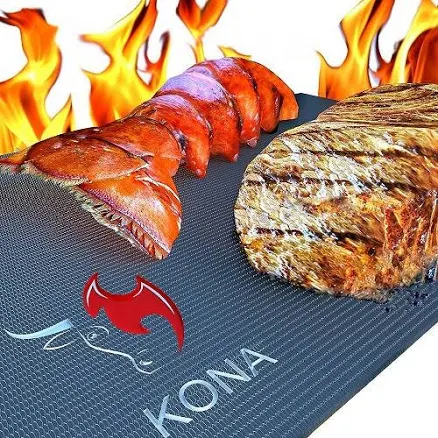
Kona Best BBQ Grill Mats
Non-stick coating chemistry is not stated, raising uncertainty about PFAS content.
Kona Best BBQ Grill Mats are woven fiberglass with an unspecified non-stick coating. The brand has no PFAS statement on record and does not disclose the coating chemistry.
Still want this one anyway? Check the price on Amazon. We’d swap it.
Material
Woven fiberglass fabric with unspecified non-stick coating
Brand disclosure
Brand is silent on PFAS
Lab data
No public lab test
You may also be interested in
Top-graded picks in the categories readers replace first, every one scored on the same rubric.

- polypropylene filter housing, carbon/sediment cartridge
- We found no PFAS statement from the brand
- Bacterial growth in spent cartridges
3 hazards checked on this product, all on its full breakdown.

Aquasure
Premier Series 75 GPD Under Sink Reverse Osmosis Water Filtration System
- RO membrane, carbon filters, stainless steel housing
- We found no PFAS statement from the brand
- Bacterial and microbial growth in housing and filters
4 hazards checked on this product, all on its full breakdown.

Avocado
Vegan Mattress
- organic cotton, natural latex, coconut coir, recycled steel coils
- The brand calls it PFAS-free, which we have not verified
- Heavy metals
2 hazards checked on this product, all on its full breakdown.
What Kona Best BBQ Grill Mats is made of, ingredients and materials
Kona Best BBQ Grill Mats are woven fiberglass fabric, a silicate-based weave chosen for heat resistance and non-adhesive properties. The non-stick coating applied to the fibers is not specified by the brand, which is the primary safety gap. Fiberglass itself is stable at high heat; the risk lies entirely in the coating's composition and degradation behavior over repeated grilling cycles.
What’s concerning
Category baseline
The starting point for this type of product, before anything specific to this product is counted.
No PFAS disclosure
No public statement from the brand about PFAS in this product.
Non-stick, chemistry undisclosed
Marketed as non-stick without stating the coating chemistry.
Non-stick coating degradation and Teflon-type coating fume risk
The coating identity is undisclosed; if it contains Teflon-type coating (Teflon), fumes become possible above 400-500 degrees Fahrenheit. Kona's silence on this point means degradation risk cannot be confidently ruled out. Visual damage to the coating increases this risk.
Fiberglass fiber shedding
Woven fiberglass can shed microscopic fibers if the coating wears or if the weave is damaged by metal utensils or high mechanical stress. While fiberglass itself is not classified as a carcinogen in modern epidemiology, inhalation of shed fibers during use is an avoidable exposure.
Heat-related coating integrity loss over time
Repeated thermal cycling (heating and cooling) can cause non-stick coatings to crack, bubble, or separate from the fiberglass substrate. Kona provides no durability or replacement guidance, making long-term safety maintenance unclear.
What’s reassuring
Coating leachables into food
No testing data or recalls suggest the coating leaches into food under normal grilling conditions. However, lack of FDA food-contact certification from Kona means this has not been independently verified for this specific product.
Formaldehyde / VOCs
Industrial fiberglass weaving sometimes uses formaldehyde-containing resins; Kona does not disclose the resin type. At grilling temperatures, off-gassing is unlikely to be significant, but confirmation would require material safety data.
Source, ATSDR ↗How is this PFAS grade calculated?
The brand's record and disclosure
Kona is a private-label cookware and grilling brand sold primarily through online retailers. The company does not publicly disclose coating chemistry, certifications (such as FDA approval for food-contact surfaces), or PFAS status. No product recalls or safety controversies are on record for this specific mat line, but the absence of transparency on non-stick treatment prevents independent verification of safety claims.
How it compares in its category
Grill mats compete on heat tolerance (typically 400-600 degrees Fahrenheit) and non-stick performance. Fiberglass mats are common in this category; competitors include silicone-based mats (less heat-tolerant but often more durable) and stainless steel mesh alternatives (no coating, not a material linked to PFAS, but less non-stick). Kona's fiberglass approach is mid-range, but the unspecified coating puts it at a transparency disadvantage versus brands that disclose Teflon-type coating or ceramic treatments.
If you buy it
Confirm your grill's maximum temperature and verify the mat is rated for that setting (manufacturer claims 400-500 degrees are typical; check the product label). Hand-wash with mild soap and warm water after cooling; avoid metal utensils that can scratch the coating. Replace if coating shows visible peeling, discoloration from food staining that won't clean, or any texture changes. Store dry to prevent mold growth in the weave.
What is not known about PFAS in this product?
- Basis
- Model estimate, 35% confidence, not a lab result
- Lab test
- None on record for this exact product
- Brand statement
- Kona has made none
Formulations change between production runs, so check the current label. How we grade.
What are the PFAS-free alternatives to Kona Best BBQ Grill Mats?
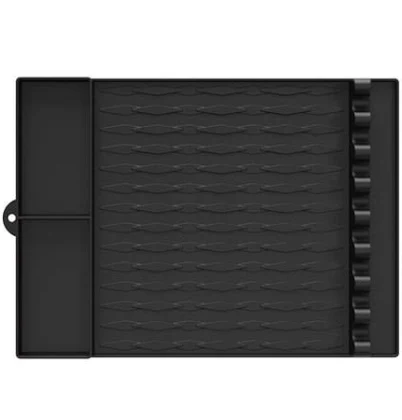
- silicone (no nonstick Teflon-family coating disclosed)
- We found no PFAS statement from the brand
- Silicone additive/filler contamination (unspecified)
4 hazards checked on this product, all on its full breakdown.
Find an alternative on Amazon
- Silicone or rubber floor mat
- We found no PFAS statement from the brand
- Thermal degradation and off-gassing
3 hazards checked on this product, all on its full breakdown.
Find an alternative on Amazon
- Silicone mat or grill mat
- We found no PFAS statement from the brand
- Thermal off-gassing and VOC release
3 hazards checked on this product, all on its full breakdown.
Find an alternative on AmazonMore grill & oven mats grades
How we score, every product runs through the same public 0-100 rubric based on materials, coatings, brand disclosure, lab findings, and recalls. See the full methodology → Spotted a mistake? Report an error.