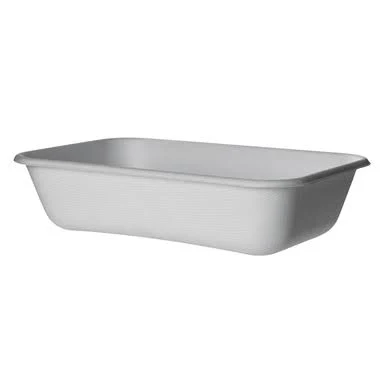
Eco Products WorldView Compostable Take-Out Containers EP-SCRC32
BPI Certified Compostable certification on record.
This product carries BPI Certified Compostable certification, whose criteria restrict PFAS, which we record as third-party verification. Eco-Products says its Vanguard molded fiber achieves grease resistance without added PFAS.
Brand says: “Eco-Products says its Vanguard molded fiber achieves grease resistance without added PFAS.”
We flunk more products than we pass. This one earned its grade. How we grade
Material
Plant-based fiber (compostable sugarcane bagasse)
Brand disclosure
Third-party verified PFAS-free
Lab data
No public lab test
You may also be interested in
Top-graded picks in the categories readers replace first, every one scored on the same rubric.

- polypropylene filter housing, carbon/sediment cartridge
- We found no PFAS statement from the brand
- Bacterial growth in spent cartridges
3 hazards checked on this product, all on its full breakdown.

Aquasure
Premier Series 75 GPD Under Sink Reverse Osmosis Water Filtration System
- RO membrane, carbon filters, stainless steel housing
- We found no PFAS statement from the brand
- Bacterial and microbial growth in housing and filters
4 hazards checked on this product, all on its full breakdown.

Avocado
Vegan Mattress
- organic cotton, natural latex, coconut coir, recycled steel coils
- The brand calls it PFAS-free, which we have not verified
- Heavy metals
2 hazards checked on this product, all on its full breakdown.
What Eco Products WorldView EP-SCRC32 is made of, ingredients and materials
This container is made from sugarcane bagasse, the fibrous residue left after juice extraction, which is then processed into a pulp-based material and formed into rigid takeout vessels. Unlike petroleum-based plastic or conventional coated paper, bagasse-based materials do not rely on synthetic polymer coatings or chemical binders that typically leach into food. The material is inherently compostable because its structure breaks down in industrial composting facilities within 90-180 days, returning to soil without persistent residues.
What’s concerning
Category baseline
The starting point for this type of product, before anything specific to this product is counted.
Bleaching agents and processing residues
Bagasse pulping and whitening can involve chlorine-based or oxygen-based bleaches. BPI certification includes testing for residual chemicals, but processing specifics for this exact batch line are not publicly disclosed.
Heavy metals
Sugarcane crops can absorb trace metals from soil, though industrial processing and BPI heavy-metal testing limits this risk. Specific regional sourcing and metal-screening data are not publicly available.
Source, FDA ↗Mold and bacterial growth if improperly stored
The porous fiber structure is susceptible to microbial colonization if stored in high-humidity conditions before use. Maintain in dry storage and inspect for discoloration or odor before use.
What’s reassuring
Third-party PFAS-free verification
A third party reports verifying this product as PFAS-free.
Base material not linked to PFAS
The main material recorded for this product is not one associated with PFAS.
Adhesives and binders in lamination
No coating or lamination layer has been identified in product specifications. The material is molded bagasse with minimal additional treatments, reducing adhesive-related risk common in coated paper products.
Microplastics
Bagasse is not a plastic and does not fragment into microplastics upon breakdown. It degrades into cellulose and organic matter in composting conditions, with no synthetic polymer fragments.
Source, EPA ↗How is this PFAS grade calculated?
The brand's record and disclosure
Eco-Products holds BPI (Biodegradable Products Institute) Certification for compostable products, a third-party standard that requires testing for heavy metals, toxins, and compostability rates. The brand has publicly committed to PFAS-free manufacturing and has third-party verification on file. No recalls or safety controversies involving this product line have been established in public records as of available information.
How it compares in its category
Most single-use takeout containers rely on plastic (CPET, polystyrene) or paper lined with polyethylene or PFAS-containing grease barriers. This bagasse alternative eliminates both petrochemical dependence and the chemical coating layer entirely. The trade-off is lower heat tolerance (typically 140-160 degrees Fahrenheit) compared to conventional plastic, making it unsuitable for very hot liquids but suitable for room-temperature and warm foods.
If you buy it
Do not fill with liquids above 160 degrees Fahrenheit, as the material can soften or warp. Use within its intended single-service window and compost in a commercial facility if available, as home composting may not reach the 140-degree decomposition temperature. Store containers in a cool, dry place; moisture exposure before use can degrade structural integrity. For hot takeout, allow food to cool slightly or request a plastic container as backup for items still steaming.
What is not known about PFAS in this product?
- Basis
- Model estimate, 78% confidence, not a lab result
- Lab test
- None on record for this exact product
- Brand statement
- Eco-Products has made a specific claim
Formulations change between production runs, so check the current label. How we grade.
More food packaging grades
How we score, every product runs through the same public 0-100 rubric based on materials, coatings, brand disclosure, lab findings, and recalls. See the full methodology → Spotted a mistake? Report an error.