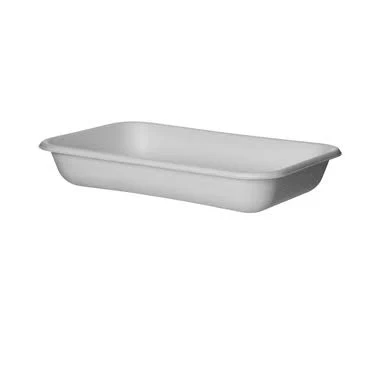
Eco-Products WorldView Sugarcane Take-Out Containers
BPI Certified Compostable certification on record.
This product carries BPI Certified Compostable certification, whose criteria restrict PFAS, which we record as third-party verification. Eco-Products says its Vanguard molded fiber achieves grease resistance without added PFAS.
Brand says: “Eco-Products says its Vanguard molded fiber achieves grease resistance without added PFAS.”
We flunk more products than we pass. This one earned its grade. How we grade
Material
Sugarcane bagasse (post-consumer fiber)
Brand disclosure
Third-party verified PFAS-free
Lab data
No public lab test
You may also be interested in
Top-graded picks in the categories readers replace first, every one scored on the same rubric.

- polypropylene filter housing, carbon/sediment cartridge
- We found no PFAS statement from the brand
- Bacterial growth in spent cartridges
3 hazards checked on this product, all on its full breakdown.

Aquasure
Premier Series 75 GPD Under Sink Reverse Osmosis Water Filtration System
- RO membrane, carbon filters, stainless steel housing
- We found no PFAS statement from the brand
- Bacterial and microbial growth in housing and filters
4 hazards checked on this product, all on its full breakdown.

Avocado
Vegan Mattress
- organic cotton, natural latex, coconut coir, recycled steel coils
- The brand calls it PFAS-free, which we have not verified
- Heavy metals
2 hazards checked on this product, all on its full breakdown.
What Eco-Products WorldView Containers is made of, ingredients and materials
Sugarcane bagasse is the fibrous residue left after juice extraction, processed into a pulp-based material without plastic binders or synthetic coatings in this product line. Unlike virgin paper or plastic, bagasse containers are inherently porous and biodegradable; they do not contain polystyrene, polyethylene, or polypropylene. The material's cellular structure provides adequate structural integrity for cold and moderately warm foods without requiring chemical reinforcement, which eliminates many common leaching pathways.
What’s concerning
Category baseline
The starting point for this type of product, before anything specific to this product is counted.
Cellulose fiber degradation and food contact
Bagasse is a plant fiber with no synthetic coating; when wet or heated, microfiber shedding into food is theoretically possible but has not been formally documented as a safety issue in this certified product. Shedding would be non-toxic plant material, not a chemical hazard.
Mold and bacterial growth on porous surface
The porous nature of bagasse can harbor mold or bacteria if stored in high-humidity conditions or if containers are reused without proper cleaning. This is a storage and handling issue, not an inherent material toxicity risk.
What’s reassuring
Third-party PFAS-free verification
A third party reports verifying this product as PFAS-free.
Base material not linked to PFAS
The main material recorded for this product is not one associated with PFAS.
Residual processing chemicals in fiber
No published data indicates retention of bleach, solvents, or pesticides from sugarcane processing or pulping in BPI-certified bagasse containers; certification protocols screen for this.
Heavy metals
Sugarcane bagasse feedstock is agricultural waste; no established recalls or studies document heavy metal accumulation specific to this product or brand.
Source, FDA ↗BPA & bisphenols
Bagasse-based containers contain no polycarbonate, polyester, or epoxy resin systems; BPA and BPS are absent by material design.
Source, FDA ↗How is this PFAS grade calculated?
The brand's record and disclosure
Eco-Products holds BPI (Biodegradable Products Institute) certification for compostability and third-party verification of PFAS absence, which is publicly documented. The brand has a disclosed sustainability focus and transparent material sourcing; no major chemical safety recalls or regulatory actions against this product line are on record. Their certification status is verifiable through BPI's public registry, supporting claims of responsible manufacturing.
How it compares in its category
Sugarcane bagasse containers occupy a middle ground between conventional styrofoam (which poses PFAS and chemical leaching risks) and bleached paper board (which may contain chlorine residues or fluorinated coatings). Unlike compostable PLA (corn-based plastic), bagasse requires no synthetic polymer and degrades in standard commercial composting without additives. This makes WorldView containers a lower-chemical-burden alternative for foodservice, though they are less insulative than foam and not suitable for extended hot-food storage.
If you buy it
These containers are designed for cold to lukewarm foods (ideally below 140°F / 60°C); prolonged exposure to hot or fatty foods may compromise structural integrity and increase fiber shedding. Store in a cool, dry place to prevent mold growth on the porous surface; inspect for visible degradation before use. Do not microwave or subject to prolonged direct heat. Dispose through commercial composting facilities, which are required for proper breakdown; home composting or landfill disposal will not achieve the certified compostability profile.
What is not known about PFAS in this product?
- Basis
- Model estimate, 78% confidence, not a lab result
- Lab test
- None on record for this exact product
- Brand statement
- Eco-Products has made a specific claim
Formulations change between production runs, so check the current label. How we grade.
More food packaging grades
How we score, every product runs through the same public 0-100 rubric based on materials, coatings, brand disclosure, lab findings, and recalls. See the full methodology → Spotted a mistake? Report an error.