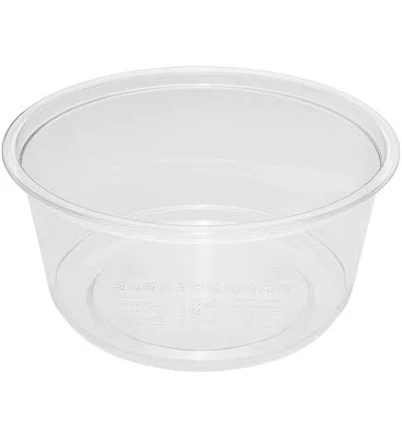
Karat Earth Eco-Friendly PLA Round Deli Container
BPI Certified Compostable certification on record.
This product carries BPI Certified Compostable certification, whose criteria restrict PFAS, which we record as third-party verification.
We flunk more products than we pass. This one earned its grade. How we grade
Material
PLA (polylactic acid) bioplastic
Brand disclosure
Third-party verified PFAS-free
Lab data
No public lab test
You may also be interested in
Top-graded picks in the categories readers replace first, every one scored on the same rubric.

- polypropylene filter housing, carbon/sediment cartridge
- We found no PFAS statement from the brand
- Bacterial growth in spent cartridges
3 hazards checked on this product, all on its full breakdown.

Aquasure
Premier Series 75 GPD Under Sink Reverse Osmosis Water Filtration System
- RO membrane, carbon filters, stainless steel housing
- We found no PFAS statement from the brand
- Bacterial and microbial growth in housing and filters
4 hazards checked on this product, all on its full breakdown.

Avocado
Vegan Mattress
- organic cotton, natural latex, coconut coir, recycled steel coils
- The brand calls it PFAS-free, which we have not verified
- Heavy metals
2 hazards checked on this product, all on its full breakdown.
What Karat Earth Eco-Friendly Deli Container is made of, ingredients and materials
This container is made from PLA (polylactic acid), a bioplastic derived from renewable resources like corn starch or sugarcane. Unlike conventional petroleum-based plastics (PET, PP), PLA does not contain BPA, BPS, or phthalates by formulation. PLA is stable at room temperature and mild warm conditions but begins to soften above 50-60°C (122-140°F), which makes it unsuitable for hot foods or beverages. The material itself does not leach known endocrine disruptors under normal cold food storage.
What’s concerning
Category baseline
The starting point for this type of product, before anything specific to this product is counted.
Microplastics
PLA can release oligomers and monomers if heated above its glass transition temperature (around 60°C). Microwaving or filling with hot foods may accelerate degradation, though no established recalls for this product exist at normal cold storage temperatures.
Source, EPA ↗Environmental persistence if mismanaged
PLA will not biodegrade in landfills, marine environments, or home compost within typical timescales, despite being labeled compostable. This is an environmental rather than direct consumer health hazard, but misdisposal limits the product's stated benefit.
Fragility and container brittleness over time
PLA can become brittle with age or UV exposure, potentially leading to cracks that may harbor bacteria or increase food contact surface area if the container is reused beyond its intended single-use lifespan.
What’s reassuring
Third-party PFAS-free verification
A third party reports verifying this product as PFAS-free.
Base material not linked to PFAS
The main material recorded for this product is not one associated with PFAS.
Leaching of residual monomers (lactic acid, lactide)
PLA may contain trace levels of unreacted monomers from manufacturing, but published studies show minimal leaching into cold or ambient foods. No documented health incidents specific to Karat Earth containers are on record.
Additive contamination (processing aids, colorants)
PLA formulations may include minor additives for clarity, UV resistance, or processing, but FDA-compliant PLA for food contact typically uses low-toxicity compounds. Karat's BPI certification implies compliance with food-contact material standards.
How is this PFAS grade calculated?
The brand's record and disclosure
Karat Earth markets itself as an eco-focused foodservice packaging brand with stated sustainability commitments. The BPI (Biodegradable Products Institute) Certified Compostable certification on record is a third-party verified standard that confirms this container meets ASTM D6868 requirements for industrial composting environments. No major recalls, contamination incidents, or disclosure failures are publicly documented for Karat Earth PLA deli containers. The brand's PFAS stance is verified, indicating no intentional PFAS-based coatings or treatments.
How it compares in its category
PLA deli containers are increasingly common as replacements for polystyrene (foam) and petroleum-based plastic alternatives. Unlike traditional polycarbonate or acrylic-lined paperboard containers, this PLA option avoids BPA entirely. Standard PP or PE deli containers offer slightly better heat tolerance but lack the biodegradability claim. PLA's compostability is an advantage for waste diversion, though it requires industrial composting facilities and is not suitable for home compost or marine environments.
If you buy it
Store cold or room-temperature foods only; do not fill with liquids or foods above 60°C or place in direct sunlight for extended periods. Avoid microwaving, as PLA will warp and may release monomers if overheated. Replace if the container becomes cloudy, cracked, or visibly degraded, as microscopic damage can increase leaching risk. Dispose in industrial compost streams when available; standard recycling or landfill disposal negates the compostability benefit and PLA does not biodegrade in typical environments.
What is not known about PFAS in this product?
- Basis
- Model estimate, 72% confidence, not a lab result
- Lab test
- None on record for this exact product
- Brand statement
- Karat has made a specific claim
Formulations change between production runs, so check the current label. How we grade.
More food packaging grades
How we score, every product runs through the same public 0-100 rubric based on materials, coatings, brand disclosure, lab findings, and recalls. See the full methodology → Spotted a mistake? Report an error.