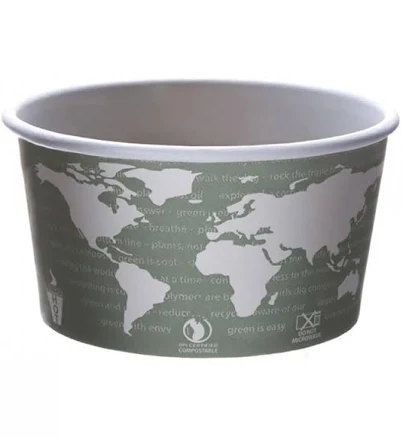
Eco-Products 12 oz. World Art Compostable Food Containers 25-ct. pack
BPI Certified Compostable certification on record.
This product carries BPI Certified Compostable certification, whose criteria restrict PFAS, which we record as third-party verification. Eco-Products says its Vanguard molded fiber achieves grease resistance without added PFAS.
Brand says: “Eco-Products says its Vanguard molded fiber achieves grease resistance without added PFAS.”
We flunk more products than we pass. This one earned its grade. How we grade
Material
Plant-based bioplastic (PLA and cellulose fiber blend)
Brand disclosure
Third-party verified PFAS-free
Lab data
No public lab test
You may also be interested in
Top-graded picks in the categories readers replace first, every one scored on the same rubric.

- polypropylene filter housing, carbon/sediment cartridge
- We found no PFAS statement from the brand
- Bacterial growth in spent cartridges
3 hazards checked on this product, all on its full breakdown.

Aquasure
Premier Series 75 GPD Under Sink Reverse Osmosis Water Filtration System
- RO membrane, carbon filters, stainless steel housing
- We found no PFAS statement from the brand
- Bacterial and microbial growth in housing and filters
4 hazards checked on this product, all on its full breakdown.

Avocado
Vegan Mattress
- organic cotton, natural latex, coconut coir, recycled steel coils
- The brand calls it PFAS-free, which we have not verified
- Heavy metals
2 hazards checked on this product, all on its full breakdown.
What Eco-Products 12 oz. World Art pack is made of, ingredients and materials
These containers are made from a blend of polylactic acid (PLA), a plant-derived bioplastic typically made from corn starch, plus cellulose fiber reinforcement. PLA is thermoplastic and degrades at higher temperatures (around 140-160°F sustained heat), but poses no known leaching risk at normal food storage temperatures. The cellulose fiber component improves rigidity and compostability without introducing established chemical hazards, unlike petroleum-based plastics such as polypropylene or PET.
What’s concerning
Category baseline
The starting point for this type of product, before anything specific to this product is counted.
Microplastic shedding or degradation at use temperature
PLA containers may become brittle and fragment over extended storage or repeated use, particularly if exposed to sunlight or elevated ambient temperatures. Fragments could theoretically enter food if container integrity is visibly compromised, though this is a mechanical rather than chemical hazard.
Thermal leaching at elevated temperatures
PLA begins to soften and degrade noticeably above 140-160°F; while no toxic compounds have been identified as leaching products, the material is simply not designed for hot-fill or microwave use and may lose structural integrity.
What’s reassuring
Third-party PFAS-free verification
A third party reports verifying this product as PFAS-free.
Base material not linked to PFAS
The main material recorded for this product is not one associated with PFAS.
BPA & bisphenols
PLA is not manufactured from BPA precursors and does not require BPA or BPS in formulation. No documented cases of BPA/BPS leaching from certified PLA containers in food-contact conditions.
Source, FDA ↗Phthalate plasticizers
PLA does not require phthalate esters for flexibility; the material is inherently rigid. BPI certification explicitly screens for regulated phthalates.
Heavy metals
BPI certification includes testing for cadmium, lead, and mercury in food-contact materials. No recalls or disclosed additives of concern have been reported for this product.
Source, FDA ↗How is this PFAS grade calculated?
The brand's record and disclosure
Eco-Products holds BPI (Biodegradable Products Institute) certification for compostability, a third-party standard that includes restrictions on heavy metals and regulated additives. The brand has published environmental claims transparently and maintains third-party verification on PFAS avoidance. No recalls, litigation, or disclosed chemical concerns have been documented for this product line.
How it compares in its category
Certified compostable PLA containers are regarded as a lower-chemical-risk alternative to conventional polystyrene foam or rigid plastic clamshells, which may contain styrene or BPA-family compounds. Unlike paper-fiber containers, these PLA blends do not require fluorinated water-repellent coatings (PFAS) to resist moisture. The trade-off is shorter shelf life and limited heat tolerance compared to petrochemical plastics, but no toxicological disadvantage.
If you buy it
Use these containers for cold or room-temperature foods only; do not microwave or fill with very hot liquids, as PLA softens above 140-160°F and may warp. Store in a cool, dry place away from prolonged sunlight to extend usability. Compost in a commercial or industrial facility if available; home compost may not reach the temperature needed for full breakdown. Replace if the container becomes cloudy, brittle, or visibly degraded.
What is not known about PFAS in this product?
- Basis
- Model estimate, 78% confidence, not a lab result
- Lab test
- None on record for this exact product
- Brand statement
- Eco-Products has made a specific claim
Formulations change between production runs, so check the current label. How we grade.
More food packaging grades
How we score, every product runs through the same public 0-100 rubric based on materials, coatings, brand disclosure, lab findings, and recalls. See the full methodology → Spotted a mistake? Report an error.