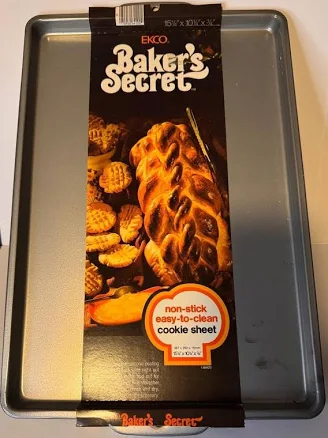
Vintage EKCO Bakers Secret Non-Stick Cookie Sheet
Vintage cookware; coating type unknown, skip if PFAS-concerned.
Ekco Baker's Secret uses a nonstick coating it won't identify. Vintage nonstick cookware from this era typically used Teflon-type coating, but you can't confirm without product details.
The better-graded swap
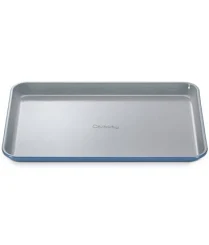
Caraway
Caraway Nonstick Ceramic Medium Baking Sheet
100/100 safety
Same rubric that flunked this product. The swap earned Excellent.
Still want this one anyway? Check the price on Amazon. We’d swap it.
Material
Steel with non-stick coating (type unspecified)
Brand disclosure
Brand is silent on PFAS
Lab data
No public lab test
Is Vintage EKCO Bakers Secret Non-Stick non-toxic? What it is made of
This sheet is steel substrate with a proprietary non-stick coating applied by EKCO. The coating type is not specified on available product information, which is typical for vintage cookware from this era (likely 1970s-1990s). Without confirmation of the coating chemistry, you cannot definitively rule out older Teflon-type coating-based formulations or other fluorinated compounds that may degrade with heat or abrasion. The steel base itself is chemically stable and does not leach under normal use.
What’s concerning
Category baseline
The starting point for this type of product, before anything specific to this product is counted.
No PFAS disclosure
No public statement from the brand about PFAS in this product.
Non-stick, chemistry undisclosed
Marketed as non-stick without stating the coating chemistry.
Teflon-type coating fume risk (coating degradation)
Vintage EKCO non-stick coating type is unconfirmed; if Teflon-type coating-based and overheated or damaged, can release fluorinated fumes at high temperatures. Risk is low during normal baking (under 400°F) but increases if coating is scratched or aged.
Coating degradation and microparticle release
Non-stick coatings on vintage bakeware degrade with age and repeated heating. Flaking or peeling coating particles may contact food; extent depends on coating condition and product age.
PFAS
EKCO has not disclosed whether this non-stick coating contains PFOA, Teflon-type coating, or other fluorinated compounds. Vintage non-stick cookware from this era frequently used Teflon-type coating or PFOA-based formulations, now recognized as persistent environmental contaminants; current information is insufficient to rule out or confirm PFAS presence.
Source, ATSDR ↗What’s reassuring
Lead
No documented lead or cadmium contamination reported in EKCO bakeware. Steel substrate itself does not leach these metals under normal use; risk is negligible if coating is the only contact surface with food.
Source, ATSDR ↗Aluminum leaching (not applicable)
Product is steel, not aluminum; aluminum leaching is not a concern for this material.
The full breakdown
The brand's record and disclosure
EKCO (Ekco Products) was a major US cookware manufacturer but has not published transparent safety data or PFAS disclosure policies in publicly available sources. The brand was acquired and divested multiple times; current parent company details are unclear. No widespread recalls for this specific product line are documented, but the lack of modern safety transparency is a limitation for vintage items. Vintage EKCO bakeware predates contemporary safety labeling standards.
How it compares in its category
Vintage non-stick bakeware sits in a higher-risk category than modern cookware with certified Teflon-type coating-free or ceramic coatings, or uncoated steel/cast iron alternatives. Contemporary brands like GreenPan, Our Place, and OXO now disclose coating chemistry and PFAS status; EKCO's vintage products lack this transparency. If PFAS concern is high, modern bare steel or ceramic-coated options offer clearer safety profiles.
If you buy it
Inspect the non-stick surface for chips, peeling, or discoloration before use; discontinue use if coating is visibly compromised. Keep oven temperatures at or below 400°F to minimize risk of coating degradation and fume release. Hand-wash only; avoid abrasive scouring pads and metal utensils that accelerate coating wear. Replace within 5 years of use if coating shows signs of wear, as older formulations are more prone to degradation.
What we don’t know
- Basis
- Model estimate, 42% confidence, not a lab result
- Lab test
- None on record for this exact product
- Brand statement
- Ekco has made none
Formulations change between production runs, so check the current label. How we grade.
Better-graded alternatives in Bakeware
Caraway
Nonstick Ceramic Medium Baking Sheet
- ceramic nonstick coating
- A third party reports verifying it as PFAS-free
- Ceramic coating degradation over time
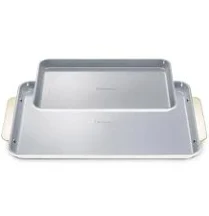
Caraway
Ceramic Nonstick Baking Sheet Duo
- ceramic nonstick coating
- A third party reports verifying it as PFAS-free
- Coating degradation and durability
2 hazards checked on this product. See all of them.
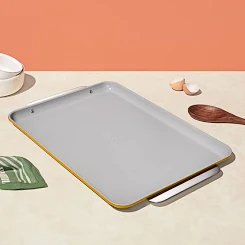
Caraway
Nonstick Ceramic Large Baking Sheet
- ceramic nonstick coating
- The brand calls it PFAS-free, which we have not verified
- Ceramic coating degradation and particle shedding
3 hazards checked on this product. See all of them.
More bakeware grades
How we score, every product runs through the same public 0-100 rubric based on materials, coatings, brand disclosure, lab findings, and recalls. See the full methodology → Spotted a mistake? Report an error.