Eureka! · Camping Tents & Tarps
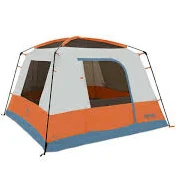
Eureka Copper Canyon LX Tent
Skip until Eureka! clarifies water-repellent coating chemistry, tent waterproofing is a known PFAS risk category.
Polyester tent with undisclosed waterproofing treatment. Eureka! doesn't publicly disclose whether their water-repellent coating uses PFAS or fluorine-free chemistry, and tent fabrics commonly use Teflon-type coating or Teflon-family coating.
Still want this one anyway? Check the price on Amazon. We’d swap it.
Material
polyester tent fabric with water-repellent coating (water-repellent coating) coating, type unspecified
Brand disclosure
Brand is silent on PFAS
Lab data
No public lab test
What Eureka Copper Canyon LX Tent is made of, ingredients and materials
The Copper Canyon LX uses polyester fabric as its primary material, a petroleum-derived synthetic that is durable and mold-resistant in wet conditions. The critical component is the water-repellent coating (water-repellent coating) coating applied to the outer fabric. Eureka! has not disclosed the chemistry of this coating. water-repellent coating treatments historically relied on PFAS compounds (perfluorinated chemicals) that resist water and stains; newer formulations may use PFAS-free alternatives, but without transparency, the risk cannot be ruled out. The tent interior may also include additional treatments or adhesives whose composition is not publicly detailed.
What’s concerning
Category baseline
The starting point for this type of product, before anything specific to this product is counted.
No PFAS disclosure
No public statement from the brand about PFAS in this product.
Waterproof / stain-resistant treatment
Water-repellent coating treatments have historically used PFAS.
water-repellent coating (water-repellent coating) coating composition
Eureka! does not disclose whether the water-repellent coating on the Copper Canyon LX is fluorinated (PFAS-based) or fluorine-free. Fluorinated water-repellent coating is common in this price and performance category and may persist in the environment and bioaccumulate; fluorine-free alternatives exist but are less widely adopted by mainstream brands.
Adhesives and seam sealants
Tent seams are typically sealed with polyurethane-based or silicone adhesives; composition is not specified for this model. These are not known to off-gas significantly once cured, but initial odor or off-gassing in a new tent is common and usually subsides after airing.
What’s reassuring
Polyester fabric degradation
No established hazard from polyester fabric itself under normal camping and storage conditions. The material is moisture-resistant and does not readily leach chemicals into water or food. Damage or UV degradation produces microfibers, a concern documented in marine environments but not a primary indoor use issue.
Formaldehyde / VOCs
No evidence that Eureka! uses formaldehyde-releasing resins in the Copper Canyon LX. Polyester does not inherently require formaldehyde for finishing, and tent fabric is not in contact with skin for extended periods, reducing this as a primary concern compared to apparel.
Source, ATSDR ↗Flame retardants
No flame retardant additives are specified or implied for this tent. Polyester itself has low flammability. Tents are not a typical product class for intentional flame retardant treatment, so this is a low-concern category.
Source, EPA ↗The full breakdown
The brand's record and disclosure
Eureka! (part of Johnson Outdoors) has not published a clear materials disclosure policy or commitment to PFAS-free products as of available public records. The brand does not list third-party chemical certifications (such as OEKO-TEX or bluesign) for this model. No recalls or chemical contamination incidents have been reported for this specific tent. The silence on water-repellent coating chemistry is typical across mainstream tent manufacturers, but represents a gap in consumer transparency in a product category where PFAS waterproofing is widespread.
How it compares in its category
Most consumer camping tents, including Eureka!'s competitors (Coleman, REI Co-op, Big Agnes), use polyester with unspecified water-repellent coating coatings and face the same PFAS uncertainty. A small number of brands (e.g., some REI Co-op models, Zpacks) explicitly advertise PFAS-free water-repellent coating or use non-fluorinated hydrophobic treatments, but these are less common in the mid-range price segment where the Copper Canyon LX sits. Polyester itself is a lower concern than PVC or nylon when it comes to chemical leaching in use, but the water-repellent coating layer is the variable hazard. This tent is neither ahead nor behind category standards for chemical transparency.
If you buy it
Store the tent dry and well-ventilated in a cool place to avoid mold growth and off-gassing concentration. Avoid heat sources; polyester begins to degrade above 150°C (302°F), which is not a risk in normal camping but matters if you store it near radiators or in a hot car. Clean the tent with cool water and mild soap only; harsh detergents or high-temperature washing can strip the water-repellent coating. Plan to reapply a water-repellent coating treatment every 1-2 years or after heavy use; when purchasing a replacement water-repellent coating product, choose one that is explicitly PFAS-free if your concern about PFAS is high.
What we don’t know
- Basis
- Model estimate, 45% confidence, not a lab result
- Lab test
- None on record for this exact product
- Brand statement
- Eureka! has made none
Formulations change between production runs, so check the current label. How we grade.
More camping tents & tarps grades
How we score, every product runs through the same public 0-100 rubric based on materials, coatings, brand disclosure, lab findings, and recalls. See the full methodology → Spotted a mistake? Report an error.