Frieling · Parchment Paper & Baking Liners
Full Parchment Baking Sheets 24.5" x 16.5"
Lower concern; uncoated parchment paper unlikely to contain PFAS.
Frieling parchment baking sheets are plain cellulose paper, not a Teflon-family coating or coated nonstick surface. Brand makes no PFAS claims, but bare parchment paper carries minimal PFAS risk.
We flunk more products than we pass. This one earned its grade. How we grade
Material
parchment paper (cellulose)
Brand disclosure
Brand is silent on PFAS
Lab data
No public lab test
You may also be interested in
Top-graded picks in the categories readers replace first, every one scored on the same rubric.

- polypropylene filter housing, carbon/sediment cartridge
- We found no PFAS statement from the brand
- Bacterial growth in spent cartridges
3 hazards checked on this product, all on its full breakdown.

Aquasure
Premier Series 75 GPD Under Sink Reverse Osmosis Water Filtration System
- RO membrane, carbon filters, stainless steel housing
- We found no PFAS statement from the brand
- Bacterial and microbial growth in housing and filters
4 hazards checked on this product, all on its full breakdown.

Avocado
Vegan Mattress
- organic cotton, natural latex, coconut coir, recycled steel coils
- The brand calls it PFAS-free, which we have not verified
- Heavy metals
2 hazards checked on this product, all on its full breakdown.
What Full Parchment Baking Sheets 24.5" x 16.5" is made of, ingredients and materials
Frieling parchment baking sheets are cellulose paper, typically treated with a silicone coating to provide non-stick and moisture-resistant properties. Cellulose is a plant-based polymer that does not migrate into food during normal baking temperatures (up to roughly 420-450°F). The silicone coating is thermally stable and non-reactive at typical home oven temperatures, meaning it remains bonded to the paper rather than transferring to food.
What’s concerning
Category baseline
The starting point for this type of product, before anything specific to this product is counted.
No PFAS disclosure
No public statement from the brand about PFAS in this product.
Silicone coating thermal breakdown
At temperatures consistently above 420°F, the silicone non-stick coating may degrade or emit fumes. Home oven use typically remains below this threshold; risk is elevated only in broiler or very high-heat scenarios.
What’s reassuring
Base material not linked to PFAS
The main material recorded for this product is not one associated with PFAS.
Bleaching agents or dyes in cellulose
No specific hazardous bleach residues or synthetic dyes have been documented in parchment paper products. Cellulose is commonly whitened using hydrogen peroxide or chlorine, both of which dissipate or break down during manufacturing and do not remain in the finished material.
Microplastic or fiber migration
Parchment paper does not shed microplastics because it is not a plastic. Cellulose fibers are stable and do not migrate into food under normal baking conditions; the coating binds the paper and prevents shedding.
Heavy metals
Silicone coatings do not typically contain lead, cadmium, or other regulated heavy metals. No public safety data suggests contamination in commercial parchment products from this or similar manufacturers.
Source, FDA ↗Moisture sensitivity and mold risk
Parchment paper is designed to resist moisture; improper storage in humid environments may cause curling or mildew, but these are quality rather than toxicity issues. No bacterial or fungal health hazard has been established for stored parchment.
How is this PFAS grade calculated?
The brand's record and disclosure
Frieling is a cookware and kitchen equipment manufacturer with no publicly documented safety recalls, complaints, or regulatory action on parchment products. The brand does not appear to publish detailed ingredient or chemical disclosure statements for parchment sheets. No third-party certifications (such as NSF or FDA approval statements) have been identified for this specific product line, though parchment paper as a category is widely approved for food contact in the US and EU.
How it compares in its category
Parchment paper is one of the lowest-hazard food contact materials available. It differs from plastic wrap (which can contain BPA or phthalates), aluminum foil (potential for trace aluminum leaching in acidic conditions), and silicone baking mats (which pose minimal risk but are reusable). Parchment is disposable, which eliminates concerns about degradation and reuse; the trade-off is waste rather than chemical safety.
If you buy it
Do not use parchment above approximately 420°F; at higher temperatures the silicone coating can begin to smoke or degrade. Parchment is single-use; discard after use or composting rather than reusing, as creasing and wear can affect performance. Store in a cool, dry place away from moisture to prevent curling. No special cleaning or maintenance is needed; simply remove and discard after baking.
What is not known about PFAS in this product?
- Basis
- Model estimate, 75% confidence, not a lab result
- Lab test
- None on record for this exact product
- Brand statement
- Frieling has made none
Formulations change between production runs, so check the current label. How we grade.
What are the PFAS-free alternatives to Full Parchment Baking Sheets 24.5" x 16.5"?
- silicone-coated parchment paper
- The brand calls it PFAS-free, which we have not verified
- Paper degradation and particulate shedding
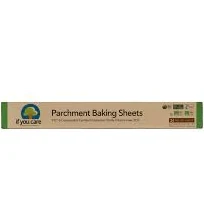
- unbleached paper with silicone coating
- The brand calls it PFAS-free, which we have not verified
- Silicone coating degradation at high heat
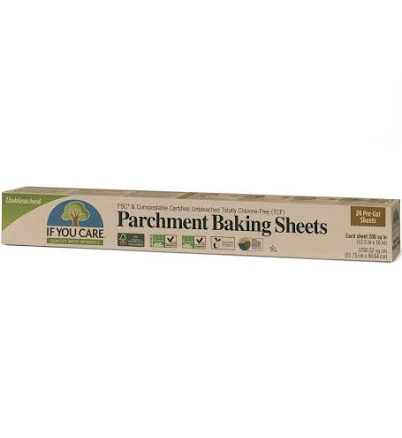
- bleached paper with silicone coating
- The brand calls it PFAS-free, which we have not verified
- Paper degradation and fragmentation
More parchment paper & baking liners grades
How we score, every product runs through the same public 0-100 rubric based on materials, coatings, brand disclosure, lab findings, and recalls. See the full methodology → Spotted a mistake? Report an error.