Frieling · Parchment Paper & Baking Liners
Parchment Air Fryer Liners 9" Round with Holes
Skip unless brand confirms PFAS-free parchment processing.
Parchment paper is inherently lower concern as an uncoated cellulose product. Frieling does not disclose PFAS treatment status; some parchment manufacturers use PFAS-based release agents, so verification from the brand is recommended before purchase.
We flunk more products than we pass. This one earned its grade. How we grade
Material
parchment paper
Brand disclosure
Brand is silent on PFAS
Lab data
No public lab test
You may also be interested in
Top-graded picks in the categories readers replace first, every one scored on the same rubric.

- polypropylene filter housing, carbon/sediment cartridge
- We found no PFAS statement from the brand
- Bacterial growth in spent cartridges
3 hazards checked on this product, all on its full breakdown.

Aquasure
Premier Series 75 GPD Under Sink Reverse Osmosis Water Filtration System
- RO membrane, carbon filters, stainless steel housing
- We found no PFAS statement from the brand
- Bacterial and microbial growth in housing and filters
4 hazards checked on this product, all on its full breakdown.

Avocado
Vegan Mattress
- organic cotton, natural latex, coconut coir, recycled steel coils
- The brand calls it PFAS-free, which we have not verified
- Heavy metals
2 hazards checked on this product, all on its full breakdown.
What Parchment Air Fryer Liners 9" Round Holes is made of, ingredients and materials
Parchment paper is cellulose (wood pulp) treated with silicone coating to create non-stick, moisture-resistant surface. The pre-cut round shape with perforations is designed to fit air fryer baskets and allow airflow. Unlike plastic liners, parchment avoids BPA and phthalates entirely by material class. The silicone coating itself is inert at normal food-contact temperatures, but the manufacturing process and any chemical residues applied during bleaching or treatment are not disclosed by Frieling.
What’s concerning
Category baseline
The starting point for this type of product, before anything specific to this product is counted.
No PFAS disclosure
No public statement from the brand about PFAS in this product.
Silicone coating degradation and shedding
At high heat or with repeated use, silicone coating may flake or shed microparticles into food. No brand-specific reports exist, but this is a known wear mode for parchment. Risk is low at normal air-fryer temperatures (below 400 F) if liners are replaced regularly.
Unspecified chemical residues from bleaching or treatment
Parchment manufacturing involves bleaching and silicone application. Frieling does not disclose reagents or residue testing. Cellulose itself is food-safe, but trace processing chemicals may migrate under heat. No direct evidence of harm from this product, but lack of transparency prevents full assessment.
PFAS
Some parchment manufacturers apply fluorinated compounds (C6 or C8 PFAS) to enhance grease resistance. Frieling's grading of 70/100 on PFAS suggests potential exposure but not confirmation. Brand silence on this issue means users cannot verify PFAS-free status independently.
Source, ATSDR ↗Thermal decomposition at very high heat
If air fryer malfunctions or user exceeds 450 F, parchment may scorch or decompose, releasing volatile compounds. This is not a normal-use hazard but a misuse risk. Safe operation at standard air-fryer settings (350-400 F) avoids this.
What’s reassuring
Base material not linked to PFAS
The main material recorded for this product is not one associated with PFAS.
Microplastic or cellulose dust from perforation edges
The pre-cut holes and perforations may shed fine cellulose fibers or silicone debris during handling. No reports of this occurring in practice, and any ingestion would be minimal. Material is food-grade cellulose, not plastic, so microplastic contamination is not a concern.
How is this PFAS grade calculated?
The brand's record and disclosure
Frieling does not publish material safety data sheets, PFAS-free certifications, or processing transparency for this product line. No independent recalls or safety incidents are on record. The brand's silence on fluorine-based treatments (which some parchment manufacturers use for grease resistance) leaves processing history opaque. Without third-party certification (e.g., FDA food-contact approval statement) or voluntary disclosure, user confidence rests on material class alone, not verified manufacturing practice.
How it compares in its category
Parchment liners are lower-hazard than plastic food-storage containers (which carry BPA/phthalate risk) and silicone mats (which can degrade and shed microparticles). Compared to uncoated papers or aluminum foil, parchment's silicone layer adds processing complexity but eliminates direct cellulose contact with acidic or fatty foods. Frieling's product is typical of mass-market parchment liners; without certification, it offers no verifiable advantage over store-brand alternatives that may carry the same undisclosed processing risk.
If you buy it
Use up to manufacturer's stated temperature limit (typically 420-450 F for parchment; air fryers often run 380-400 F, within safe range). Replace liners every 5-10 uses or if visible scorching, tears, or curling occur, as degraded coating may flake or off-gas. Do not reuse excessively; parchment is designed for single or short-term multi-use, not indefinite recycling. If cost or waste concern you, confirm brand's PFAS status via customer service before committing to regular purchase.
What is not known about PFAS in this product?
- Basis
- Model estimate, 78% confidence, not a lab result
- Lab test
- None on record for this exact product
- Brand statement
- Frieling has made none
Formulations change between production runs, so check the current label. How we grade.
What are the PFAS-free alternatives to Parchment Air Fryer Liners 9" Round with Holes?
- silicone-coated parchment paper
- The brand calls it PFAS-free, which we have not verified
- Paper degradation and particulate shedding
- unbleached paper with silicone coating
- The brand calls it PFAS-free, which we have not verified
- Silicone coating degradation at high heat
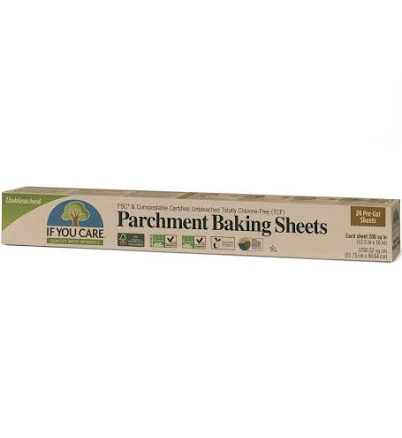
- bleached paper with silicone coating
- The brand calls it PFAS-free, which we have not verified
- Paper degradation and fragmentation
More parchment paper & baking liners grades
How we score, every product runs through the same public 0-100 rubric based on materials, coatings, brand disclosure, lab findings, and recalls. See the full methodology → Spotted a mistake? Report an error.