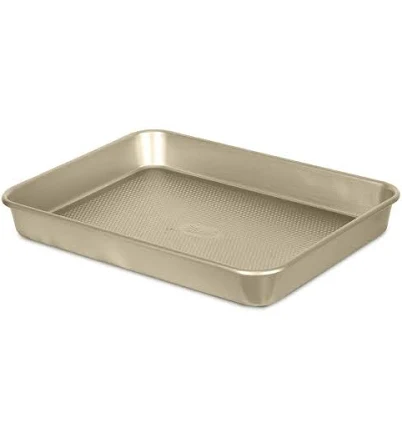
Glad Premium Rectangular Baking Pan
Nonstick baking pan; coating composition not disclosed publicly.
Glad's baking pan material and coating composition are not publicly disclosed. Nonstick cookware may contain PFAS, but without brand transparency or third-party testing, risk level cannot be confirmed.
The better-graded swap
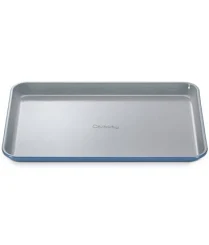
Caraway
Caraway Nonstick Ceramic Medium Baking Sheet
100/100 safety
Same rubric that flunked this product. The swap earned Excellent.
Still want this one anyway? Check the price on Amazon. We’d swap it.
Material
Steel with unspecified nonstick coating
Brand disclosure
Brand is silent on PFAS
Lab data
No public lab test
Is Glad Premium Rectangular Baking Pan non-toxic? What it is made of
Glad's Premium Rectangular Baking Pan is steel with an applied nonstick coating of unspecified composition. Steel itself is inert and food-safe, but the nonstick layer is the variable, manufacturers typically use either Teflon-type coating (Teflon-type) or ceramic/silicone alternatives, and Glad has not publicly disclosed which is used here. The coating's integrity directly affects leaching risk; degraded or damaged nonstick surfaces can shed particles and increase metal exposure.
What’s concerning
Category baseline
The starting point for this type of product, before anything specific to this product is counted.
No PFAS disclosure
No public statement from the brand about PFAS in this product.
Non-stick, chemistry undisclosed
Marketed as non-stick without stating the coating chemistry.
Nonstick coating degradation and particle shedding
Without disclosure of coating type, the risk of flaking or particle release during normal use or as the pan ages cannot be fully assessed. Mechanical damage or high heat exposure accelerates degradation in all nonstick coatings.
Teflon-type coating fume risk (if coating is Teflon-type coating-based)
If Glad uses traditional Teflon-type coating, overheating above 500 degrees F can release fumes that cause polymer fume fever in humans and harm pet birds. Glad's silence on coating type leaves this scenario unconfirmed but plausible.
Steel leaching if coating fails
Steel is generally stable, but if the nonstick coating is breached or degrades, direct contact between acidic foods (tomatoes, vinegar) and steel can increase metal ion migration, a concern for those sensitive to metal exposure during repeated use.
What’s reassuring
Unidentified coating additives or surfactants
No recalls or complaints specific to Glad baking pans are on public record, but the lack of ingredient transparency means potential surfactants or processing residues in the coating are not disclosed to consumers.
The full breakdown
The brand's record and disclosure
Glad is a Clorox-owned consumer products brand focused on food storage and kitchen items. Glad has not issued public statements about PFAS phase-out commitments or coating chemistry transparency for cookware. No safety certifications specific to this baking pan appear in public records. The brand's silence on nonstick coating composition is typical of the cookware industry but limits consumer ability to assess PFAS risk independently.
How it compares in its category
Steel baking pans are a mid-tier cookware choice. They are more durable than aluminum and less reactive, but nonstick-coated steel pans occupy a middle ground between untreated steel (no coating leaching concern) and premium nonstick cookware with certified low-PFAS or PFAS-free coatings. Many competitors now disclose coating type or offer ceramic alternatives; Glad's lack of specification is a competitive weakness in transparency.
If you buy it
Keep the pan below 500 degrees F to minimize any potential fume or coating breakdown risk. Avoid metal utensils and abrasive scrubbing, which accelerate coating degradation and increase particle shedding. Hand wash rather than dishwasher to extend coating life. Replace the pan if the nonstick surface shows flaking, peeling, or discoloration, as these indicate loss of coating integrity and potential release of underlying steel or coating particles.
What we don’t know
- Basis
- Model estimate, 35% confidence, not a lab result
- Lab test
- None on record for this exact product
- Brand statement
- Glad has made none
Formulations change between production runs, so check the current label. How we grade.
Better-graded alternatives in Bakeware
Caraway
Nonstick Ceramic Medium Baking Sheet
- ceramic nonstick coating
- A third party reports verifying it as PFAS-free
- Ceramic coating degradation over time
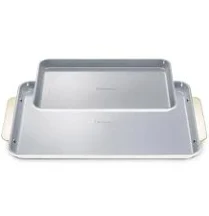
Caraway
Ceramic Nonstick Baking Sheet Duo
- ceramic nonstick coating
- A third party reports verifying it as PFAS-free
- Coating degradation and durability
2 hazards checked on this product. See all of them.
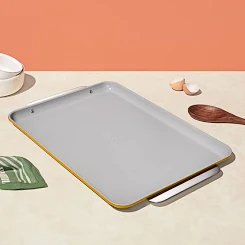
Caraway
Nonstick Ceramic Large Baking Sheet
- ceramic nonstick coating
- The brand calls it PFAS-free, which we have not verified
- Ceramic coating degradation and particle shedding
3 hazards checked on this product. See all of them.
More bakeware grades
How we score, every product runs through the same public 0-100 rubric based on materials, coatings, brand disclosure, lab findings, and recalls. See the full methodology → Spotted a mistake? Report an error.