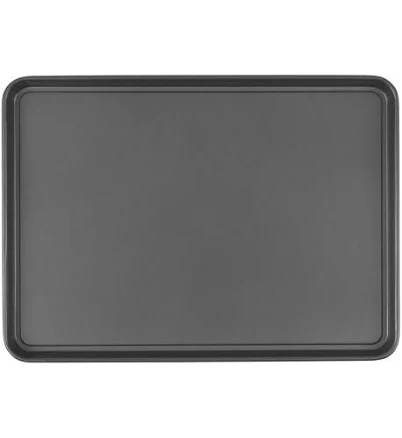
GoodCook Essentials Nonstick Large Cookie Sheet
Skip; coating type and PFAS status unknown.
GoodCook nonstick cookware does not disclose coating chemistry or PFAS status. Most traditional nonstick coatings contain PFOA or similar Teflon-family coating. Unverified.
The better-graded swap
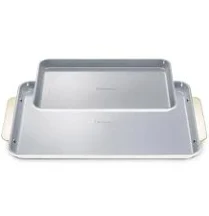
Caraway
Caraway Ceramic Nonstick Baking Sheet Duo
100/100 safety
Same rubric that flunked this product. The swap earned Excellent.
Still want this one anyway? Check the price on Amazon. We’d swap it.
Material
Steel sheet with nonstick coating, type unspecified
Brand disclosure
Brand is silent on PFAS
Lab data
No public lab test
Is GoodCook Essentials Nonstick Large Cookie non-toxic? What it is made of
GoodCook Essentials cookie sheet uses a steel substrate with an unspecified nonstick coating. The steel base itself is not a material linked to PFAS. The critical unknown is the nonstick layer's composition, it could be Teflon-type coating (Teflon), ceramic, silicone, or another polymer. Without manufacturer specification, you cannot assess whether PFAS exposure is possible or how the coating behaves under heat stress.
What’s concerning
Category baseline
The starting point for this type of product, before anything specific to this product is counted.
No PFAS disclosure
No public statement from the brand about PFAS in this product.
Non-stick, chemistry undisclosed
Marketed as non-stick without stating the coating chemistry.
Nonstick coating degradation and flaking
Unspecified coating type and budget construction suggest lower durability. Flaking of any nonstick polymer into food is the main hazard; this risk increases with high heat, metal contact, or dishwasher use.
Teflon-type coating fume risk (if Teflon-type coating-based coating)
If this product uses Teflon-type coating, overheating above 500°F can release fumes. Without coating disclosure, you cannot rule this out. Residential use typically stays below this threshold, but accidental high heat is a scenario.
Coating leachables (uncharacterized polymers)
Proprietary or generic nonstick polymers may release trace monomers or additives if degraded or exposed to prolonged heat/acidic foods. No specific data exists for this product, but the unknown coating composition is the risk driver.
What’s reassuring
Steel substrate safety
Steel itself does not leach lead, cadmium, or aluminum in normal baking use. No hazard reported for this material in this application.
Aluminum substrate (if hybrid construction)
If the sheet includes aluminum under or blended with steel, no significant leaching occurs in neutral pH baking. Food contact is brief and non-acidic, minimizing risk.
The full breakdown
The brand's record and disclosure
Glad (which owns GoodCook Essentials) has not published detailed material safety data or PFAS commitments for this cookware line. The company does not list nonstick coating type on product packaging or websites reviewed. This lack of transparency is typical for budget cookware brands but means you cannot verify claims about PFAS-free or Teflon-type coating-free status before purchase.
How it compares in its category
Budget nonstick cookie sheets typically use Teflon-type coating or proprietary polymer coatings with unknown fluorine content. Higher-end alternatives disclose ceramic or Teflon-type coating-free construction explicitly. This product's silence on coating type places it in a middle-risk tier, cheaper than branded ceramic, but without the transparency or performance guarantees of premium lines. Comparable budget alternatives (store brands, Ecolution, Rachael Ray) also often lack full disclosure.
If you buy it
Keep heat below 400°F during normal use to reduce any coating degradation risk. Inspect the surface before each use for chips, peeling, or discoloration. Avoid metal utensils that can scratch the coating. If the nonstick surface becomes visibly worn, flaking, or non-functional within 1-2 years, replace it; continued use of a deteriorating coating is the primary hazard. Hand wash only; dishwasher use accelerates coating wear.
What we don’t know
- Basis
- Model estimate, 35% confidence, not a lab result
- Lab test
- None on record for this exact product
- Brand statement
- Good Cook has made none
Formulations change between production runs, so check the current label. How we grade.
Better-graded alternatives in Bakeware
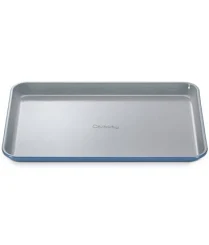
Caraway
Nonstick Ceramic Medium Baking Sheet
- ceramic nonstick coating
- A third party reports verifying it as PFAS-free
- Ceramic coating degradation over time
Caraway
Ceramic Nonstick Baking Sheet Duo
- ceramic nonstick coating
- A third party reports verifying it as PFAS-free
- Coating degradation and durability
2 hazards checked on this product. See all of them.
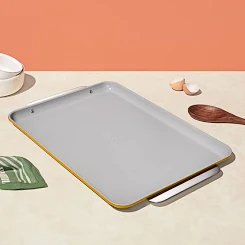
Caraway
Nonstick Ceramic Large Baking Sheet
- ceramic nonstick coating
- The brand calls it PFAS-free, which we have not verified
- Ceramic coating degradation and particle shedding
3 hazards checked on this product. See all of them.
More bakeware grades
How we score, every product runs through the same public 0-100 rubric based on materials, coatings, brand disclosure, lab findings, and recalls. See the full methodology → Spotted a mistake? Report an error.