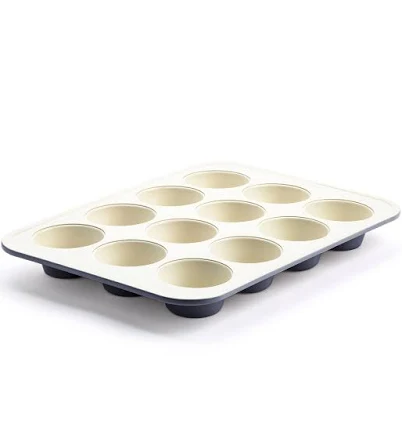
GreenLife 12 Cup Ceramic Non-Stick Muffin Pan, Is It Non-Toxic?
Named ceramic non-stick coating, with a brand PFAS statement we have not verified.
GreenPan says its Thermolon coated food contact surface is free of PFAS, including Teflon-type coating and PFOA. We record that as an unverified brand claim.
Brand says: “GreenPan says its Thermolon coated food contact surface is free of PFAS, including PTFE and PFOA.”
We flunk more products than we pass. This one earned its grade. How we grade
Material
Ceramic non-stick coating (proprietary GreenPan Thermolon)
Brand disclosure
Brand claims PFAS-free
Lab data
No public lab test
You may also be interested in
Top-graded picks in the categories readers replace first, every one scored on the same rubric.

- polypropylene filter housing, carbon/sediment cartridge
- We found no PFAS statement from the brand
- Bacterial growth in spent cartridges
3 hazards checked on this product, all on its full breakdown.

Aquasure
Premier Series 75 GPD Under Sink Reverse Osmosis Water Filtration System
- RO membrane, carbon filters, stainless steel housing
- We found no PFAS statement from the brand
- Bacterial and microbial growth in housing and filters
4 hazards checked on this product, all on its full breakdown.

Avocado
Vegan Mattress
- organic cotton, natural latex, coconut coir, recycled steel coils
- The brand calls it PFAS-free, which we have not verified
- Heavy metals
2 hazards checked on this product, all on its full breakdown.
Is GreenLife 12 Cup Ceramic Muffin Pan non-toxic? What it is made of
This pan uses GreenPan's proprietary Thermolon ceramic non-stick coating, which is a ceramic-type from sand and water rather than Teflon-family coating like Teflon-type coating. The base is steel, typically with a ceramic layer bonded to the surface. Ceramic coatings do not release the same respiratory fumes as Teflon-type coating when overheated, and they do not rely on PFOA-class chemicals for water and oil repellency. The tradeoff is that ceramic non-stick is more prone to scratching and can degrade faster than Teflon-type coating with aggressive use or metal utensils.
What’s concerning
Disclosed non-fluorinated coating
Coating is named and the brand states it is made without PFAS.
Category baseline
The starting point for this type of product, before anything specific to this product is counted.
Ceramic coating degradation and particle ingestion
Ceramic non-stick coatings are more brittle than Teflon-type coating and can flake or chip with use, especially if washed aggressively or if metal utensils contact the surface. Small ceramic particles in food are generally considered low acute risk but are not ideal; no established toxicity at trace levels.
Thermal decomposition of coating at high temperature
Ceramic non-stick coatings can begin to break down above 400-500F in sustained use. Muffin pans are typically used at 350-425F for baking, which is within the typical operating range for ceramic non-stick coatings. Occasional excursions above rated temperature may produce off-gassing, though not the same fluorine-based fumes as Teflon-type coating.
Coating adhesion loss over time
User reports and product reviews document that GreenPan ceramic non-stick pans can lose non-stick performance after 1-2 years of regular use or dishwasher exposure. This is a durability issue, not a safety hazard, but signals replacement sooner than traditional non-stick, increasing cost per use.
What’s reassuring
Brand-stated PFAS-free
The brand states this product is PFAS-free. We have not verified the claim.
Lead
No recalls or public warnings exist for GreenPan ceramic muffin pans. Reputable manufacturers in this category test for lead and cadmium; GreenPan's cookware meets FDA and EU heavy metal limits. No evidence suggests otherwise for this specific product line.
Source, ATSDR ↗Aluminum leaching from base material
The steel base does not expose aluminum to food contact on typical muffin pans. Ceramic coatings form a barrier between steel and food. No mechanism for aluminum leaching is evident unless coating is severely compromised.
How is this PFAS grade calculated?
The brand's record and disclosure
GreenPan has made explicit PFAS-free claims across its cookware line and has published third-party testing results for some products supporting the absence of PFOA and PFOS. The brand has not faced major recalls specifically for lead or cadmium in its ceramic cookware as of public record. GreenPan is part of the Groupe SEB family and adheres to EU and North American cookware standards. However, independent verification of the full Thermolon coating composition is limited in public databases, so the claim rests on brand disclosure rather than universal third-party audit.
How it compares in its category
Ceramic non-stick muffin pans sit between traditional bare steel (no coating, lower concern for chemical migration but food sticks) and Teflon-type coating non-stick (faster degradation risk, PFOA history). GreenPan's ceramic offering avoids the legacy PFOA concern but introduces coating durability as a practical trade-off. Most competitors in the eco-friendly segment (e.g.Our Place, Made In) use similar ceramic or reinforced mineral coatings; products attributed as PFAS-free by brands or certifiers in mainstream retail are now common, making this less of a differentiator than it was five years ago.
If you buy it
Hand wash only; dishwashers can accelerate ceramic coating wear. Avoid metal or sharp-edged utensils; use silicone, wood, or plastic. Do not exceed 400F; ceramic non-stick can lose effectiveness if used on high stovetop heat (though oven baking shows lower concern for coating breakdown). Inspect the coating every 6-12 months for chips, flaking, or dullness. If coating visibly degrades, retire the pan to avoid ingestion of ceramic particles. Store with protective layers between pans to prevent scratching.
What is not known about PFAS in this product?
- Basis
- Model estimate, 72% confidence, not a lab result
- Lab test
- None on record for this exact product
- Brand statement
- GreenPan has made a specific claim
Formulations change between production runs, so check the current label. How we grade.
More muffin tins grades
How we score, every product runs through the same public 0-100 rubric based on materials, coatings, brand disclosure, lab findings, and recalls. See the full methodology → Spotted a mistake? Report an error.