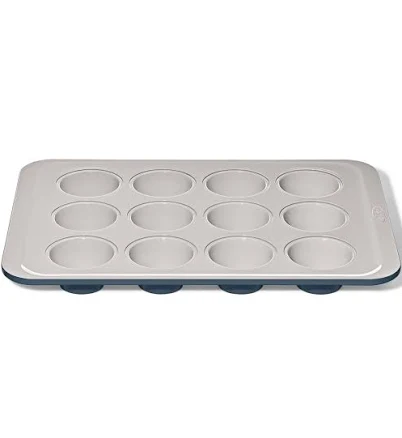
OXO Good Grips Non-Stick Pro Ceramic Coated Metal Bakeware Muffin Pan, Is It Non-Toxic?
Ceramic non-stick coating of unstated chemistry, and no PFAS statement from the brand.
The mineral-based ceramic coating avoids traditional Teflon-family coating nonstick chemistry tied to PFAS. OXO does not publicly disclose coating details or PFAS-free status.
The better-graded swap
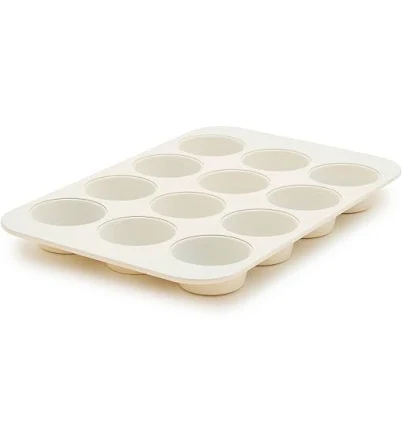
GreenPan
GreenPan Reserve Bakeware 12-Cup Muffin Pan
70/100 safety
Same rubric that flunked this product. The swap earned Good.
Still want this one anyway? Check the price on Amazon. We’d swap it.
Material
Ceramic-coated steel
Lab data
No public lab test
You may also be interested in
Top-graded picks in the categories readers replace first, every one scored on the same rubric.

- polypropylene filter housing, carbon/sediment cartridge
- We found no PFAS statement from the brand
- Bacterial growth in spent cartridges
3 hazards checked on this product, all on its full breakdown.

Aquasure
Premier Series 75 GPD Under Sink Reverse Osmosis Water Filtration System
- RO membrane, carbon filters, stainless steel housing
- We found no PFAS statement from the brand
- Bacterial and microbial growth in housing and filters
4 hazards checked on this product, all on its full breakdown.

Avocado
Vegan Mattress
- organic cotton, natural latex, coconut coir, recycled steel coils
- The brand calls it PFAS-free, which we have not verified
- Heavy metals
2 hazards checked on this product, all on its full breakdown.
Is OXO Good Grips Non-Stick Pro Muffin Pan non-toxic? What it is made of
This pan pairs a steel base with a ceramic non-stick coating of proprietary formulation. OXO does not publicly specify the coating's chemical composition, binder system, or whether it contains PFAS-based additives, which is standard for many ceramic non-stick products. Steel itself is stable, but the durability and safety of the ceramic layer depend entirely on how it was formulated and how well it adheres under repeated heating and cooling cycles.
What’s concerning
Non-stick, chemistry undisclosed
Marketed as non-stick without stating the coating chemistry.
Category baseline
The starting point for this type of product, before anything specific to this product is counted.
No PFAS disclosure
No public statement from the brand about PFAS in this product.
Ceramic coating degradation and flaking
Ceramic non-stick coatings on steel bakeware commonly degrade under thermal stress and mechanical wear. Flaked ceramic particles in baked goods pose a minor ingestion risk; more importantly, loss of coating exposes steel to direct food contact and oxidation.
Steel substrate corrosion and rust
If the ceramic coating is breached or if the steel base is not stainless-grade (OXO specs do not clarify grade), prolonged contact with water or acidic foods can initiate rust, which may migrate into baked goods.
Coating binder or adhesive leaching
The chemical system binding ceramic particles to steel is not disclosed by OXO. Some ceramic coatings use phenolic or other resin binders that can release volatile compounds under heat; no test data on this product is publicly available.
Teflon-type coating or other Teflon-family coating in 'ceramic' formulation
Industry analysis has found that some products labeled 'ceramic non-stick' contain Teflon-type coating or fluorinated additives to improve non-stick performance. OXO's silence on chemistry leaves this possibility unruled out for this pan.
What’s reassuring
Lead
No recall or test report on record for OXO ceramic bakeware. Food-contact ceramic glazes sold in the US are subject to FDA migration limits, but OXO has not published third-party test results to confirm compliance for this product line.
Source, ATSDR ↗How is this PFAS grade calculated?
The brand's record and disclosure
OXO has not issued public statements about PFAS in its ceramic non-stick cookware line or committed to PFAS-free formulations. The brand does not list ingredient certifications (GOTS, Oeko-Tex, NSF, or similar) for this product category. OXO's parent company, Helen of Troy Limited, has faced no major cookware-specific safety recalls in recent years, but the absence of transparency on coating chemistry is a notable gap in modern consumer disclosure standards.
How it compares in its category
Ceramic-coated bakeware is marketed as a PFAS-free alternative to traditional Teflon-type coating, but quality and actual chemistry vary widely. OXO's ceramic line is mid-market priced; true ceramic (mineral-only) pans from brands like GreenPan or Caraway offer more transparency, while budget ceramic alternatives often degrade faster. Steel-based bakeware without any coating (plain carbon steel or cast iron) eliminates coating-related hazards entirely but requires seasoning and different handling.
If you buy it
Hand wash only; avoid abrasive scrubbers and high heat above 400 F to preserve coating integrity. Inspect the pan before each use for chips, peeling, or dark discoloration, which signal coating breakdown. If coating damage appears, discontinue use to prevent flaking particles in food. Store away from moisture to minimize corrosion at the steel-ceramic interface, which can accelerate coating failure over time.
What is not known about PFAS in this product?
- Basis
- Model estimate, 72% confidence, not a lab result
- Lab test
- None on record for this exact product
- Brand statement
- OXO has made a specific claim
Formulations change between production runs, so check the current label. How we grade.
What are the PFAS-free alternatives to OXO Good Grips Non-Stick Pro Ceramic Coated Metal Bakeware Muffin Pan?
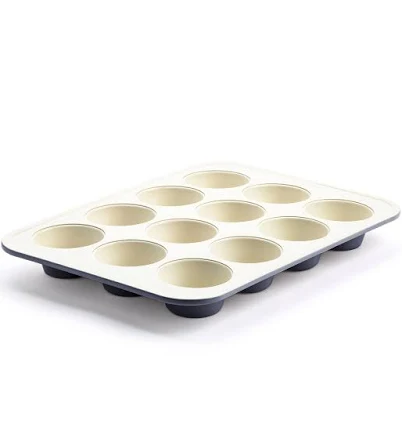
- Ceramic non-stick coating (proprietary GreenPan Thermolon)
- The brand calls it PFAS-free, which we have not verified
- Ceramic coating degradation and particle ingestion
3 hazards checked on this product, all on its full breakdown.
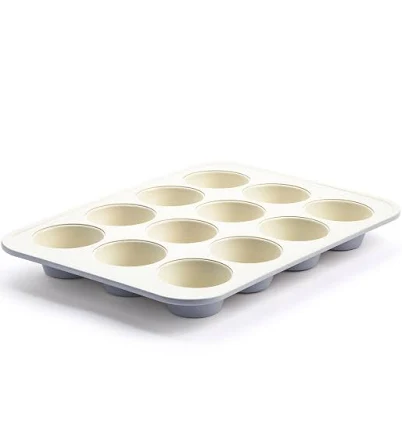
- Ceramic nonstick coating (proprietary blend)
- The brand calls it PFAS-free, which we have not verified
- Ceramic coating degradation and substrate exposure
2 hazards checked on this product, all on its full breakdown.
- Hard-anodized aluminum with proprietary thermolon nonstick coating
- The brand calls it PFAS-free, which we have not verified
- Aluminum leaching
4 hazards checked on this product, all on its full breakdown.
More muffin tins grades
How we score, every product runs through the same public 0-100 rubric based on materials, coatings, brand disclosure, lab findings, and recalls. See the full methodology → Spotted a mistake? Report an error.