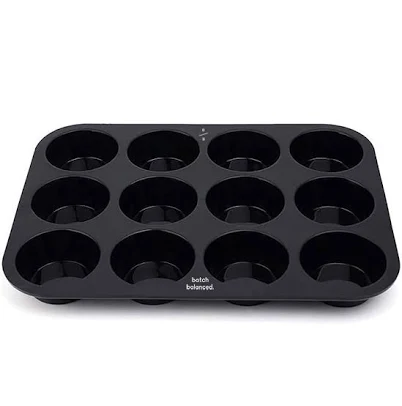
Silicon Muffin Pan, Is It Non-Toxic?
Lower concern; silicone muffin pans are inherently PFAS-light, but brand transparency is absent.
Silicone elastomers do not require PFAS-based nonstick coatings or water repellency treatments. No third-party testing or verification is available for this product.
The better-graded swap
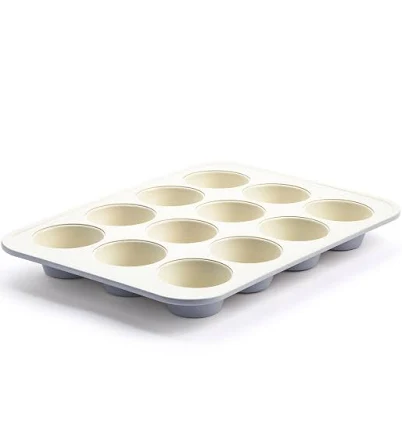
GreenPan
GreenPan GreenLife Ceramic Nonstick Muffin Pan
70/100 safety
Same rubric that flunked this product. The swap earned Good.
Still want this one anyway? Check the price on Amazon. We’d swap it.
Material
silicone elastomer
Brand disclosure
Brand is silent on PFAS
Lab data
No public lab test
You may also be interested in
Top-graded picks in the categories readers replace first, every one scored on the same rubric.

- polypropylene filter housing, carbon/sediment cartridge
- We found no PFAS statement from the brand
- Bacterial growth in spent cartridges
3 hazards checked on this product, all on its full breakdown.

Aquasure
Premier Series 75 GPD Under Sink Reverse Osmosis Water Filtration System
- RO membrane, carbon filters, stainless steel housing
- We found no PFAS statement from the brand
- Bacterial and microbial growth in housing and filters
4 hazards checked on this product, all on its full breakdown.

Avocado
Vegan Mattress
- organic cotton, natural latex, coconut coir, recycled steel coils
- The brand calls it PFAS-free, which we have not verified
- Heavy metals
2 hazards checked on this product, all on its full breakdown.
Is Silicon Muffin Pan non-toxic? What it is made of
This product is a silicone elastomer mold, not a metal pan with a coating. Silicone is a cross-linked polymer of silicon and oxygen that does not rely on Teflon-type coating, ceramic glazes, or enamels to function. Unlike traditional nonstick cookware, silicone muffin pans have no degradable surface layer that can chip, peel, or leach. The material itself is thermally stable to around 400-500 degrees Fahrenheit (typical oven range), meaning structural breakdown and fume release are not realistic concerns at normal baking temperatures.
What’s concerning
Category baseline
The starting point for this type of product, before anything specific to this product is counted.
No PFAS disclosure
No public statement from the brand about PFAS in this product.
Silicone leaching (oligomers and uncrosslinked polymers)
Food-grade silicone can shed small oligomeric molecules (short-chain fragments) into acidic or fatty foods, especially at higher temperatures. This occurs in all silicone bakeware and is not unique to the brand. Published studies show levels are typically low and within regulatory tolerances, but independent testing of this specific brand is not on record.
Odor and stain absorption
Silicone elastomers are porous and absorb odors and color from foods and spices. This is a cosmetic and olfactory issue, not a toxicological one, but persistent odor can indicate bacterial or mold colonization if the pan is not properly dried or stored.
Thermal degradation at misuse temperatures
If exposed to sustained temperatures above 500 degrees Fahrenheit (e.g., broiler or direct flame), silicone can soften, degrade, and potentially release volatile organic compounds. Normal oven baking does not reach these temperatures, so the risk is low under intended use.
What’s reassuring
Base material not linked to PFAS
The main material recorded for this product is not one associated with PFAS.
Lack of third-party certification for food-contact safety
The brand does not advertise FDA food-contact verification or NSF certification. No public complaints or recalls are linked to this brand, and silicone as a material class is low-risk. The absence of a certification label is not proof of a problem, only a gap in transparency.
Contamination from manufacturing impurities or colorants
If this pan is colored (e.g., red, blue, pink), dyes or pigments are mixed into the silicone during molding. No recalls or published testing of colorants exist. Standard industrial silicone pigments are low-hazard, but brand-specific purity data is unavailable.
How is this PFAS grade calculated?
The brand's record and disclosure
The brand has no documented history of product recalls, safety statements, or third-party certifications (such as FDA food-contact confirmation or independent silicone purity testing) in publicly available sources. The brand maintains no explicit stance on silicone sourcing, cross-linking chemistry, or quality control. This silence is not evidence of a problem, but it reflects a lack of transparency typical of many smaller cookware brands. Consumers have no published safety complaints or regulatory actions linked to this brand.
How it compares in its category
Silicone muffin pans present lower concern than metal pans coated with Teflon-type coating (nonstick) or ceramic enamel, both of which can degrade and leach over time. They avoid the aluminum leaching risk present in bare aluminum bakeware. Compared to glass or stainless steel, silicone offers no thermal advantage but eliminates ceramic glaze concerns. The trade-off is that silicone pans are more flexible, can absorb faint odors, and may stain over time; these are cosmetic issues, not safety ones.
If you buy it
Hand wash rather than dishwasher to slow cosmetic degradation and odor absorption. Do not use at temperatures above 400-450 degrees Fahrenheit; check the package for the manufacturer's stated limit. Store in a cool, dark place away from strong spices or oils that can cause staining. Replace the pan if it develops tears, becomes brittle, or shows signs of structural failure; a damaged mold is a usability problem, not an acute chemical hazard, but loss of integrity can allow batter to seep into crevices. These pans typically last 5-10 years with normal care.
What is not known about PFAS in this product?
- Basis
- Model estimate, 72% confidence, not a lab result
- Lab test
- None on record for this exact product
- Brand statement
- has made none
Formulations change between production runs, so check the current label. How we grade.
What are the PFAS-free alternatives to Silicon Muffin Pan?
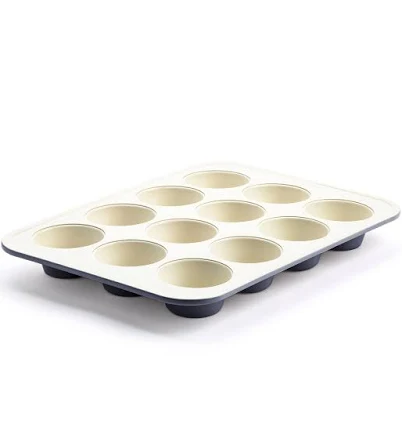
- Ceramic non-stick coating (proprietary GreenPan Thermolon)
- The brand calls it PFAS-free, which we have not verified
- Ceramic coating degradation and particle ingestion
3 hazards checked on this product, all on its full breakdown.
- Ceramic nonstick coating (proprietary blend)
- The brand calls it PFAS-free, which we have not verified
- Ceramic coating degradation and substrate exposure
2 hazards checked on this product, all on its full breakdown.
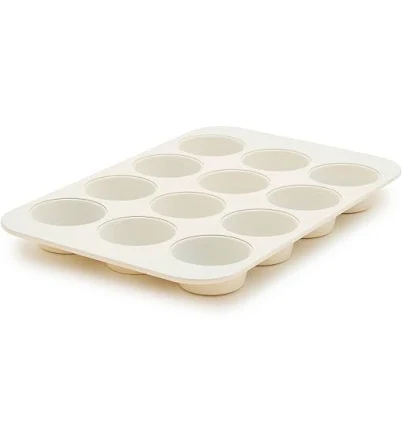
- Hard-anodized aluminum with proprietary thermolon nonstick coating
- The brand calls it PFAS-free, which we have not verified
- Aluminum leaching
4 hazards checked on this product, all on its full breakdown.
More muffin tins grades
How we score, every product runs through the same public 0-100 rubric based on materials, coatings, brand disclosure, lab findings, and recalls. See the full methodology → Spotted a mistake? Report an error.