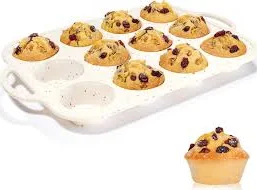
Silicone 12-Cup Muffin Pan with Metal Frame & Handles, Nonstick BPA-Free (Confetti), Is It Non-Toxic?
Lower PFAS concern, but unspecified nonstick coating type on frame requires brand clarification.
Silicone muffin pans are inherently lower-risk than traditional nonstick cookware, but the product omits details about coatings on the metal frame or handles. The brand makes no public PFAS claims.
The better-graded swap
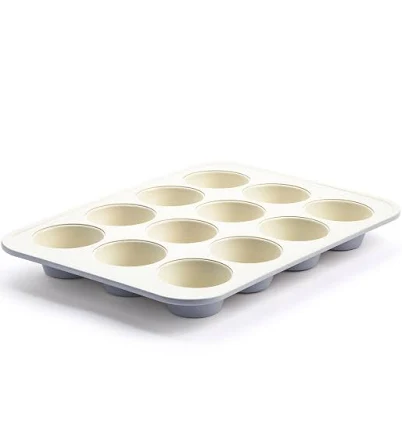
GreenPan
GreenPan GreenLife Ceramic Nonstick Muffin Pan
70/100 safety
Same rubric that flunked this product. The swap earned Good.
Still want this one anyway? Check the price on Amazon. We’d swap it.
Material
Silicone (primary); metal frame/handles
Brand disclosure
Brand is silent on PFAS
Lab data
No public lab test
You may also be interested in
Top-graded picks in the categories readers replace first, every one scored on the same rubric.

- polypropylene filter housing, carbon/sediment cartridge
- We found no PFAS statement from the brand
- Bacterial growth in spent cartridges
3 hazards checked on this product, all on its full breakdown.

Aquasure
Premier Series 75 GPD Under Sink Reverse Osmosis Water Filtration System
- RO membrane, carbon filters, stainless steel housing
- We found no PFAS statement from the brand
- Bacterial and microbial growth in housing and filters
4 hazards checked on this product, all on its full breakdown.

Avocado
Vegan Mattress
- organic cotton, natural latex, coconut coir, recycled steel coils
- The brand calls it PFAS-free, which we have not verified
- Heavy metals
2 hazards checked on this product, all on its full breakdown.
Is Silicone 12-Cup Muffin Pan (Confetti) non-toxic? What it is made of
This product uses food-grade silicone as its primary baking surface, which is thermally stable and non-reactive with acidic or fatty foods up to its rated temperature limit (typically 400-500°F depending on formulation). The metal frame and handles are the secondary concern; silicone itself does not leach BPA, phthalates, or other endocrine disruptors when used as directed. The "BPA-Free" claim on the label is accurate for the silicone component, though silicone formulations may contain trace additives (fillers, colorants) whose composition is rarely disclosed by manufacturers.
What’s concerning
Category baseline
The starting point for this type of product, before anything specific to this product is counted.
No PFAS disclosure
No public statement from the brand about PFAS in this product.
Silicone degradation and particle shedding
Food-grade silicone is chemically inert at typical baking temperatures, but repeated heating cycles and aging can cause the polymer matrix to crack, tear, or shed small particles. Risk increases with abrasive cleaning or dishwasher use. No recalls specific to this brand have been reported, but degraded silicone in food is a documented concern across the category.
Heat transfer via metal handles
Metal handles conduct heat directly from a hot oven. If handles are not insulated or are made of high-conductivity materials, they can reach temperatures that cause skin burns. This is a design limitation of the category, not unique to this brand, but user awareness is important.
What’s reassuring
Base material not linked to PFAS
The main material recorded for this product is not one associated with PFAS.
Metal frame composition and corrosion
The product does not specify the alloy or steel type used in the metal frame. If it is low-grade steel or aluminum without protective coating, corrosion or leaching of iron or aluminum into food is theoretically possible over time, especially in acidic batters. The brand does not publish frame material specs on the product page.
Colorant and additive safety in silicone
The 'Confetti' pattern requires colorants mixed into or applied to the silicone. Food-grade colorants are regulated, but the specific dyes or pigments used by this manufacturer are not disclosed. No safety incidents or failed compliance tests have been reported for this product.
Teflon-type coating/PFOA non-stick coating (if applied to frame)
The product claims to be nonstick but material type is unspecified; if the metal frame has a nonstick coating, it could be Teflon-type coating-based, which carries thermal decomposition risk above 500°F. Silicone alone is naturally nonstick, so frame coating is unlikely, but manufacturer clarification is recommended.
How is this PFAS grade calculated?
The brand's record and disclosure
The brand is a smaller direct-to-consumer brand with limited public safety documentation or third-party certifications on record. The brand has not published detailed material specifications, manufacturing standards, or responses to PFAS inquiries in publicly available sources. No recalls or substantiated safety incidents specific to this brand have been identified. Lack of transparency is not evidence of a problem, but it limits independent verification of additive safety or metal frame composition.
How it compares in its category
Silicone muffin pans show lower concern relative to traditional nonstick (Teflon-type coating/PFOA-coated) metal pans or ceramic-coated steel, which carry documented thermal degradation and heavy-metal leaching risks respectively. Glass or stainless-steel alternatives eliminate leaching risk entirely but are heavier and require greasing. Silicone's main trade-off is durability, it can tear or degrade over 3-5 years with heavy use, and degraded silicone may shed particles into food.
If you buy it
Hand wash only; dishwasher cycles can accelerate silicone degradation and frame corrosion. Do not exceed the manufacturer's stated temperature limit (verify on packaging or contact the brand; typical range cited is 350-450°F for baking). Inspect the pan every 6-12 months for cracks, tears, discoloration, or stiffness; replace if silicone loses flexibility or shows signs of breakdown. Avoid prolonged contact between food and the metal frame by ensuring batter fills the silicone wells completely, and cool the pan before handling the metal handles to prevent skin contact with retained heat.
What is not known about PFAS in this product?
- Basis
- Model estimate, 72% confidence, not a lab result
- Lab test
- None on record for this exact product
- Brand statement
- has made none
Formulations change between production runs, so check the current label. How we grade.
What are the PFAS-free alternatives to Silicone 12-Cup Muffin Pan with Metal Frame & Handles, Nonstick BPA-Free (Confetti)?
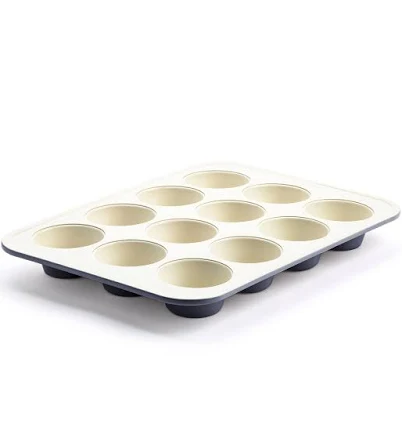
- Ceramic non-stick coating (proprietary GreenPan Thermolon)
- The brand calls it PFAS-free, which we have not verified
- Ceramic coating degradation and particle ingestion
3 hazards checked on this product, all on its full breakdown.
- Ceramic nonstick coating (proprietary blend)
- The brand calls it PFAS-free, which we have not verified
- Ceramic coating degradation and substrate exposure
2 hazards checked on this product, all on its full breakdown.
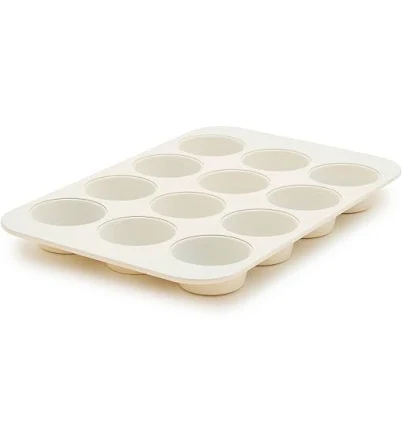
- Hard-anodized aluminum with proprietary thermolon nonstick coating
- The brand calls it PFAS-free, which we have not verified
- Aluminum leaching
4 hazards checked on this product, all on its full breakdown.
More muffin tins grades
How we score, every product runs through the same public 0-100 rubric based on materials, coatings, brand disclosure, lab findings, and recalls. See the full methodology → Spotted a mistake? Report an error.