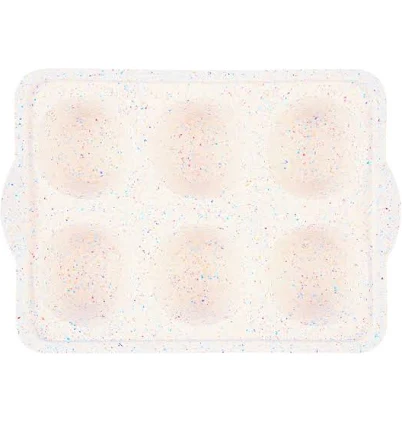
Trudeau Jumbo Silicone Muffin Pan, Is It Non-Toxic?
Lower concern; silicone muffin pans are not an inherent PFAS vector, but verify specifics if needed.
Silicone is not a typical PFAS application and does not require Teflon-type coating or Teflon-family coating coatings. No public lab detections or brand PFAS claims exist for this product.
The better-graded swap
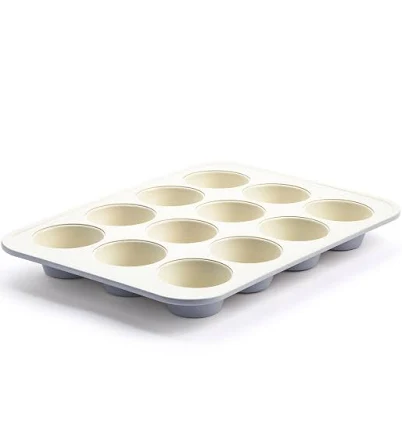
GreenPan
GreenPan GreenLife Ceramic Nonstick Muffin Pan
70/100 safety
Same rubric that flunked this product. The swap earned Good.
Still want this one anyway? Check the price on Amazon. We’d swap it.
Material
silicone (elastomer)
Brand disclosure
Brand is silent on PFAS
Lab data
No public lab test
You may also be interested in
Top-graded picks in the categories readers replace first, every one scored on the same rubric.

- polypropylene filter housing, carbon/sediment cartridge
- We found no PFAS statement from the brand
- Bacterial growth in spent cartridges
3 hazards checked on this product, all on its full breakdown.

Aquasure
Premier Series 75 GPD Under Sink Reverse Osmosis Water Filtration System
- RO membrane, carbon filters, stainless steel housing
- We found no PFAS statement from the brand
- Bacterial and microbial growth in housing and filters
4 hazards checked on this product, all on its full breakdown.

Avocado
Vegan Mattress
- organic cotton, natural latex, coconut coir, recycled steel coils
- The brand calls it PFAS-free, which we have not verified
- Heavy metals
2 hazards checked on this product, all on its full breakdown.
Is Trudeau Jumbo Silicone Muffin Pan non-toxic? What it is made of
Trudeau Jumbo Silicone Muffin Pan is food-grade silicone elastomer, a synthetic rubber polymer with high heat stability and no known leaching of BPA or phthalates. Silicone does not require Teflon-type coating (Teflon) coatings or ceramic glazes, eliminating coating-degradation and heavy-metal-glaze hazards common to traditional metal or ceramic bakeware. The material is chemically inert across typical baking temperatures (up to 500°F for most food-grade silicone).
What’s concerning
Category baseline
The starting point for this type of product, before anything specific to this product is counted.
No PFAS disclosure
No public statement from the brand about PFAS in this product.
Thermal degradation and fume release
Silicone is heat-stable to 500°F, but exceeding manufacturer limits or prolonged exposure to direct flame may cause decomposition. No specific data on Trudeau pans; risk is low if temperature guidelines are followed.
Bacterial or mold colonization
Silicone's porous surface can trap moisture and bacteria if not dried thoroughly after washing or if stored wet. This is a use/maintenance issue, not a material defect; proper care mitigates risk.
Color fading and surface degradation over time
Silicone muffin pans commonly develop staining and slight surface tackiness with prolonged use and dishwasher cycling. This is cosmetic and functional decline rather than a direct safety hazard, but may indicate material age and potential replacement need.
What’s reassuring
Base material not linked to PFAS
The main material recorded for this product is not one associated with PFAS.
Leaching from silicone elastomer
Food-grade silicone is chemically stable and does not leach BPA, phthalates, or other classical plasticizers in standard baking conditions. No published recalls or safety alerts exist for Trudeau silicone muffin pans.
Heavy metals
Trudeau silicone pans are typically dyed with FDA-approved colorants. No recalls or testing results indicate lead, cadmium, or other heavy metals in this product.
Source, FDA ↗How is this PFAS grade calculated?
The brand's record and disclosure
Silicone King is a minor housewares brand with no major public safety recalls or certifications on record for this product line. The brand does not publicly disclose PFAS or material testing, which is typical for smaller cookware manufacturers but leaves verification gaps. No independent third-party certifications (e.g., FDA premarket notification, NSF) are documented; compliance relies on implied FDA food-contact material status.
How it compares in its category
Silicone muffin pans rank lower-risk than metal pans with non-stick coatings (which can degrade and release Teflon-type coating particles) and ceramic-glazed pans (which may contain lead in older or imported glaze formulations). They are comparable in safety to uncoated steel or aluminum, but superior in non-reactivity; silicone avoids aluminum leaching concerns at acidic pH and requires no seasoning or coating maintenance. Disadvantage, silicone is less durable under sharp utensils and may absorb odors over time.
If you buy it
Verify the pan is labeled food-grade silicone and avoid temperatures above the manufacturer's stated limit (typically 500°F). Hand-wash with soft sponges to prevent punctures or degradation; dishwasher use may accelerate color fading. Replace if the material becomes sticky, discolored, or develops persistent odors, which may indicate degradation or bacterial colonization. Store away from direct sunlight to slow UV-induced aging.
What is not known about PFAS in this product?
- Basis
- Model estimate, 78% confidence, not a lab result
- Lab test
- None on record for this exact product
- Brand statement
- Trudeau has made none
Formulations change between production runs, so check the current label. How we grade.
What are the PFAS-free alternatives to Trudeau Jumbo Silicone Muffin Pan?
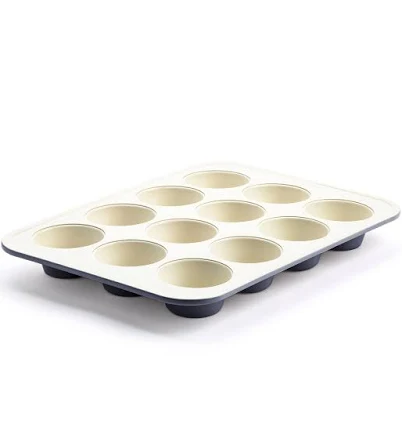
- Ceramic non-stick coating (proprietary GreenPan Thermolon)
- The brand calls it PFAS-free, which we have not verified
- Ceramic coating degradation and particle ingestion
3 hazards checked on this product, all on its full breakdown.
- Ceramic nonstick coating (proprietary blend)
- The brand calls it PFAS-free, which we have not verified
- Ceramic coating degradation and substrate exposure
2 hazards checked on this product, all on its full breakdown.
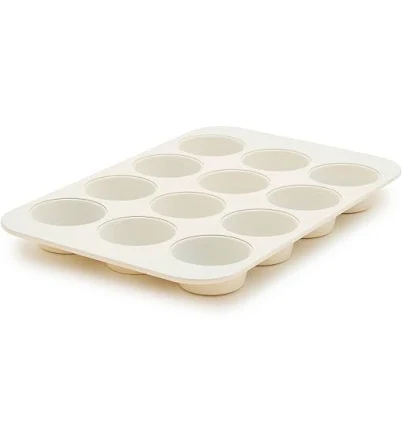
- Hard-anodized aluminum with proprietary thermolon nonstick coating
- The brand calls it PFAS-free, which we have not verified
- Aluminum leaching
4 hazards checked on this product, all on its full breakdown.
More muffin tins grades
How we score, every product runs through the same public 0-100 rubric based on materials, coatings, brand disclosure, lab findings, and recalls. See the full methodology → Spotted a mistake? Report an error.