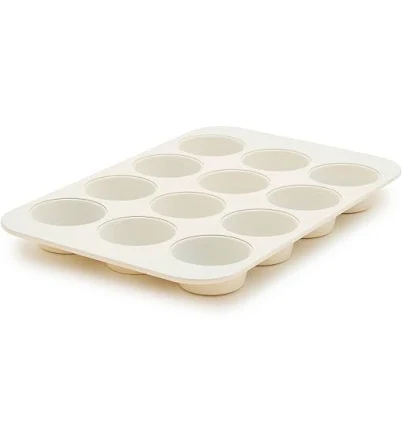
GreenPan Reserve Bakeware 12-Cup Muffin Pan, Is It Non-Toxic?
Named ceramic non-stick coating, with a brand PFAS statement we have not verified.
GreenPan says its Thermolon coated food contact surface is free of PFAS, including Teflon-type coating and PFOA. We record that as an unverified brand claim. Its record describes a non-stick coating of unstated type, which is still counted.
Brand says: “GreenPan says its Thermolon coated food contact surface is free of PFAS, including PTFE and PFOA.”
We flunk more products than we pass. This one earned its grade. How we grade
Material
Hard-anodized aluminum with proprietary thermolon nonstick coating
Brand disclosure
Brand claims PFAS-free
Lab data
No public lab test
You may also be interested in
Top-graded picks in the categories readers replace first, every one scored on the same rubric.

- polypropylene filter housing, carbon/sediment cartridge
- We found no PFAS statement from the brand
- Bacterial growth in spent cartridges
3 hazards checked on this product, all on its full breakdown.

Aquasure
Premier Series 75 GPD Under Sink Reverse Osmosis Water Filtration System
- RO membrane, carbon filters, stainless steel housing
- We found no PFAS statement from the brand
- Bacterial and microbial growth in housing and filters
4 hazards checked on this product, all on its full breakdown.

Avocado
Vegan Mattress
- organic cotton, natural latex, coconut coir, recycled steel coils
- The brand calls it PFAS-free, which we have not verified
- Heavy metals
2 hazards checked on this product, all on its full breakdown.
Is GreenPan Reserve Bakeware Muffin Pan non-toxic? What it is made of
This pan is hard-anodized aluminum with GreenPan's proprietary Thermolon ceramic nonstick coating. Hard anodizing creates a sealed oxide layer that prevents aluminum from leaching into food under normal use, unlike bare or soft-anodized aluminum. The ceramic coating replaces traditional Teflon-type coating (Teflon), reducing acute fume risk if overheated, though any nonstick coating degrades over time with thermal cycling and mechanical wear.
What’s concerning
Disclosed non-fluorinated coating
Coating is named and the brand states it is made without PFAS.
Category baseline
The starting point for this type of product, before anything specific to this product is counted.
Aluminum leaching
Hard anodizing significantly reduces aluminum migration, but the protective oxide layer can be compromised by scratches, high acidity, or prolonged contact with alkaline foods. Risk is lower than bare aluminum but present over the product lifetime.
Nonstick coating degradation
Ceramic coatings are less durable than Teflon-type coating and can flake or wear thin with mechanical abrasion (utensil use, stacking) or thermal stress. Once compromised, the seal is lost and underlying aluminum exposure increases.
Thermal fume risk (Teflon-type coating free)
Ceramic coatings do not off-gas Teflon-type coating-derived fumes at normal cooking temperatures, but overheating any nonstick coating (above 500-600°F) can release organic compounds; risk is lower than traditional Teflon-type coating but not zero.
PFAS
Brand claims PFAS-free but independent lab verification of Thermolon composition is not publicly available. Ceramic does not inherently require PFAS, but verification would increase confidence in the claim.
Source, ATSDR ↗What’s reassuring
Brand-stated PFAS-free
The brand states this product is PFAS-free. We have not verified the claim.
Lead
No recalls or test reports of lead/cadmium contamination in GreenPan Reserve bakeware. Ceramic coatings may carry trace heavy metals depending on pigment sourcing, but no evidence specific to this product.
Source, ATSDR ↗How is this PFAS grade calculated?
The brand's record and disclosure
GreenPan has publicly committed to PFAS-free cookware and markets Thermolon as a ceramic alternative to fluorinated nonsticks. The brand has not faced major recalls for lead or cadmium contamination in bakeware. However, the company has not published independent third-party testing of the coating composition, so the PFAS-free claim itself remains unverified by external labs.
How it compares in its category
Ceramic nonstick muffin pans sit between budget nonstick (higher Teflon-type coating/PFOA risk) and pure stainless steel (no nonstick convenience). Hard-anodized bases offer better durability than bare aluminum. GreenPan Reserve is a mid-to-premium tier within ceramic nonstick cookware, priced above conventional Teflon-type coating pans but comparable to other ceramic brands like Our Place or Caraway.
If you buy it
Hand wash only; dishwashers degrade nonstick coatings faster. Keep temperatures below 400-450°F for sustained use to minimize coating breakdown. Replace the pan if the coating visibly flakes, peels, or darkens unevenly, as loss of the seal increases aluminum contact risk. Store with felt or paper separators between pans to avoid scratching.
What is not known about PFAS in this product?
- Basis
- Model estimate, 45% confidence, not a lab result
- Lab test
- None on record for this exact product
- Brand statement
- GreenPan has made a specific claim
Formulations change between production runs, so check the current label. How we grade.
More muffin tins grades
How we score, every product runs through the same public 0-100 rubric based on materials, coatings, brand disclosure, lab findings, and recalls. See the full methodology → Spotted a mistake? Report an error.