· Bakeware
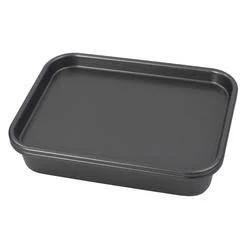
2-Piece Roast Pan and Baking Sheet
Unspecified nonstick coating; no PFAS claims or independent verification.
Won't disclose the coating chemistry for these pans. Most budget nonstick cookware uses Teflon-type coating or Teflon-family coating, and no testing has been done.
The better-graded swap
Caraway
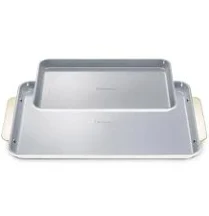
Caraway Ceramic Nonstick Baking Sheet Duo
100/100 safety
Same rubric that flunked this product. The swap earned Excellent.
Still want this one anyway? Check the price on Amazon. We’d swap it.
Material
Steel roasting pan and baking sheet; nonstick coating unspecified
Brand disclosure
Brand is silent on PFAS
Lab data
No public lab test
Is 2-Piece Roast Pan and Baking Sheet non-toxic? What it is made of
The brand's 2-piece set combines steel (roasting pan and baking sheet), which is chemically inert and durable. The critical unknown is the nonstick coating type and composition, which the brand does not publicly specify. Steel itself does not leach; the risk centers entirely on the coating's identity, thermal stability, and degradation behavior over time.
What’s concerning
Category baseline
The starting point for this type of product, before anything specific to this product is counted.
No PFAS disclosure
No public statement from the brand about PFAS in this product.
Non-stick, chemistry undisclosed
Marketed as non-stick without stating the coating chemistry.
Nonstick coating degradation and particle release
Unspecified coating formulation means risk of flaking or breakdown over time, especially if overheated, scratched, or aged. Ingestion of microscopic coating particles from degraded surfaces is possible but health impact depends on the coating's actual chemistry.
Thermal decomposition and fume release
If coating is Teflon-type coating-based, heating above ~500F can produce polymer fume fever and toxic decomposition byproducts. The brand's failure to specify the coating or publish thermal safety limits leaves users without clear guidance on safe operating temperature.
Leaching from coating adhesion layer
Some nonstick coatings rely on proprietary primers or adhesion agents between steel and the topcoat. Without disclosure, it is unclear whether these intermediary layers contain heavy metals, solvents, or other processing chemicals that could migrate into food under stress (prolonged acidic foods, high heat).
Off-gassing during initial heating (manufacturing residues)
New nonstick cookware often releases volatile organic compounds (VOCs) and manufacturing solvents on first use. The brand provides no pre-use seasoning or off-gassing guidance, which is standard practice for transparent manufacturers.
What’s reassuring
Steel substrate corrosion and rust
Steel pans are resistant to corrosion under normal use; however, if the nonstick coating is damaged and exposes bare steel, surface rust may develop in damp storage. This is a durability issue rather than a toxicity hazard.
The full breakdown
The brand's record and disclosure
The brand has not published any public commitment regarding PFAS in cookware, nor do they specify the coating chemistry on this product listing or safety documentation. No independent third-party certifications (such as GreenGuard or third-party PFAS testing) are attached to this model. The brand's silence on coating composition is a red flag for informed purchasing; competitors often disclose Teflon-type coating-free or ceramic alternatives explicitly.
How it compares in its category
Most budget-segment bakeware uses either Teflon-type coating (Teflon) or proprietary synthetic coatings. Premium competitors (e.g., All-Clad, Le Creuset) disclose coating type and offer PFAS-free options or ceramic alternatives. The brand's lack of transparency places this product in a middle tier where risk cannot be assessed without direct inquiry to the manufacturer.
If you buy it
Never exceed 400-500F (check manual); many nonstick coatings begin degrading or off-gassing above this range. Avoid metal utensils and abrasive scrubbing to reduce coating damage and flaking. Inspect the surface regularly for scratches, discoloration, or peeling; discard if coating is visibly compromised. Hand wash rather than dishwasher to extend coating life and reduce thermal stress.
What we don’t know
- Basis
- Model estimate, 35% confidence, not a lab result
- Lab test
- None on record for this exact product
- Brand statement
- has made none
Formulations change between production runs, so check the current label. How we grade.
Better-graded alternatives in Bakeware
Caraway
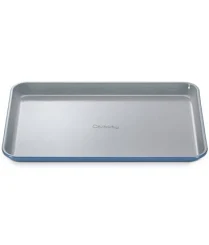
Nonstick Ceramic Medium Baking Sheet
- ceramic nonstick coating
- A third party reports verifying it as PFAS-free
- Ceramic coating degradation over time
Caraway
Ceramic Nonstick Baking Sheet Duo
- ceramic nonstick coating
- A third party reports verifying it as PFAS-free
- Coating degradation and durability
2 hazards checked on this product. See all of them.
Caraway
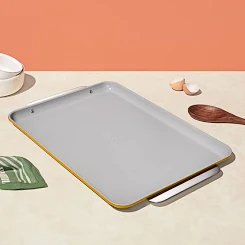
Nonstick Ceramic Large Baking Sheet
- ceramic nonstick coating
- The brand calls it PFAS-free, which we have not verified
- Ceramic coating degradation and particle shedding
3 hazards checked on this product. See all of them.
More bakeware grades
How we score, every product runs through the same public 0-100 rubric based on materials, coatings, brand disclosure, lab findings, and recalls. See the full methodology → Spotted a mistake? Report an error.