· Bakeware
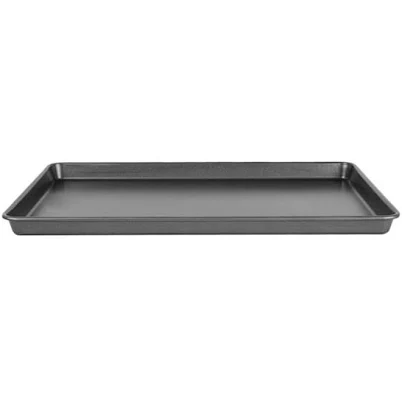
At Home Nonstick Cookie Sheet
Nonstick coating unknown; typical cookware risk profile.
Won't disclose what nonstick coating this sheet has. Most nonstick cookware uses Teflon-type coating or Teflon-family coating, and no lab testing exists for this product.
The better-graded swap
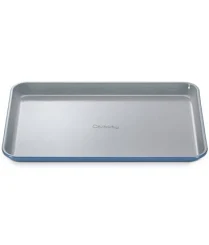
Caraway
Caraway Nonstick Ceramic Medium Baking Sheet
100/100 safety
Same rubric that flunked this product. The swap earned Excellent.
Still want this one anyway? Check the price on Amazon. We’d swap it.
Material
Nonstick coating, type unspecified
Brand disclosure
Brand is silent on PFAS
Lab data
No public lab test
Is At Home Nonstick Cookie Sheet non-toxic? What it is made of
The brand has not publicly disclosed whether this cookie sheet uses Teflon-type coating (Teflon-type), ceramic, or proprietary nonstick chemistry. The sheet itself is likely steel or aluminum substrate. Without coating transparency, you cannot assess whether it releases toxic fumes if overheated or whether the coating will degrade into food over time. This opacity is the core safety issue.
What’s concerning
Category baseline
The starting point for this type of product, before anything specific to this product is counted.
No PFAS disclosure
No public statement from the brand about PFAS in this product.
Non-stick, chemistry undisclosed
Marketed as non-stick without stating the coating chemistry.
Teflon-type coating fume risk (thermal decomposition)
If the coating is Teflon-type coating-based (not confirmed by the brand), overheating above 500°F can release Teflon-family coating fumes that cause acute polymer fume fever (flu-like symptoms in humans, lethal to pet birds at much lower temperatures). Risk is low with normal baking (typically 350-425°F) but rises sharply if broiler or direct flame contact occurs.
Coating degradation and microparticle release
Nonstick coatings on budget cookware commonly degrade within 2-3 years of normal use, releasing microscopic flakes into food. No specific degradation timeline for this model is published; The brand provides no durability warranty that specifies coating integrity standards.
Aluminum leaching (if aluminum substrate uncoated)
If the substrate is bare aluminum and the nonstick layer degrades or has pinholes, acidic foods (tomato sauce, vinegar, citrus) can leach aluminum into food. Chronic aluminum exposure is linked to neurological concerns in susceptible populations, though evidence remains contested. Risk is mitigated if coating remains intact.
Lack of material safety disclosure
The brand does not specify coating chemistry, curing temperature, or off-gassing data on product literature or website. This prevents independent assessment of whether the product meets CPSC food-contact limits for volatile organic compounds or heavy metals in ink/labels.
Handle and substrate durability
Budget cookie sheets often have riveted or spot-welded handles and thin substrates prone to warping at high oven temperatures. Warping can cause uneven baking and pooling of oils; handle corrosion can introduce iron or nickel leaching if rivets rust. Not documented for this specific product but common in the price tier.
The full breakdown
The brand's record and disclosure
The brand does not publish material safety data sheets or nonstick-coating specifications for retail cookware on its website. No recalls specific to this cookie sheet are on record with CPSC. The company has made no public commitment to PFOA/Teflon-type coating phase-out or ceramic alternatives, which contrasts with transparency from competitors like GreenPan or All-Clad. This silence on chemical composition is itself a yellow flag for informed purchasing.
How it compares in its category
Budget nonstick cookie sheets from major retailers typically use conventional Teflon-type coating or Teflon-type coating alternatives but rarely detail the specifics. The brand sits in the mid-market tier; it offers no certification (e.g., GREENGUARD, NSF) that would signal third-party vetting of off-gassing or leaching. Ceramic-coated or uncoated steel alternatives from Rachael Ray, OXO, or restaurant supply brands provide either better disclosure or elimination of fume risk.
If you buy it
Never preheat above 500°F; most nonstick coatings degrade rapidly above 500-600°F, releasing fumes that can cause polymer fume fever. Hand-wash only; dishwasher exposure degrades nonstick coatings faster. Inspect the surface regularly for peeling, discoloration, or scratches; discard if coating flakes. Store in a cool, dry place; prolonged humidity can weaken substrate adhesion. Replace every 3-5 years or immediately if coating shows visible wear.
What we don’t know
- Basis
- Model estimate, 35% confidence, not a lab result
- Lab test
- None on record for this exact product
- Brand statement
- has made none
Formulations change between production runs, so check the current label. How we grade.
Better-graded alternatives in Bakeware
Caraway
Nonstick Ceramic Medium Baking Sheet
- ceramic nonstick coating
- A third party reports verifying it as PFAS-free
- Ceramic coating degradation over time
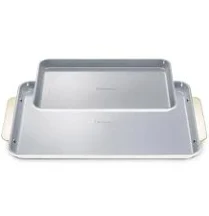
Caraway
Ceramic Nonstick Baking Sheet Duo
- ceramic nonstick coating
- A third party reports verifying it as PFAS-free
- Coating degradation and durability
2 hazards checked on this product. See all of them.
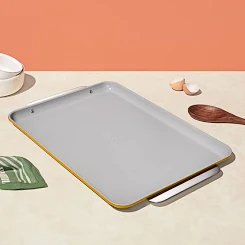
Caraway
Nonstick Ceramic Large Baking Sheet
- ceramic nonstick coating
- The brand calls it PFAS-free, which we have not verified
- Ceramic coating degradation and particle shedding
3 hazards checked on this product. See all of them.
More bakeware grades
How we score, every product runs through the same public 0-100 rubric based on materials, coatings, brand disclosure, lab findings, and recalls. See the full methodology → Spotted a mistake? Report an error.