
Pan, Bake - 31230, Is It Non-Toxic?
Unspecified nonstick coating raises concern; avoid until clarified.
Hamilton Beach won't say what nonstick coating this pan has. Most nonstick cookware uses Teflon-type coating or Teflon-family coating unless explicitly marked ceramic or mineral.
The better-graded swap
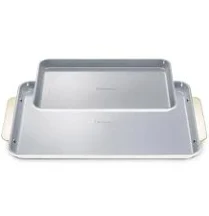
Caraway
Caraway Ceramic Nonstick Baking Sheet Duo
100/100 safety
Same rubric that flunked this product. The swap earned Excellent.
Still want this one anyway? Check the price on Amazon. We’d swap it.
Material
Nonstick coating, type unspecified
Brand disclosure
Brand is silent on PFAS
Lab data
No public lab test
You may also be interested in
Top-graded picks in the categories readers replace first, every one scored on the same rubric.

- polypropylene filter housing, carbon/sediment cartridge
- We found no PFAS statement from the brand
- Bacterial growth in spent cartridges
3 hazards checked on this product, all on its full breakdown.

Aquasure
Premier Series 75 GPD Under Sink Reverse Osmosis Water Filtration System
- RO membrane, carbon filters, stainless steel housing
- We found no PFAS statement from the brand
- Bacterial and microbial growth in housing and filters
4 hazards checked on this product, all on its full breakdown.

Avocado
Vegan Mattress
- organic cotton, natural latex, coconut coir, recycled steel coils
- The brand calls it PFAS-free, which we have not verified
- Heavy metals
2 hazards checked on this product, all on its full breakdown.
Is Pan, Bake - 31230 non-toxic? What it is made of
Hamilton Beach model 31230 is a nonstick baking pan, but the coating chemistry is not publicly specified by the manufacturer. Nonstick coatings on bakeware typically fall into two families, Teflon-type coating-based (traditional Teflon-type) or ceramic/silicone hybrids. Teflon-type coating coatings release toxic fumes (chiefly perfluorooctanoic acid precursors) above 500F; baking pans rarely reach that in normal home use, but broiler or direct flame exposure can trigger degradation. The lack of transparency about which type Hamilton Beach uses here creates uncertainty about long-term coating stability and fume risk.
What’s concerning
Category baseline
The starting point for this type of product, before anything specific to this product is counted.
No PFAS disclosure
No public statement from the brand about PFAS in this product.
Non-stick, chemistry undisclosed
Marketed as non-stick without stating the coating chemistry.
Teflon-type coating fume risk (inhalation hazard if coating degrades)
Coating chemistry unspecified; if Teflon-type coating-based, overheating above 500F or physical damage can release gases. Baking pans rarely reach such temps in normal use, but broiler exposure or prolonged high-heat cooking poses a realistic risk.
Coating adhesion and peeling over time
No durability data published for this specific model. Nonstick coatings degrade with use; metal utensils, high heat, and dishwasher cycles accelerate failure, potentially releasing coating particles into food.
PFAS
Hamilton Beach's silence on PFAS status is the defining risk here; the industry shift toward PFAS-free alternatives means this product's refusal to disclose creates justified consumer concern about older PFAS formulations.
Source, ATSDR ↗What’s reassuring
Aluminum substrate leaching
Standard aluminum bakeware does not leach aluminum into food under normal baking conditions (acidic foods and prolonged contact are the main risk factors, both atypical for baking pans).
Lead
No records of lead or cadmium contamination in Hamilton Beach nonstick bakeware. This hazard is rare in modern U.S. bakeware but is relevant to vintage or imported cookware.
Source, ATSDR ↗How is this PFAS grade calculated?
The brand's record and disclosure
Hamilton Beach does not publicly maintain a PFAS or PFOA transparency statement, and has not voluntarily committed to phasing out fluorinated nonstick coatings. The company has not faced major recalls for nonstick bakeware, but absence of disclosure does not mean absence of PFAS. No third-party certifications (e.g., GREENGUARD, NSF) are listed for this product. This silence is the primary concern, as competitors increasingly disclose coating type and PFAS content.
How it compares in its category
Most major bakeware brands (Pyrex, USA Pan, OXO, Le Creuset) either use ceramic or stoneware, or explicitly state they use Teflon-type coating-free alternatives. Hamilton Beach's refusal to specify the coating type places this pan in a lower-transparency tier. Budget nonstick bakeware often defaults to older Teflon-type coating formulations; premium alternatives (ceramic, silicone, carbon steel) carry no fluorochemical risk and often outperform in durability.
If you buy it
Never exceed 400F; avoid broiler use or direct stovetop heating. Inspect the coating monthly for scratches, peeling, or discoloration; discard immediately if compromised. Hand wash only; dishwasher abrasion accelerates coating failure. Store away from heat sources. If you plan to keep it beyond 3-5 years, request manufacturer confirmation of coating type before purchase; otherwise, consider a ceramic or stoneware alternative for peace of mind.
What is not known about PFAS in this product?
- Basis
- Model estimate, 35% confidence, not a lab result
- Lab test
- None on record for this exact product
- Brand statement
- Hamilton Beach has made none
Formulations change between production runs, so check the current label. How we grade.
What are the PFAS-free alternatives to Pan, Bake - 31230?
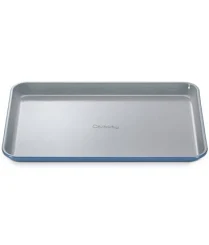
- ceramic nonstick coating
- A third party reports verifying it as PFAS-free
- Ceramic coating degradation over time
- ceramic nonstick coating
- A third party reports verifying it as PFAS-free
- Coating degradation and durability
2 hazards checked on this product, all on its full breakdown.

- ceramic nonstick coating
- The brand calls it PFAS-free, which we have not verified
- Ceramic coating degradation and particle shedding
3 hazards checked on this product, all on its full breakdown.
More bakeware grades
How we score, every product runs through the same public 0-100 rubric based on materials, coatings, brand disclosure, lab findings, and recalls. See the full methodology → Spotted a mistake? Report an error.