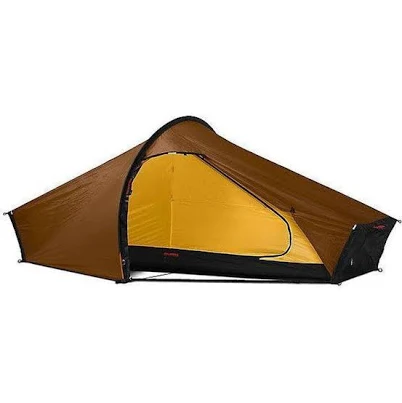
Hilleberg · Camping Tents & Tarps
Hilleberg Akto 1-Person Mountaineering Tent
Higher PFAS risk from waterproof coating, the brand won't disclose treatment chemistry.
This 1-person mountaineering tent relies on a waterproof fabric coating whose composition the brand doesn't specify. Waterproof outdoor textiles have historically used PFAS-based water-repellent coating treatments.
Still want this one anyway? Check the price on Amazon. We’d swap it.
Material
Nylon/polyester with proprietary waterproof coating
Brand disclosure
Brand is silent on PFAS
Lab data
No public lab test
What Hilleberg Akto 1-Person Mountaineering is made of, ingredients and materials
The Akto uses nylon and polyester fabrics treated with a proprietary waterproof coating (Hilleberg does not publicly specify the chemistry). Nylon and polyester themselves are stable synthetic polymers with low leaching risk under normal conditions. The waterproof treatment is the primary chemical concern, water-repellent coating (water-repellent coating) coatings on outdoor textiles have historically used PFAS compounds, though some manufacturers have transitioned to fluorine-free alternatives. Without disclosure from Hilleberg, the coating composition remains unknown.
What’s concerning
Category baseline
The starting point for this type of product, before anything specific to this product is counted.
No PFAS disclosure
No public statement from the brand about PFAS in this product.
Waterproof / stain-resistant treatment
Water-repellent coating treatments have historically used PFAS.
PFAS
Hilleberg does not disclose whether the proprietary waterproof treatment contains PFAS. water-repellent coating coatings on outdoor textiles commonly include fluorinated compounds; without transparency, PFAS presence cannot be ruled out. Risk is inhalation during extended indoor storage in enclosed spaces or contact with wet fabric if coating is damaged.
Source, ATSDR ↗Coating degradation and microfiber release
As nylon and polyester fabrics age, the waterproof coating breaks down into particles. Repeated flexing, UV exposure, and washing accelerate this process. Shed coating particles are too large to be classified as microplastics in the strict sense, but their chemical composition is unknown and inhalation during use is unlikely at normal outdoor exposure levels.
Volatile organic compounds (VOC) off-gassing
New synthetic tent fabrics and coatings may release minor VOCs (solvents, volatile monomers) during the first few days or weeks. This is typically not hazardous at normal outdoor ventilation levels but may be noticeable in unventilated indoor storage. Airing the tent outdoors for 24-48 hours before first use reduces perceived odor.
What’s reassuring
Formaldehyde / VOCs
No recalls or test reports document formaldehyde in Hilleberg tent fabrics. Synthetic nylon and polyester are not typical formaldehyde carriers (unlike cotton textiles), and Hilleberg's reputation for quality control suggests any finishing resins would be of standard industrial grade, but the company does not certify absence.
Source, ATSDR ↗Heavy metals
Synthetic dyes used in nylon typically do not contain heavy metals at levels of concern. No contamination incidents are documented for Hilleberg products. Standard outdoor textile dyeing practices in Scandinavian manufacturing carry lower risk than unregulated suppliers, though independent testing is not public.
Source, FDA ↗The full breakdown
The brand's record and disclosure
Hilleberg is a Swedish tent manufacturer with a strong reputation for durability and field performance, but the company does not publicly disclose waterproofing chemistry or maintain third-party safety certifications for chemical treatments. No recalls or contamination incidents are documented for Hilleberg tents. The brand's silence on PFAS and water-repellent coating treatment is consistent with the broader outdoor gear industry, where transparency remains limited despite growing scrutiny of waterproofing chemistries.
How it compares in its category
Hilleberg tents are positioned in the premium durability segment; most competitors at this price point (North Face, MSR, Big Agnes) similarly do not disclose waterproofing chemistry. Some outdoor brands have begun transitioning to fluorine-free water-repellent coating (e.g., Patagonia partnerships, some REI Co-op tents), but the Akto 1 shows no public commitment to this shift. For a mountaineering tent, the Akto's material durability and weather performance are strong; the chemical trade-off is typical for the category rather than unusually high-risk.
If you buy it
Store in a dry, well-ventilated space away from direct heat to slow coating degradation over time. Do not machine wash; hand-clean with cool water and mild soap only, as hot water and detergents accelerate coating breakdown. Inspect seams and fabric for wear annually; reapply seam sealer and water-repellent coating treatment every 2-3 years depending on use frequency. If the interior accumulates visible mold or mildew during storage, dry thoroughly before use and consider airing in sunlight, as moisture buildup does not create chemical hazards but degrades material life.
What we don’t know
- Basis
- Model estimate, 45% confidence, not a lab result
- Lab test
- None on record for this exact product
- Brand statement
- Hilleberg has made none
Formulations change between production runs, so check the current label. How we grade.
More camping tents & tarps grades
How we score, every product runs through the same public 0-100 rubric based on materials, coatings, brand disclosure, lab findings, and recalls. See the full methodology → Spotted a mistake? Report an error.