Home Collection · Parchment Paper & Baking Liners
Nicole Home Collection Parchment paper
Skip. Grease-resistant parchment often uses fluorinated coatings.
Nicole parchment paper has a grease-resistant coating but brand discloses no PFAS information. Grease-resistant paper products commonly contain fluorinated compounds; independent testing unavailable for this product.
The better-graded swap
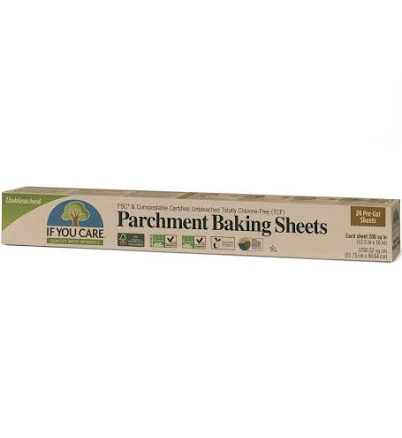
If You Care
If You Care Parchment Baking Sheets
90/100 safety
Same rubric that flunked this product. The swap earned Excellent.
Still want this one anyway? Check the price on Amazon. We’d swap it.
Material
paper with silicone or unknown grease-resistant coating
Brand disclosure
Brand is silent on PFAS
Lab data
No public lab test
You may also be interested in
Top-graded picks in the categories readers replace first, every one scored on the same rubric.

- polypropylene filter housing, carbon/sediment cartridge
- We found no PFAS statement from the brand
- Bacterial growth in spent cartridges
3 hazards checked on this product, all on its full breakdown.

Aquasure
Premier Series 75 GPD Under Sink Reverse Osmosis Water Filtration System
- RO membrane, carbon filters, stainless steel housing
- We found no PFAS statement from the brand
- Bacterial and microbial growth in housing and filters
4 hazards checked on this product, all on its full breakdown.

Avocado
Vegan Mattress
- organic cotton, natural latex, coconut coir, recycled steel coils
- The brand calls it PFAS-free, which we have not verified
- Heavy metals
2 hazards checked on this product, all on its full breakdown.
What Nicole Home Collection Parchment paper is made of, ingredients and materials
Nicole Home Collection parchment is paper substrate treated with a grease-resistant coating to prevent food oils from soaking through. The coating is described generically as 'silicone or unknown' in product documentation, which is typical industry vagueness. Grease-resistant food paper coatings historically rely on fluorochemicals to repel oils; the brand does not disclose whether its coating is fluorinated, silicone-only, or a hybrid. This opacity is the core safety concern.
What’s concerning
Waterproof / stain-resistant treatment
Water-repellent coating treatments have historically used PFAS.
Category baseline
The starting point for this type of product, before anything specific to this product is counted.
No PFAS disclosure
No public statement from the brand about PFAS in this product.
PFAS
Grease-resistant parchment coating composition is not disclosed by Nicole Home Collection. Industry-wide, most conventional parchment uses Teflon-type coating or other fluorochemicals; no label claim of PFAS-free or non-fluorinated coating on this product. Migration risk increases with heat, oil contact, and acidic foods.
Source, ATSDR ↗Unknown coating thermal degradation
Coating identity and thermal stability are not publicly specified. If the coating is silicone-based or hybrid, it may release volatile organic compounds at oven temperatures above 420°F. Without material data, safe upper temperature cannot be confirmed.
Microplastic or coating particle shedding into food
Aged or damaged parchment can shed coating particles, especially if creased, torn, or degraded by oil or heat. Nicole Home Collection does not specify coating durability or particle-shedding risk under typical use.
Unreliable composition transparency
The brand provides only generic 'silicone or unknown grease-resistant coating' language in product descriptions and marketing. This lack of specificity is standard for many parchment brands but prevents informed risk assessment.
How is this PFAS grade calculated?
The brand's record and disclosure
Nicole Home Collection (a subsidiary brand under various parent companies) has no public commitment to PFAS-free formulations or third-party certification of coating chemistry. The brand does not publish safety data sheets or material composition details for consumers. No major recalls or regulatory violations on record for this product, but the absence of transparency around grease-resistant coating chemistry is a red flag in a product category where PFAS use is common and largely unregulated at the consumer level.
How it compares in its category
Most conventional parchment papers (including store brands and major manufacturers) use fluorinated coatings because they are cost-effective and highly effective at oil repulsion. Uncoated parchment, silicone-coated parchment from transparent manufacturers, and plant-based alternatives (e.g., tree-pulp or beeswax coatings) are available at similar price points and do not require PFAS. This product offers no performance or price advantage that justifies the coating uncertainty.
If you buy it
Do not use above 420°F, as thermal degradation of unknown coatings can release volatile compounds. Replace rolls after 12 months of storage, as coatings can degrade. Do not use for prolonged food storage; parchment is single-use or short-term baking only. If you choose to use it despite coating uncertainty, limit frequency and do not use with acidic foods or high heat, both of which increase coating leaching risk.
What is not known about PFAS in this product?
- Basis
- Model estimate, 35% confidence, not a lab result
- Lab test
- None on record for this exact product
- Brand statement
- Home Collection has made none
Formulations change between production runs, so check the current label. How we grade.
What are the PFAS-free alternatives to Nicole Home Collection Parchment paper?
- Steel with PFA-free nonstick coating
- The brand calls it PFAS-free, which we have not verified
- Nonstick coating degradation over time
3 hazards checked on this product, all on its full breakdown.
- plastic tube with replaceable hollow-fiber filter cartridge
- The brand calls it PFAS-free, which we have not verified
- Bacterial growth in filter and housing if unmaintained
2 hazards checked on this product, all on its full breakdown.
- silicone-coated parchment paper
- The brand calls it PFAS-free, which we have not verified
- Paper degradation and particulate shedding
More parchment paper & baking liners grades
How we score, every product runs through the same public 0-100 rubric based on materials, coatings, brand disclosure, lab findings, and recalls. See the full methodology → Spotted a mistake? Report an error.