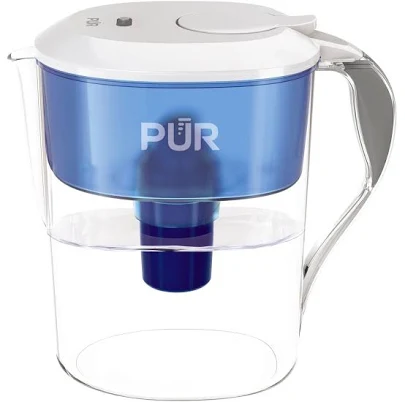
Honeywell 40 Gal Pitcher, Pur LED, 11.25"x10.63"x6.75", B... AB1Supply
Lower PFAS risk. Standard water filter pitcher without known PFAS sources.
PUR water pitcher filters use carbon media, not Teflon-family coating. Honeywell makes no PFAS claims and typical consumer water filters carry minimal documented PFAS risk.
We flunk more products than we pass. This one earned its grade. How we grade
Material
Plastic pitcher body, carbon-based water filter cartridge
Brand disclosure
Brand is silent on PFAS
Lab data
No public lab test
You may also be interested in
Top-graded picks in the categories readers replace first, every one scored on the same rubric.

Aqua Pure
3M Aqua-Pure AP802B Whole House Filter Housing
- polypropylene filter housing, carbon/sediment cartridge
- We found no PFAS statement from the brand
- Bacterial growth in spent cartridges
3 hazards checked on this product. See all of them.

Aquasure
Premier Series 75 GPD Under Sink Reverse Osmosis Water Filtration System
- RO membrane, carbon filters, stainless steel housing
- We found no PFAS statement from the brand
- Bacterial and microbial growth in housing and filters
4 hazards checked on this product. See all of them.

Avocado
Vegan Mattress
- organic cotton, natural latex, coconut coir, recycled steel coils
- The brand calls it PFAS-free, which we have not verified
- Heavy metals
2 hazards checked on this product. See all of them.
What Honeywell 40 Gal Pitcher, Pur LED is made of, ingredients and materials
This Honeywell pitcher uses a plastic body (likely polypropylene or similar food-grade polymer) paired with a replaceable carbon-based filter cartridge. The pitcher itself does not involve ceramic glazes, metal coatings, or Teflon-type coating, eliminating lead/cadmium and fume risks common in cookware. The carbon filter works through adsorption rather than chemical additives, meaning the filtered water contacts activated carbon and the plastic housing only.
What’s concerning
No PFAS disclosure
No public statement from the brand about PFAS in this product.
Bacterial growth in unmaintained filter cartridge
Water pitcher filters create a moist environment; if cartridges are not replaced on schedule or the pitcher sits unused, bacteria and mold can colonize the filter media and housing, degrading water quality despite the filter's initial effectiveness.
Microplastics
Long-term use or abrasion of the plastic housing can shed microscopic plastic particles into water, particularly if the pitcher is frequently washed with abrasive sponges or stored in high-UV environments.
Source, EPA ↗Activated carbon dust or fines in filtered water
If the filter cartridge is damaged, cracked, or deteriorates, carbon particles can bypass the filter media and enter drinking water; this is rare but more likely if cartridges are not seated properly or are reused beyond their rated lifespan.
What’s reassuring
Base material not linked to PFAS
The main material recorded for this product is not one associated with PFAS.
BPA & bisphenols
No documented cases of BPA or phthalate leaching from Honeywell pitcher bodies. Food-grade polypropylene used in certified water pitchers is formulated to minimize leaching, and this product shows no public health warnings or recalls on this issue.
Source, FDA ↗VOC off-gassing from plastic in new pitcher
No specific reports of odor or volatile emissions from Honeywell pitcher plastic. Initial plastic smell is common in new pitchers and typically dissipates within days of rinsing and use; if a persistent chemical odor persists beyond one week, discontinue use.
The full breakdown
The brand's record and disclosure
Honeywell does not publicize detailed material sourcing or third-party certifications (NSF, WQA) for this specific model based on available public records. The brand has no known recalls or disclosed contamination incidents tied to this pitcher line. Honeywell's parent company operates in building/industrial sectors and maintains minimal transparency on consumer water-filter product chemistry compared to dedicated filtration brands.
How it compares in its category
Standard plastic-pitcher filters (Brita, PUR, ZeroWater) share similar material profiles. Honeywell's 40-gallon capacity and LED indicator place it in the mid-market; it avoids the glass alternatives that risk breakage but offers no material advantage over competitors. Most pitcher filters in this category use polypropylene bodies and activated-carbon cartridges with no significant differentiation in leaching profiles.
If you buy it
Replace cartridges every 40 gallons or per the LED timer to prevent bacterial biofilm growth inside exhausted filters. Do not expose the pitcher to direct sunlight for extended periods, as UV can degrade the plastic housing over years. Rinse the pitcher and lid before first use. Store at room temperature; do not use with water hotter than 100 degrees Fahrenheit, as sustained heat may accelerate plastic degradation and leaching of trace additives.
What we don’t know
- Basis
- Model estimate, 72% confidence, not a lab result
- Lab test
- None on record for this exact product
- Brand statement
- Honeywell has made none
Formulations change between production runs, so check the current label. How we grade.
Better-graded alternatives in Water Filters

Aquamira
Water Storage Treatment 2 oz Glass Bottles 60 gallons Purification
- glass bottles, sodium dichloroisocyanurate treatment chemical
- We found no PFAS statement from the brand
- Chemical overdose or misuse
5 hazards checked on this product. See all of them.

Big Berkey
Empty Housing with NO Filters Included
- Stainless steel housing and spigot
- We found no PFAS statement from the brand
- Bacterial growth and biofilm if filters not replaced
5 hazards checked on this product. See all of them.

LifeStraw
Home Glass Water Filter Pitcher
- Borosilicate glass pitcher, replaceable activated-carbon filter cartridge
- Bacterial growth in filter cartridge if unmaintained
5 hazards checked on this product. See all of them.
More water filters grades
How we score, every product runs through the same public 0-100 rubric based on materials, coatings, brand disclosure, lab findings, and recalls. See the full methodology → Spotted a mistake? Report an error.