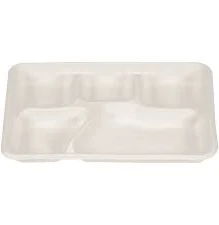
Huhtamaki · Disposable Food Containers
Huhtamaki Lunch Tray, 5 Compartment
Contact brand for grease-resistant coating composition.
Huhtamaki lunch trays use molded fiber with grease-resistant treatment, likely water-based but coating composition stays undisclosed. No PFAS claims or third-party verification is available.
The better-graded swap
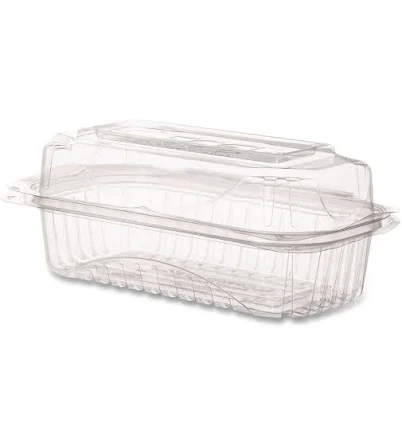
Eco-Products
Eco-Products Compostable Clear Clamshell Hinged Food
100/100 safety
Same rubric that flunked this product. The swap earned Excellent.
Still want this one anyway? Check the price on Amazon. We’d swap it.
Material
Molded fiber/paperboard with grease-resistant coating
Brand disclosure
Brand is silent on PFAS
Lab data
No public lab test
What Huhtamaki Lunch Tray, 5 Compartment is made of, ingredients and materials
Huhtamaki's 5-compartment lunch tray is molded fiber (recycled paper pulp) with a grease-resistant coating applied to prevent oil and moisture penetration. Molded fiber itself is chemically inert and doesn't leach like some plastics. The critical variable is the grease coating, it may contain PFAS (PFAS "forever chemicals"), silicones, or other fluorochemicals to repel fats, but Huhtamaki has not publicly disclosed the formulation. Without transparency, risk cannot be reliably assessed.
What’s concerning
Category baseline
The starting point for this type of product, before anything specific to this product is counted.
No PFAS disclosure
No public statement from the brand about PFAS in this product.
Waterproof / stain-resistant treatment
Water-repellent coating treatments have historically used PFAS.
PFAS
Molded fiber grease coatings commonly use PFAS, but Huhtamaki has not disclosed the specific chemistry. Non-fluorinated alternatives exist but are not confirmed here. Migration into fatty foods is the primary exposure route.
Source, ATSDR ↗Coating degradation and particle migration
As molded fiber trays age or are heated, the grease coating can wear, crack, or peel. Microscopic coating particles may transfer to food. Risk increases with reuse or high-heat conditions.
Bacterial contamination (post-consumer use)
Molded fiber is porous. Once used and wet, if not properly dried or cleaned, it can harbor bacterial growth. This is a use-hygiene issue, not a manufacturing one.
What’s reassuring
Microplastic or fiber migration from base material
Molded fiber itself does not fragment into microplastics like plastic packaging. However, physical damage to the tray surface could theoretically introduce paper fibers into food.
Heavy metals
Huhtamaki's molded fiber is made from recycled paper pulp. Food-grade recycled paper undergoes sorting and deinking; heavy-metal contamination is rare but not independently verified for this specific product line.
Source, FDA ↗The full breakdown
The brand's record and disclosure
Huhtamaki is a major global food-packaging manufacturer with ISO certifications for food safety and environmental standards, but the company has not publicly committed to PFAS-free grease coatings or disclosed specific coating chemistry for its molded fiber products. The company maintains general food-contact compliance but does not provide end-user transparency on fluorochemical content. This silence on a known category hazard is the primary concern.
How it compares in its category
Molded fiber trays have lower concern for BPA and phthalate leaching because the base material is paper pulp, though the grease-resistant coating warrants consideration. However, competitors like World Centric and some house brands explicitly market PFAS-free or fluorochemical-free coatings. Huhtamaki's lack of such claims places it in a middle tier, better than conventional foam or plastic, but less transparent than category leaders on the grease-coating hazard.
If you buy it
Avoid prolonged contact with fatty or oily foods, especially if heated (microwaving accelerates coating interactions). Use for dry foods, sandwiches, or pre-cooled items when possible. Do not microwave on high heat. Replace trays if the coating shows visible wear, peeling, or discoloration. Before repeated purchase, contact Huhtamaki directly requesting PFAS-free or fluorochemical-free grease-coating certification; their response will clarify whether to continue buying.
What we don’t know
- Basis
- Model estimate, 40% confidence, not a lab result
- Lab test
- None on record for this exact product
- Brand statement
- Huhtamaki has made none
Formulations change between production runs, so check the current label. How we grade.
Better-graded alternatives in Disposable Food Containers
Eco-Products
Compostable Clear Clamshell Hinged Food
- Compostable resin (PLA/PBAT blend, plant-based)
- A third party reports verifying it as PFAS-free
- Thermal degradation and chemical release at use temperatures
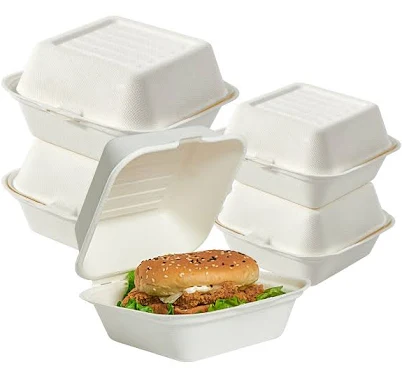
Lipak
ECO- Lipak Wholesale Sugarcane Clamshell To-Go Boxes
- Sugarcane bagasse (compostable fiber)
- We found no PFAS statement from the brand
- Bleaching agents and residual processing chemicals
3 hazards checked on this product. See all of them.
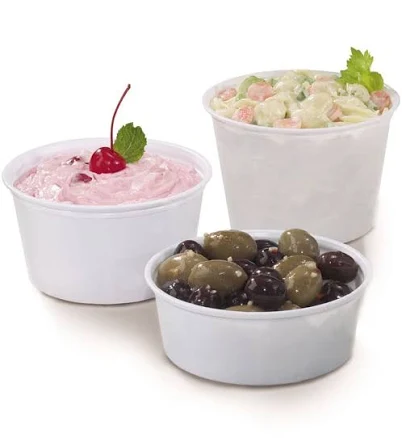
Fabri-Kal
Kal-Tainer 8 Ounce Squat White Container 10 / CS
- polypropylene (PP) container, uncoated
- We found no PFAS statement from the brand
- Microplastics
2 hazards checked on this product. See all of them.
More disposable food containers grades
How we score, every product runs through the same public 0-100 rubric based on materials, coatings, brand disclosure, lab findings, and recalls. See the full methodology → Spotted a mistake? Report an error.