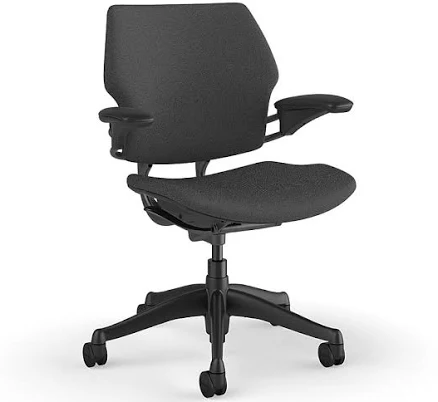
Humanscale Freedom Task Chair
Lower PFAS concern; standard office chair with no known stain or water treatments.
The Freedom Task Chair uses polyester and nylon mesh on a steel frame with no disclosed stain-resistant or water-repellent treatments. Standard materials carry lower inherent PFAS risk.
We flunk more products than we pass. This one earned its grade. How we grade
Material
Mesh (polyester/nylon), plastic, steel frame, foam cushioning
Brand disclosure
Brand is silent on PFAS
Lab data
No public lab test
You may also be interested in
Top-graded picks in the categories readers replace first, every one scored on the same rubric.

- polypropylene filter housing, carbon/sediment cartridge
- We found no PFAS statement from the brand
- Bacterial growth in spent cartridges
3 hazards checked on this product, all on its full breakdown.

Aquasure
Premier Series 75 GPD Under Sink Reverse Osmosis Water Filtration System
- RO membrane, carbon filters, stainless steel housing
- We found no PFAS statement from the brand
- Bacterial and microbial growth in housing and filters
4 hazards checked on this product, all on its full breakdown.

Avocado
Vegan Mattress
- organic cotton, natural latex, coconut coir, recycled steel coils
- The brand calls it PFAS-free, which we have not verified
- Heavy metals
2 hazards checked on this product, all on its full breakdown.
What Humanscale Freedom Task Chair is made of, ingredients and materials
The Freedom chair uses polyester and nylon mesh for the backrest and seat, supported by a steel frame and polyurethane foam cushioning. Polyester and nylon are stable synthetic polymers that do not readily leach chemicals under normal office conditions (room temperature, no direct heat). The foam cushioning may off-gas volatile organic compounds (VOCs) initially, but this is typically minimal in commercial-grade office furniture and decreases with ventilation over the first few weeks. Steel frames are inert and pose no leaching risk.
What’s concerning
Category baseline
The starting point for this type of product, before anything specific to this product is counted.
No PFAS disclosure
No public statement from the brand about PFAS in this product.
VOC off-gassing from polyurethane foam
Office chair foam can release volatile organic compounds during the first few days to weeks. Humanscale's GREENGUARD Gold certification limits allowable emissions, but some initial off-gassing is normal and typically minimal in well-ventilated spaces.
Polyester/nylon mesh degradation
Over 5-10 years of use, mesh fabrics can develop small tears or pilling. Direct sunlight exposure accelerates this. Degradation itself does not release hazardous chemicals but may allow foam particles to escape or create wear surfaces that shed fibers.
What’s reassuring
Base material not linked to PFAS
The main material recorded for this product is not one associated with PFAS.
Heavy metals
No documented cases of heavy metal contamination in commercial Humanscale office chairs. GREENGUARD Gold certification includes restrictions on hazardous substances, including heavy metals in colorants and coatings.
Source, FDA ↗Flame retardants
Commercial office furniture in the US typically meets flammability standards without added brominated flame retardants. No evidence suggests Humanscale Freedom uses such additives; GREENGUARD certification excludes several restricted flame retardants.
Source, EPA ↗Leaching from steel frame or plastic components under normal use
Steel and polyester/nylon are chemically stable at room temperature and normal humidity. No documented leaching risk from frame or mesh under typical office conditions.
How is this PFAS grade calculated?
The brand's record and disclosure
Humanscale is recognized for sustainability focus and has pursued third-party certifications including BIFMA Level 3 (Sustainable Furniture Council) and GREENGUARD Gold, both of which include chemical emissions testing and restrictions. The company does not publicly disclose detailed PFAS policies, but the absence of marketed stain-resistant or water-repellent treatments on the Freedom suggests minimal intentional PFAS application. No major safety recalls or chemical controversies are documented for this chair model.
How it compares in its category
The Freedom chair sits above average for chemical transparency in the task chair category, particularly due to GREENGUARD Gold certification, which requires low-VOC emissions testing. Many competing task chairs lack third-party chemical certifications or use synthetic leather and heavier chemical treatments for durability. The mesh-based design avoids the off-gassing risks associated with PVC-coated or polyurethane-heavy alternatives, making it a relatively lower concern ergonomic seating choice.
If you buy it
Unpack and place the chair in a well-ventilated area for 24-48 hours to allow initial foam off-gassing to dissipate. Avoid placing it in direct sunlight or near heat sources, which could accelerate foam degradation or plastic component weakening. Vacuum the mesh regularly to prevent dust and skin cell accumulation; wipe plastic surfaces with a damp cloth rather than harsh solvents. Replace the cushion foam if it becomes compressed or degraded (typically after 5-7 years of heavy use) to maintain support and prevent breakdown of the material.
What is not known about PFAS in this product?
- Basis
- Model estimate, 72% confidence, not a lab result
- Lab test
- None on record for this exact product
- Brand statement
- Humanscale has made none
Formulations change between production runs, so check the current label. How we grade.
More office chairs grades
How we score, every product runs through the same public 0-100 rubric based on materials, coatings, brand disclosure, lab findings, and recalls. See the full methodology → Spotted a mistake? Report an error.