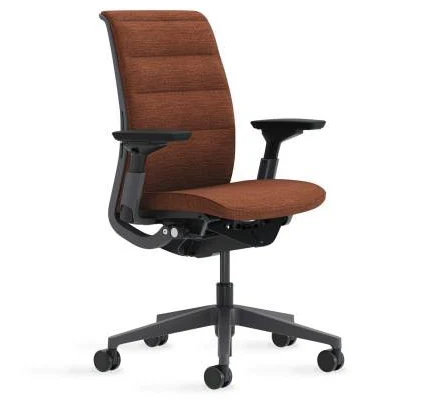
Steelcase Think Chair
Lower concern office chair with no evidence of intentional PFAS, but no public disclosure.
The Steelcase Think is mostly steel, polymer, and foam, materials not typically treated with PFAS in office furniture. Steelcase won't disclose PFAS use or avoidance.
We flunk more products than we pass. This one earned its grade. How we grade
Material
steel frame, polymer backrest, foam seat
Brand disclosure
Brand is silent on PFAS
Lab data
No public lab test
You may also be interested in
Top-graded picks in the categories readers replace first, every one scored on the same rubric.

- polypropylene filter housing, carbon/sediment cartridge
- We found no PFAS statement from the brand
- Bacterial growth in spent cartridges
3 hazards checked on this product, all on its full breakdown.

Aquasure
Premier Series 75 GPD Under Sink Reverse Osmosis Water Filtration System
- RO membrane, carbon filters, stainless steel housing
- We found no PFAS statement from the brand
- Bacterial and microbial growth in housing and filters
4 hazards checked on this product, all on its full breakdown.

Avocado
Vegan Mattress
- organic cotton, natural latex, coconut coir, recycled steel coils
- The brand calls it PFAS-free, which we have not verified
- Heavy metals
2 hazards checked on this product, all on its full breakdown.
What Steelcase Think Chair is made of, ingredients and materials
The Think chair combines a welded steel frame, injection-molded polypropylene or polyurethane backrest, and polyurethane foam cushioning. Steel frames are chemically inert and durable. Polyurethane foams and polymers used in office seating are formulated to meet flammability standards (typically BIFMA or CAL TB 117), which can involve flame retardants, though modern formulations increasingly use non-halogenated types. The backrest polymer is unlikely to leach significantly under typical office temperature and humidity conditions.
What’s concerning
Category baseline
The starting point for this type of product, before anything specific to this product is counted.
No PFAS disclosure
No public statement from the brand about PFAS in this product.
Flame retardants
Office furniture foam is required to meet flammability standards; the Think chair likely contains flame retardants, typically non-halogenated modern types. GREENGUARD Gold testing does not specifically exclude these compounds. Long-term health impact from low-level exposure in a well-ventilated office is not established as a major concern, but full ingredient disclosure would clarify whether halog
Source, EPA ↗Volatile organic compound off-gassing from new foam and polymers
New polyurethane foam and injection-molded plastics release VOCs during the first weeks to months. Steelcase's GREENGUARD Gold certification limits these emissions to strict thresholds, reducing off-gassing risk compared to non-certified office chairs. Proper ventilation during initial use minimizes exposure.
Polymer backrest degradation and potential microplastic shedding
Polypropylene or polyurethane backrests may develop surface cracking or brittleness after 10+ years of daily flexing and environmental exposure. No evidence of significant microplastic release during normal use, but severe degradation could theoretically shed small particles into the immediate air. Regular inspection and timely replacement of the backrest component mitigates this risk.
What’s reassuring
Base material not linked to PFAS
The main material recorded for this product is not one associated with PFAS.
Lead
Steelcase is a major OEM supplier to corporate clients with strict procurement standards; lead or cadmium in fasteners or paint is not reported. Modern industrial finishing processes used by Steelcase do not typically involve these heavy metals, but the company does not publish material certifications for individual components.
Source, ATSDR ↗Formaldehyde / VOCs
GREENGUARD Gold certification specifically limits formaldehyde emissions. The Think chair's steel frame and separate foam/plastic components minimize reliance on high-formaldehyde adhesives; no formaldehyde safety incidents or recalls are on record.
Source, ATSDR ↗How is this PFAS grade calculated?
The brand's record and disclosure
Steelcase is a major commercial furniture manufacturer with certifications including BIFMA Level 3 and GREENGUARD Gold for the Think chair, indicating third-party testing for chemical emissions. However, the company has not published detailed ingredient disclosure or a public PFAS avoidance statement. Steelcase does not appear on lists of major chemical safety controversies, but the silence on PFAS and other restricted substances is notable for a premium-tier brand. GREENGUARD Gold certification does limit formaldehyde and volatile organic compounds but does not specifically restrict PFAS or flame retardants.
How it compares in its category
The Think chair is positioned at the mid-to-premium end of the ergonomic office chair market. It is substantially more transparent than budget alternatives (which often lack any certifications) but less forthcoming than a few competitors who publish restricted substance lists or pursue cradle-to-cradle certification. Most mainstream office chairs of similar quality carry similar flame retardant loads and polymer composition; the Think's steel frame and established durability are comparative strengths for long-term use and reduced replacement frequency.
If you buy it
The Think chair is designed for 8+ hour daily use and requires minimal maintenance beyond occasional cleaning and tightening of fasteners. Avoid prolonged exposure to direct sunlight or heat sources above 120 degrees Fahrenheit, which could degrade the foam or backrest polymer over decades. If the foam compresses noticeably after 5-10 years or the backrest shows cracking, replacement cushions and back components are available. Keep the chair in a temperature-stable indoor environment (65-75 degrees Fahrenheit) to minimize off-gassing of residual volatile compounds from manufacturing.
What is not known about PFAS in this product?
- Basis
- Model estimate, 72% confidence, not a lab result
- Lab test
- None on record for this exact product
- Brand statement
- Steelcase has made none
Formulations change between production runs, so check the current label. How we grade.
More office chairs grades
How we score, every product runs through the same public 0-100 rubric based on materials, coatings, brand disclosure, lab findings, and recalls. See the full methodology → Spotted a mistake? Report an error.