Jack Wolfskin · Camping Tents & Tarps
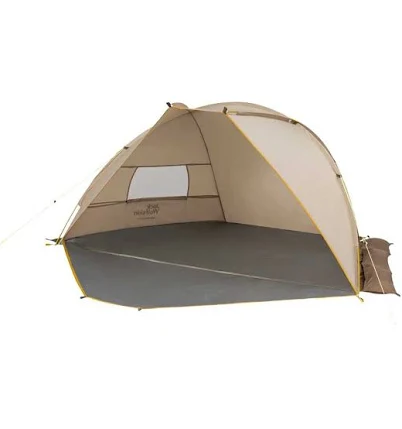
Jack Wolfskin Beach Shelter III
Skip until Jack Wolfskin discloses water-repellent coating chemistry.
This polyester tent includes a typical water-repellent treatment, but Jack Wolfskin provides no information on its chemistry. Many outdoor brands default to fluorinated coatings.
Still want this one anyway? Check the price on Amazon. We’d swap it.
Material
Polyester with water-repellent coating (water-repellent coating) coating
Brand disclosure
Brand is silent on PFAS
Lab data
No public lab test
What Jack Wolfskin Beach Shelter III is made of, ingredients and materials
The Beach Shelter III is constructed from polyester fabric with a water-repellent coating (water-repellent coating) coating applied to the outer surface. water-repellent coating coatings on camping textiles are typically either fluorinated (PFAS-based) or, increasingly, fluorine-free alternatives, but Jack Wolfskin has not publicly disclosed which chemistry they use. Polyester itself is stable and does not leach significantly into skin or food under normal use, but the water-repellent coating finish is the material of concern for this product.
What’s concerning
Category baseline
The starting point for this type of product, before anything specific to this product is counted.
No PFAS disclosure
No public statement from the brand about PFAS in this product.
Waterproof / stain-resistant treatment
Water-repellent coating treatments have historically used PFAS.
water-repellent coating (water-repellent coating) coating leachables - fluorinated vs. fluorine-free unknown
The active water-repellent coating chemistry is not disclosed by Jack Wolfskin. If fluorinated (PFAS-based), leaching risk is low during normal dry use but increases with washing, abrasion, or degradation. Fluorine-free water-repellent coating alternatives exist but are not confirmed for this model.
Polyester fiber shedding and microfiber release during washing
Polyester textiles shed microfibers, especially when agitated or washed repeatedly. While not unique to this brand, frequent laundering of the Beach Shelter III will generate microplastic particles; hand washing minimizes but does not eliminate this.
Seam sealing compound off-gassing
Beach shelters typically use polyurethane or silicone seam sealants. New units may emit low-level VOCs; airing the shelter outdoors before first use reduces this exposure. No specific data on Jack Wolfskin seam sealant chemistry is available.
UV degradation and coating embrittlement over time
Polyester water-repellent coating coatings degrade under UV and thermal cycling. Extended outdoor storage without protection will cause the coating to crack, peel, or become brittle, potentially increasing fiber shedding and any associated chemical exposure if the coating was fluorinated.
What’s reassuring
Formaldehyde / VOCs
No specific recalls or testing results are on record for Jack Wolfskin camping textiles regarding formaldehyde resins or azo dye contamination. Polyester used by mainstream outdoor brands is generally subject to OEKO-TEX or equivalent screening, though Jack Wolfskin does not publicly certify this model.
Source, ATSDR ↗The full breakdown
The brand's record and disclosure
Jack Wolfskin, owned by Pinewood Group, does not maintain a public PFAS disclosure policy or list of PFAS-free product lines as of available records. The brand has not voluntarily committed to phasing out fluorinated water-repellent coating chemistry or publishing supplier chemical declarations for their outdoor textiles. This silence is typical of mid-tier outdoor brands but stands in contrast to competitors (e.g., Patagonia, Arcteryx) who have published water-repellent coating transition roadmaps. Without direct confirmation from the manufacturer, the water-repellent coating chemistry remains a black box.
How it compares in its category
Beach shelters and pop-up tents in this price and brand tier almost universally use some form of water repellent coating; fluorinated water-repellent coating is still the industry default for durability and UV resistance. Competitors with similar specs (e.g., Coleman, Ozark Trail) face the same undisclosed water-repellent coating issue. Higher-end brands (Helinox, Big Agnes) increasingly market PFAS-free or fluorine-free water-repellent coating but at higher cost. In the mainstream camping category, this product is representative of the PFAS-unknown middle.
If you buy it
Do not machine wash or tumble dry; hand wash with mild soap and cold water to preserve the water-repellent coating and minimize any potential release of coating chemicals. Avoid prolonged skin contact with wet fabric immediately after heavy rain, as coating degradation can accelerate leaching. Inspect seams and fabric annually for wear or peeling; once the water-repellent coating visibly delaminates or loses water repellency, replacement is advisable because re-coating with aftermarket treatments introduces additional chemical variables. Store dry and well ventilated to prevent mold and off-gassing.
What we don’t know
- Basis
- Model estimate, 35% confidence, not a lab result
- Lab test
- None on record for this exact product
- Brand statement
- Jack Wolfskin has made none
Formulations change between production runs, so check the current label. How we grade.
More camping tents & tarps grades
How we score, every product runs through the same public 0-100 rubric based on materials, coatings, brand disclosure, lab findings, and recalls. See the full methodology → Spotted a mistake? Report an error.