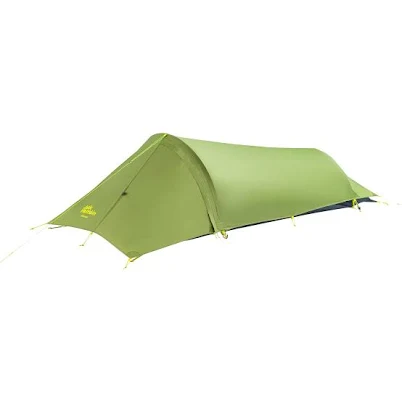
Jack Wolfskin · Camping Tents & Tarps
Jack Wolfskin Gossamer Tent
Skip until Jack Wolfskin discloses water-repellent coating chemistry or switches to PFAS-free alternatives.
This polyester tent includes water-repellent treatment typical of outdoor tents but Jack Wolfskin refuses to reveal its chemistry. Traditional coatings often contain PFAS.
Still want this one anyway? Check the price on Amazon. We’d swap it.
Material
Polyester with water-repellent coating (water-repellent coating) coating
Brand disclosure
Brand is silent on PFAS
Lab data
No public lab test
What Jack Wolfskin Gossamer Tent is made of, ingredients and materials
The Gossamer Tent uses polyester fabric as its primary material, a synthetic polymer chosen for lightweight strength and water resistance. Jack Wolfskin applies a water-repellent coating (water-repellent coating) coating to achieve its water-shedding performance, which is essential for a camping tent but remains chemically undisclosed. Most modern water-repellent coating coatings historically relied on fluorinated compounds (PFAS), though some brands have migrated to fluorine-free alternatives in recent years. Without explicit confirmation from Jack Wolfskin about their specific water-repellent coating chemistry, the fluorine content and persistence in the environment cannot be ruled out.
What’s concerning
Category baseline
The starting point for this type of product, before anything specific to this product is counted.
No PFAS disclosure
No public statement from the brand about PFAS in this product.
Waterproof / stain-resistant treatment
Water-repellent coating treatments have historically used PFAS.
PFAS
Jack Wolfskin has not disclosed whether the Gossamer's water-repellent coating contains PFAS or fluorine-free alternatives. Industry history suggests many polyester tents of this generation use fluorinated compounds; confirmation is essential before purchase if PFAS avoidance is a priority.
Source, ATSDR ↗Polyester fiber degradation and microfiber shedding
Repeated folding, UV exposure, and mechanical wear can cause polyester fabrics to shed microfibers, which may be inhaled during setup or camping. This is a general polyester hazard, not specific to Jack Wolfskin, but relevant for long-term tent use in enclosed spaces.
Coating leaching under heat or humidity
If the water-repellent coating contains PFAS, prolonged exposure to humid conditions, condensation inside the tent, or summer heat may facilitate slow leaching of fluorinated compounds into stored water or food. Long-term internal air quality in a sealed tent during extended camping is not quantified.
What’s reassuring
Heavy metals
No reported incidents of heavy metals (lead, cadmium, arsenic) in Gossamer tent dyes. Polyester fabric dyeing in modern European-regulated facilities typically meets textile safety limits, but Jack Wolfskin does not publish third-party test results for this product.
Source, FDA ↗Formaldehyde / VOCs
No public record of formaldehyde concerns in Gossamer tents. Polyester-to-polyester seam sealing and water-repellent coating applications are unlikely to employ formaldehyde resins, but unconfirmed coating chemistry means residual cross-reactivity cannot be entirely ruled out.
Source, ATSDR ↗The full breakdown
The brand's record and disclosure
Jack Wolfskin, owned by Pinewood Sports, has not publicly disclosed detailed water-repellent coating chemistry for its tent products or committed to PFAS-free standards as of available records. The brand has not faced major product safety recalls related to coating toxicity or chemical leaching in recent years, but transparency gaps around chemical additives remain. No third-party certifications (Bluesign, OEKO-TEX, etc.) covering chemical restrictions are prominently marketed for this tent model. The brand's silence on PFAS is a significant omission given widespread industry awareness of fluorinated compound concerns.
How it compares in its category
Many competing ultralight tents from brands like Big Agnes, MSR, and Naturehike have begun disclosing non-fluorinated or low-PFAS water-repellent coating treatments in marketing or technical documentation. Jack Wolfskin's lack of transparency places this tent in a weaker position from a consumer-choice standpoint, even if the product itself performs adequately. Polyester as a tent fabric is mainstream and well-established; the Gossamer's differentiation rests on the water-repellent coating system, which is precisely where the disclosure gap exists. Consumers prioritizing chemical disclosure will find clearer commitments elsewhere in the $200-400 ultralight tent segment.
If you buy it
Contact Jack Wolfskin directly before purchase and request written confirmation of water-repellent coating chemistry (specifically, whether it contains PFAS or similar fluorinated compounds). Store the tent in a cool, dry place away from direct heat; polyester itself is stable and will not degrade into harmful off-gases under normal camping use. Do not attempt to re-seal or re-coat the tent yourself without identifying what coating was originally applied, as mismatched products could compromise water resistance or introduce unknown chemicals. If you prioritize avoiding PFAS, defer purchase until the brand provides transparent technical documentation.
What we don’t know
- Basis
- Model estimate, 35% confidence, not a lab result
- Lab test
- None on record for this exact product
- Brand statement
- Jack Wolfskin has made none
Formulations change between production runs, so check the current label. How we grade.
More camping tents & tarps grades
How we score, every product runs through the same public 0-100 rubric based on materials, coatings, brand disclosure, lab findings, and recalls. See the full methodology → Spotted a mistake? Report an error.