Jack Wolfskin · Camping Tents & Tarps
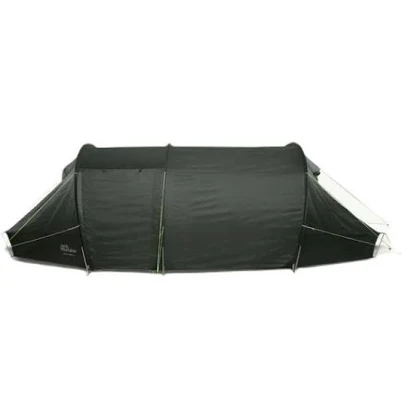
Jack Wolfskin North Tunnel III Tent
Skip or contact Jack Wolfskin for coating transparency.
This tunnel tent uses polyester with water-repellent coating that Jack Wolfskin refuses to specify. Most outdoor tents in this category use fluorocarbon-based treatments.
Still want this one anyway? Check the price on Amazon. We’d swap it.
Material
Polyester fabric with water-repellent coating (water-repellent coating) coating
Brand disclosure
Brand is silent on PFAS
Lab data
No public lab test
What Jack Wolfskin North Tunnel III Tent is made of, ingredients and materials
The North Tunnel III uses polyester fabric as its primary structure, which is inherently stable and does not off-gas formaldehyde or volatile organics under normal camping conditions. The critical concern is the water-repellent coating (water-repellent coating) coating applied to make the fabric water-resistant. water-repellent coating coatings historically rely on fluorochemicals to achieve water and oil repellency; the specific chemistry of Jack Wolfskin's coating is not publicly disclosed. This coating degradation over repeated washings can also release fine particles, though polyester itself does not break down into microplastics under typical use.
What’s concerning
Category baseline
The starting point for this type of product, before anything specific to this product is counted.
No PFAS disclosure
No public statement from the brand about PFAS in this product.
Waterproof / stain-resistant treatment
Water-repellent coating treatments have historically used PFAS.
PFAS
Jack Wolfskin does not disclose whether the North Tunnel III's water-repellent coating uses legacy fluorochemicals (PFOA/PFOS), newer short-chain PFAS, or non-fluorinated alternatives. Assumption that polyester outdoor coatings typically rely on fluorochemistry is well-established, but this specific product's formula is unknown.
Source, ATSDR ↗What’s reassuring
Coating degradation and inhalation/ingestion particles
No recalls or reports of coating flaking or respiratory issues from this model exist. Polyester water-repellent coating coatings typically degrade gradually rather than shed large particles; risk of intentional inhalation or ingestion under normal camping use is negligible.
Flame retardants
Polyester fabric itself is moderately flame-resistant by nature; no evidence that Jack Wolfskin applies additional flame-retardant chemistry to this tent. This is consistent with modern camping tent practice and no hazard is identified.
Source, EPA ↗VOC off-gassing from polyester and adhesives
New polyester tents may have mild new-product odor from adhesives and sealants, but this dissipates within days to weeks and poses no established health risk. The North Tunnel III has no reported odor or off-gassing incidents.
The full breakdown
The brand's record and disclosure
Jack Wolfskin, owned by Scandinavian Outdoor Group, has not published detailed transparency statements on PFAS use in tent coatings or broader chemical management policies. The brand holds no known OEKO-TEX or bluesign certifications that would signal third-party chemical screening. No recalls or safety controversies specific to this model are on record. The brand's silence on water-repellent coating chemistry is consistent with many outdoor brands but represents a gap in consumer transparency.
How it compares in its category
Most three-season tunnel tents in this price and performance tier use polyester with fluorinated water-repellent coating coatings; Jack Wolfskin is not exceptional in this regard. Competitors like MSR and Big Agnes similarly do not disclose water-repellent coating composition on consumer-facing materials. Brands offering explicit PFAS-free or fluorine-free options (e.g., Naturehike, some Kelty models) are less common but available if PFAS avoidance is a priority. The North Tunnel III's waterproofing performance is reliable and typical for the category, not a differentiator in either direction.
If you buy it
Store the tent dry and avoid long-term exposure to direct sunlight when not in use, as UV can degrade synthetic coatings over time. Wash the exterior only with plain water or mild detergent; avoid hot water or machine washing, which can strip the water-repellent coating. Do not use the tent as a ground cover or tarp substitute, as ground contact accelerates coating wear. Replace or retreat the water-repellent coating every 1-2 years if frequent heavy rain exposure is expected; contact Jack Wolfskin for approved re-treatment products.
What we don’t know
- Basis
- Model estimate, 45% confidence, not a lab result
- Lab test
- None on record for this exact product
- Brand statement
- Jack Wolfskin has made none
Formulations change between production runs, so check the current label. How we grade.
More camping tents & tarps grades
How we score, every product runs through the same public 0-100 rubric based on materials, coatings, brand disclosure, lab findings, and recalls. See the full methodology → Spotted a mistake? Report an error.