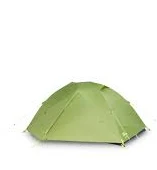
Jack Wolfskin · Camping Tents & Tarps
Jack Wolfskin Skyrocket II Dome Tent
Skip until Jack Wolfskin discloses water-repellent coating chemistry.
This dome tent uses polyester treated with water-repellent coating to shed moisture. Jack Wolfskin provides no disclosure about whether fluorochemicals are used.
Still want this one anyway? Check the price on Amazon. We’d swap it.
Material
Polyester fabric with water-repellent coating (water-repellent coating) coating
Brand disclosure
Brand is silent on PFAS
Lab data
No public lab test
What Jack Wolfskin Skyrocket II Dome Tent is made of, ingredients and materials
The Skyrocket II uses polyester fabric, a synthetic polymer that itself is chemically stable and does not off-gas formaldehyde or volatile organic compounds under normal camping conditions. The critical unknown is the water-repellent coating (water-repellent coating) coating applied to the polyester. Traditional water-repellent coating coatings historically relied on PFAS (PFAS "forever chemicals") to achieve water resistance; modern alternatives exist but are not universally adopted. Jack Wolfskin has not publicly disclosed whether this tent uses legacy PFAS-based water-repellent coating or a PFAS-free alternative, leaving the chemical composition opaque to consumers.
What’s concerning
Category baseline
The starting point for this type of product, before anything specific to this product is counted.
No PFAS disclosure
No public statement from the brand about PFAS in this product.
Waterproof / stain-resistant treatment
Water-repellent coating treatments have historically used PFAS.
PFAS
Polyester water-repellent coating coatings historically contain PFAS; Jack Wolfskin has not disclosed whether this tent uses PFAS-based or alternative chemistry. Unconfirmed risk remains the primary safety concern for this product.
Source, ATSDR ↗What’s reassuring
Polyester Degradation Under UV/Heat
Polyester fabric itself is stable but can degrade and shed microfibers after years of sun exposure or repeated washing. This is a long-term durability issue, not an acute hazard, and affects most polyester tents similarly.
Flame retardants
Polyester is naturally flame-retardant and does not typically require additional flame retardant chemical coatings. No evidence of added flame retardants in this model; no hazard reported.
Source, EPA ↗Formaldehyde / VOCs
Polyester fabric does not use formaldehyde-releasing resins; formaldehyde risk is absent in this material category and no off-gassing is expected during normal use.
Source, ATSDR ↗Heavy metals
No recalls or test reports document heavy metal contamination in Jack Wolfskin tent dyes. Modern polyester dye processes rarely involve lead or cadmium, and no specific concern exists for this product.
Source, FDA ↗The full breakdown
The brand's record and disclosure
Jack Wolfskin is owned by Pinewood Group and operates under European safety standards, which generally exceed North American baselines. However, the brand has not published a formal PFAS reduction commitment or transparency statement regarding their tent coating chemistry. No product recalls, contamination findings, or third-party test results for this specific model are on record in public databases. The company's silence on water-repellent coating chemistry is a compliance and communication gap rather than evidence of active harm.
How it compares in its category
Most dome tents in this price and performance tier (3-season recreational camping) use water-repellent coating-coated polyester; the Skyrocket II is typical, not an outlier. Some competitors (e.g., REI Co-op branded tents, Nemo) have begun disclosing PFAS-free or PFAS-reduced coatings in response to consumer demand. Jack Wolfskin's lack of disclosure puts it in the middle of the market, not a leader in transparency, but not worse than many mainstream outdoor brands. Upgrading to a brand with explicit PFAS-free certification would reduce unconfirmed chemical risk.
If you buy it
Store the tent dry and in shade to prevent accelerated degradation of the water-repellent coating, which can break down over 3-5 years of regular use or UV exposure. Do not machine wash or use hot water; gentle hand rinse with cool water and mild soap only. If coating degrades visibly (water beads less, pools on fabric), the tent remains functional but loses weather efficiency; re-application kits exist but require careful product selection to avoid PFAS-based products. Before purchase, contact Jack Wolfskin customer service directly to request the technical data sheet (TDS) for the water-repellent coating; if they decline to provide it, that refusal itself is a signal to reconsider.
What we don’t know
- Basis
- Model estimate, 35% confidence, not a lab result
- Lab test
- None on record for this exact product
- Brand statement
- Jack Wolfskin has made none
Formulations change between production runs, so check the current label. How we grade.
More camping tents & tarps grades
How we score, every product runs through the same public 0-100 rubric based on materials, coatings, brand disclosure, lab findings, and recalls. See the full methodology → Spotted a mistake? Report an error.