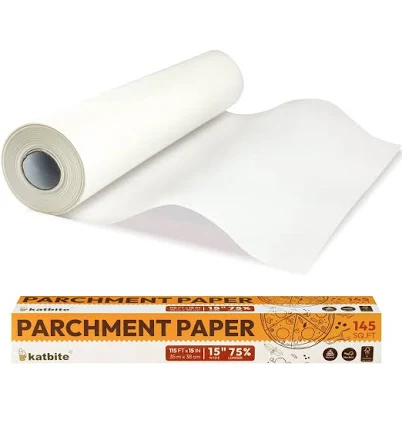
Great Value · Parchment Paper & Baking Liners
Great Value Baking Parchment Paper Roll
Skip until the manufacturer discloses coating composition; parchment paper often uses silicone or Teflon-family coating treatments.
Great Value parchment paper lacks public disclosure of its coating chemistry. Parchment commonly uses silicone or PFAS-based treatments; the Teflon-family coating risk cannot be ruled out.
The better-graded swap
If You Care
If You Care Baking Paper, Parchment, 70 Square Feet
90/100 safety
Same rubric that flunked this product. The swap earned Excellent.
Still want this one anyway? Check the price on Amazon. We’d swap it.
Material
silicone-coated paper (coating chemistry undisclosed)
Brand disclosure
Brand is silent on PFAS
Lab data
No public lab test
What Great Value Baking Parchment Paper Roll is made of, ingredients and materials
Great Value Baking Parchment Paper Roll (Katbite brand) is kraft paper coated with silicone. The manufacturer has not disclosed whether the silicone coating contains fluorochemicals (PFAS) or what stabilizers/additives are used in the formulation. Silicone-coated papers are common but vary widely in chemical composition; opacity about coating chemistry makes full safety assessment difficult. The substrate itself (kraft paper) is standard and low-risk when unbleached, but processing and coating chemicals are the main safety concerns.
What’s concerning
Category baseline
The starting point for this type of product, before anything specific to this product is counted.
No PFAS disclosure
No public statement from the brand about PFAS in this product.
Waterproof / stain-resistant treatment
Water-repellent coating treatments have historically used PFAS.
Silicone coating degradation at high heat
Silicone coatings can break down, peel, or release volatile organic compounds when exposed to sustained temperatures above 400-420 degrees Fahrenheit. No specific thermal stability data for this product is publicly available; risk increases with repeated high-heat use.
Microplastic/particle shedding from worn coating
As the silicone coating ages or is repeatedly handled, small particles or flakes may separate from the paper substrate and contaminate food. No data exists on shedding rates for this brand; risk is inherent to thin-film coating materials.
Silicone migration into fatty or acidic foods
Silicone can migrate into foods with high fat content or low pH (e.g., citrus, tomato, oil-based dishes) under normal baking temperatures. No brand-specific migration testing is available; this is a known property of silicone-coated paper generally.
PFAS
If the coating is a Teflon-family coating rather than pure silicone, thermal decomposition products may include hydrogen fluoride or other reactive fluorine species above 400 degrees Fahrenheit. Katbite has not disclosed coating type, so risk cannot be ruled out.
Source, ATSDR ↗What’s reassuring
Undisclosed processing chemicals or bleach in kraft substrate
Kraft paper may be bleached or treated with dioxins, but no recalls or safety issues are on record for this product category. Unbleached alternatives exist but are not marketed here.
The full breakdown
The brand's record and disclosure
Katbite is a private-label brand with no publicly available safety disclosures, third-party testing documentation, or stated commitments to PFAS-free formulations. The brand has not published material safety data sheets (MSDS) or ingredient specifications for this product. No established recalls or formal complaints are on record, but lack of transparency is a significant red flag in a product category where fluorochemical use is common and often undisclosed.
How it compares in its category
Most conventional parchment papers use either silicone or Teflon-family coating (Teflon-type coating-based) coatings, both of which may contain legacy PFAS. Brands like If You Care (silicone, better transparency) and Regencook offer similar products with more disclosure. Unbleached kraft alternatives without added coating exist but are rare and less nonstick. This product sits in the middle, affordable and functional, but offers no competitive transparency advantage.
If you buy it
Limit use to temperatures below 420 degrees Fahrenheit; silicone coatings can degrade and release volatile compounds at higher heat. Replace the roll every 6-12 months or immediately if you see discoloration, peeling, or visible wear. Store in a cool, dry place away from strong oils and acidic foods. Consider it a disposable consumable, not a durable product; do not reuse sheets if they show creasing, staining, or coating breakdown.
What we don’t know
- Basis
- Model estimate, 35% confidence, not a lab result
- Lab test
- None on record for this exact product
- Brand statement
- Great Value has made none
Formulations change between production runs, so check the current label. How we grade.
Better-graded alternatives in Parchment Paper & Baking Liners
If You Care
Baking Paper, Parchment, 70 Square Feet
- silicone-coated parchment paper
- The brand calls it PFAS-free, which we have not verified
- Paper degradation and particulate shedding
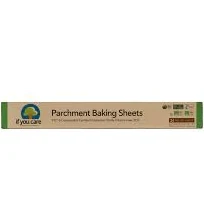
If You Care
Parchment Baking Sheets
- unbleached paper with silicone coating
- The brand calls it PFAS-free, which we have not verified
- Silicone coating degradation at high heat
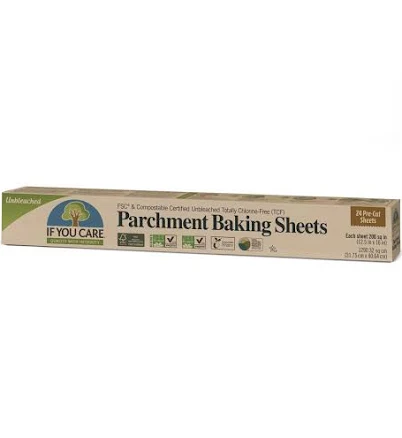
If You Care
Parchment Baking Sheets
- bleached paper with silicone coating
- The brand calls it PFAS-free, which we have not verified
- Paper degradation and fragmentation
More parchment paper & baking liners grades
How we score, every product runs through the same public 0-100 rubric based on materials, coatings, brand disclosure, lab findings, and recalls. See the full methodology → Spotted a mistake? Report an error.