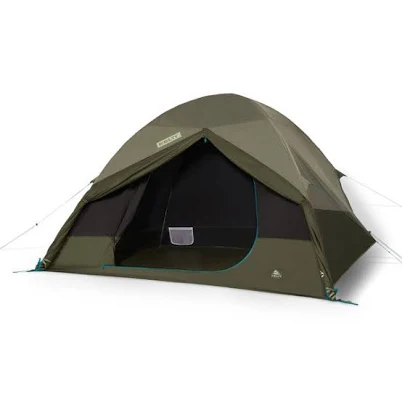
Quest Outdoors Daydreamer 4 Person Tent
Higher concern due to unspecified water-repellent coating with no PFAS disclosure.
This tent has polyester fabric with a water-repellent coating, but the coating chemistry is not stated. Quest has no PFAS statement on record for this product. Water-repellent treatments on outdoor tents have historically used PFAS.
Still want this one anyway? Check the price on Amazon. We’d swap it.
Material
Polyester tent fabric with unspecified water-repellent coating
Brand disclosure
Brand is silent on PFAS
Lab data
No public lab test
You may also be interested in
Top-graded picks in the categories readers replace first, every one scored on the same rubric.

Aqua Pure
3M Aqua-Pure AP802B Whole House Filter Housing
- polypropylene filter housing, carbon/sediment cartridge
- We found no PFAS statement from the brand
- Bacterial growth in spent cartridges
3 hazards checked on this product. See all of them.

Aquasure
Premier Series 75 GPD Under Sink Reverse Osmosis Water Filtration System
- RO membrane, carbon filters, stainless steel housing
- We found no PFAS statement from the brand
- Bacterial and microbial growth in housing and filters
4 hazards checked on this product. See all of them.

Avocado
Vegan Mattress
- organic cotton, natural latex, coconut coir, recycled steel coils
- The brand calls it PFAS-free, which we have not verified
- Heavy metals
2 hazards checked on this product. See all of them.
What Quest Outdoors Daydreamer 4 Person Tent is made of, ingredients and materials
The Daydreamer uses polyester tent fabric, a synthetic material that does not inherently leach toxins into skin or food. However, the unspecified water-repellent coating (water-repellent coating) coating applied to polyester is the chemical wildcard; historically most outdoor tent coatings contained Teflon-type coating or fluorine-based compounds to achieve water resistance. Kelty has not publicly disclosed whether this tent uses PFAS-free or PFAS-containing water-repellent coating. Polyester itself is stable under normal camping conditions and poses minimal risk if the coating remains intact.
What’s concerning
Category baseline
The starting point for this type of product, before anything specific to this product is counted.
No PFAS disclosure
No public statement from the brand about PFAS in this product.
Waterproof / stain-resistant treatment
Water-repellent coating treatments have historically used PFAS.
PFAS
Polyester tent water-repellent coating coatings historically contain fluorinated compounds; Kelty's refusal to disclose suggests uncertainty or PFAS use. Direct skin contact is low during setup, but volatile off-gassing in enclosed tent interiors during hot weather has not been formally studied for consumer tents.
Source, ATSDR ↗Mold and bacterial growth if stored wet
Polyester fabric itself does not promote mold, but if stored damp the coating can trap moisture and create anaerobic pockets. Inhaling mold spores during subsequent use poses respiratory irritation, especially in children or asthmatics.
Coating degradation and microfiber shedding
Water-repellent coating coatings degrade under UV and mechanical stress; peeling or flaking fragments may shed into sleeping areas. While polyester microfibers in air are not acutely toxic, long-term inhalation effects are not well characterized in consumer products.
What’s reassuring
Formaldehyde / VOCs
Consumer polyester camping tents are not typically treated with formaldehyde-releasing resins (unlike apparel or industrial textiles), and no recalls or complaints for off-gassing specific to Kelty tents are documented. Risk is theoretical but not established.
Source, ATSDR ↗Ventilation and CO poisoning risk from stoves
This is not a chemical hazard in the tent material itself, but a usage hazard, running fuel stoves or charcoal inside any closed tent, including this one, can produce deadly CO. Proper ventilation is mandatory and is a user responsibility, not a product defect.
The full breakdown
The brand's record and disclosure
Kelty (owned by Johnson Outdoor Products) has not issued public statements on PFAS use in tent coatings or a commitment to fluorine-free alternatives. The company provides minimal technical transparency on water-repellent coating chemistry across its product line. No major recalls or health controversies specific to Kelty tents have been documented in public health databases. This silence on an industry-wide chemical concern is a significant transparency gap, not evidence of safety.
How it compares in its category
Most budget and mid-range polyester tents (Coleman, Ozark Trail, ALPS Mountaineering) similarly withhold water-repellent coating details. Premium brands like Big Agnes and REI Co-op have begun offering PFAS-free or PFC-free tent lines, though at higher price points. The Daydreamer sits in a typical disclosure vacuum for its market segment. Switching to a brand with explicit PFAS-free labeling would eliminate this uncertainty.
If you buy it
Store the tent dry and well-ventilated to avoid mold and microbial growth in the fabric; never store wet. Do not apply additional waterproofing treatments unless specifically labeled PFAS-free, as DIY sprays often contain Teflon-type coating. Inspect seams and coatings annually for peeling or degradation; a failing water-repellent coating may allow water infiltration and increase mold risk. Assume the tent will need replacement in 5-10 years depending on UV exposure and use frequency; do not rely on it for permanent outdoor storage.
What we don’t know
- Basis
- Model estimate, 45% confidence, not a lab result
- Lab test
- None on record for this exact product
- Brand statement
- Quest has made none
Formulations change between production runs, so check the current label. How we grade.
More camping tents & tarps grades
How we score, every product runs through the same public 0-100 rubric based on materials, coatings, brand disclosure, lab findings, and recalls. See the full methodology → Spotted a mistake? Report an error.