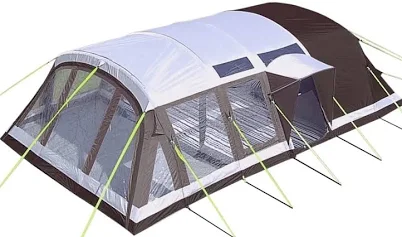
Khyam Airtek 6 Tent
Tent waterproofing treatment unspecified, skip unless brand discloses.
Khyam doesn't publicly state PFAS content or waterproof treatment details for this tent. Coating source and makeup stay completely undisclosed.
Still want this one anyway? Check the price on Amazon. We’d swap it.
Material
Polyester fabric with unspecified waterproof coating
Brand disclosure
Brand is silent on PFAS
Lab data
No public lab test
You may also be interested in
Top-graded picks in the categories readers replace first, every one scored on the same rubric.

Aqua Pure
3M Aqua-Pure AP802B Whole House Filter Housing
- polypropylene filter housing, carbon/sediment cartridge
- We found no PFAS statement from the brand
- Bacterial growth in spent cartridges
3 hazards checked on this product. See all of them.

Aquasure
Premier Series 75 GPD Under Sink Reverse Osmosis Water Filtration System
- RO membrane, carbon filters, stainless steel housing
- We found no PFAS statement from the brand
- Bacterial and microbial growth in housing and filters
4 hazards checked on this product. See all of them.

Avocado
Vegan Mattress
- organic cotton, natural latex, coconut coir, recycled steel coils
- The brand calls it PFAS-free, which we have not verified
- Heavy metals
2 hazards checked on this product. See all of them.
What Khyam Airtek 6 Tent is made of, ingredients and materials
The Khyam Airtek 6 uses polyester fabric, a synthetic polymer that is chemically stable under normal camping conditions and resistant to mildew and UV degradation. The waterproof coating on the fabric is not specified by the manufacturer, which is the primary safety concern for this product. Polyester itself does not off-gas formaldehyde or volatile organic compounds at ambient temperatures, but the adhesive or resin used to bond the coating to the fabric could be a source of VOC emissions if poorly formulated.
What’s concerning
No PFAS disclosure
No public statement from the brand about PFAS in this product.
Category baseline
The starting point for this type of product, before anything specific to this product is counted.
Waterproof / stain-resistant treatment
Water-repellent coating treatments have historically used PFAS.
Waterproof coating composition (unspecified)
Khyam does not publish the chemical identity of the coating. If it is a legacy polyurethane or acrylic resin system, VOC off-gassing is possible in poorly ventilated packed storage, though unlikely at typical camping ventilation. This is the primary non-PFAS hazard for this product.
Polyester fiber degradation and microplastic shedding
Polyester fabrics can fragment when aged, UV-exposed, or subjected to abrasion, potentially releasing microfibers into soil or water. The Airtek 6 offers no stated UV stabilization or anti-degrade treatment, so long-term outdoor storage accelerates this risk.
Coating peeling and inhalation during breakdown
If the waterproof coating degrades prematurely (e.g., peeling or flaking), users may inhale fine particles during setup or handling. No durability warranty or re-coating service is documented for this brand.
What’s reassuring
Heavy metals
Polyester fabric used in tents is not typically in direct contact with food or skin at high temperatures, so migration of azo dyes or antimony from polyester is a low practical risk, but the brand provides no dye-safety certification.
Source, FDA ↗Flame retardants
No public information indicates whether this tent carries flame retardant treatments. UK and US tents are not mandated to be flame-retardant, so none is assumed unless the product sheet states otherwise.
Source, EPA ↗The full breakdown
The brand's record and disclosure
Khyam is a UK-based tent manufacturer with no public record of third-party safety certifications, environmental testing, or materials transparency reports. The company does not publicly disclose the composition of waterproofing treatments used on their tents, which is standard industry transparency for premium brands. No major recalls or safety controversies have been documented for Khyam products, but the absence of disclosure on coating chemistry leaves exposure assessment incomplete.
How it compares in its category
Many mainstream tent brands (e.g., The North Face, Coleman) now disclose whether their waterproof coatings are Teflon-type coating-based, PU-based, or silicone-based, and some certify against PFAS content. Khyam's silence on this point places it below the transparency standard of mid-range competitors. Budget tents often omit disclosure, but at Khyam's price point, specification sheets should include coating type and durability claims.
If you buy it
Store the tent in a cool, dry place away from direct sunlight when not in use to minimize coating degradation and any potential off-gassing in confined spaces. Inspect seams and the fabric surface annually for flaking, peeling, or discoloration, which signal coating breakdown; replace the tent if waterproofing fails significantly. Do not use the tent as a tarp on the ground in direct heat or flame. Clean with mild soap and water only; avoid solvents that may strip or degrade the coating.
What we don’t know
- Basis
- Model estimate, 35% confidence, not a lab result
- Lab test
- None on record for this exact product
- Brand statement
- Khyam has made none
Formulations change between production runs, so check the current label. How we grade.
More camping tents & tarps grades
How we score, every product runs through the same public 0-100 rubric based on materials, coatings, brand disclosure, lab findings, and recalls. See the full methodology → Spotted a mistake? Report an error.