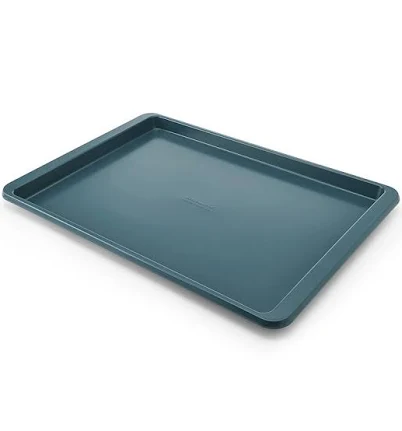
KitchenAid Nonstick Aluminized Steel Baking Sheet Color/Finish
Skip until KitchenAid reveals the nonstick coating type.
KitchenAid won't say what nonstick coating this baking sheet has. Teflon-type coating, silicone, ceramic, or other Teflon-family coating all remain unknown.
The better-graded swap

Caraway
Caraway Nonstick Ceramic Large Baking Sheet
90/100 safety
Same rubric that flunked this product. The swap earned Excellent.
Still want this one anyway? Check the price on Amazon. We’d swap it.
Material
Aluminized steel with unspecified nonstick coating
Lab data
No public lab test
Is KitchenAid Nonstick Aluminized Steel non-toxic? What it is made of
This baking sheet combines a steel substrate with an aluminum coating layer (aluminizing improves heat distribution) topped with an unspecified nonstick surface treatment. The nonstick layer is the critical unknown, KitchenAid has not publicly disclosed whether it uses traditional Teflon-type coating (Teflon-type), ceramic, silicone, or alternative chemistries. The aluminized steel itself does not leach aluminum at normal baking temperatures, but the integrity of the nonstick coating and any thermal degradation it may undergo affects overall safety.
What’s concerning
Category baseline
The starting point for this type of product, before anything specific to this product is counted.
No PFAS disclosure
No public statement from the brand about PFAS in this product.
Non-stick, chemistry undisclosed
Marketed as non-stick without stating the coating chemistry.
Nonstick coating thermal degradation and fume release
If the coating contains Teflon-type coating or other high-heat-sensitive polymers, overheating (above manufacturer specs, usually 400-500F) may cause the nonstick layer to break down and release fumes. KitchenAid's failure to disclose coating chemistry means the exact fume risk profile cannot be assessed; other brands with disclosed Teflon-type coating coatings typically include clear warnings and safe-use limits.
Coating degradation and microparticle release with use
Repeated heating, cooling, and mechanical contact (utensils, washing) can cause nonstick coatings to chip or flake over time. Ingestion of microscopic particles from a degraded coating is of uncertain toxicity, but it is a known failure mode in nonstick bakeware; undisclosed coating chemistry makes it harder to predict how quickly or severely this occurs with this specific product.
Disclosure gap and purchase-decision uncertainty
Multiple consumer safety organizations and independent retailers have flagged KitchenAid's lack of nonstick coating transparency as a concern. This is not a direct health hazard but rather a failure to provide information necessary for informed choice, particularly for buyers seeking to avoid PFAS.
What’s reassuring
Aluminum leaching from substrate
The underlying aluminized steel does not leach aluminum into food during normal baking (baking is not acidic contact like boiling or storing acidic foods). Aluminized baking sheets have no hazard of this kind on record according to major food safety authorities including the FDA.
Lead
This product uses a nonstick polymer coating, not an enamel or ceramic glaze, so traditional lead/cadmium glazing hazards do not apply. KitchenAid's manufacturing is subject to US safety standards, which prohibit lead in cookware; no recalls for lead contamination in this product line are on record.
Source, ATSDR ↗The full breakdown
The brand's record and disclosure
KitchenAid (owned by Whirlpool) has not issued transparent statements about PFAS-free certification or detailed nonstick chemistry for this product line. The brand does not appear on public PFAS-free registries or certifications (e.g. No major recalls specific to this baking sheet model have been documented, but the silence on coating chemistry is a significant transparency gap compared to competitors who explicitly market Teflon-type coating-free or PFAS-free alternatives.
How it compares in its category
Uncoated aluminized steel baking sheets and ceramic-coated alternatives are increasingly available and offer the same performance without coating ambiguity. Premium brands like GreenPan and OXO explicitly state PFAS-free nonstick chemistry; budget and mid-tier options from Calphalon and Rachael Ray have begun phasing toward disclosed coatings. KitchenAid's refusal to disclose puts it behind the transparency curve in a category where coating disclosure is now routine.
If you buy it
Contact KitchenAid directly and request written confirmation of the nonstick coating type and PFAS status before purchasing. Do not exceed 400-500F (typical nonstick safety limits), hand wash only, and avoid metal utensils and abrasive scrubbers that degrade the coating. Replace if the nonstick surface chips, flakes, or visibly deteriorates. Store in a cool, dry place to minimize thermal cycling that can weaken the coating bond over time.
What we don’t know
- Basis
- Model estimate, 35% confidence, not a lab result
- Lab test
- None on record for this exact product
- Brand statement
- Kitchenaid has made a specific claim
Formulations change between production runs, so check the current label. How we grade.
Better-graded alternatives in Bakeware
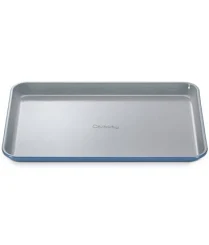
Caraway
Nonstick Ceramic Medium Baking Sheet
- ceramic nonstick coating
- A third party reports verifying it as PFAS-free
- Ceramic coating degradation over time
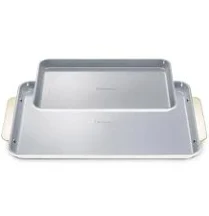
Caraway
Ceramic Nonstick Baking Sheet Duo
- ceramic nonstick coating
- A third party reports verifying it as PFAS-free
- Coating degradation and durability
2 hazards checked on this product. See all of them.
Caraway
Nonstick Ceramic Large Baking Sheet
- ceramic nonstick coating
- The brand calls it PFAS-free, which we have not verified
- Ceramic coating degradation and particle shedding
3 hazards checked on this product. See all of them.
More bakeware grades
How we score, every product runs through the same public 0-100 rubric based on materials, coatings, brand disclosure, lab findings, and recalls. See the full methodology → Spotted a mistake? Report an error.