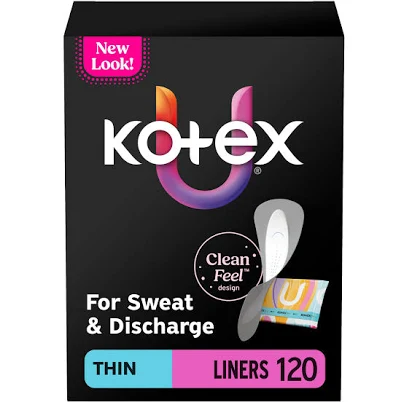
Kotex Core Daily Wrapped Liners
Lower PFAS concern; standard period-liner materials without disclosed water-resistance treatment.
These liners use cotton and rayon without water-repellent coatings that typically require PFAS. The brand provides no PFAS information or third-party testing.
We flunk more products than we pass. This one earned its grade. How we grade
Material
cotton, rayon, adhesive (nonwoven blend)
Lab data
No public lab test
You may also be interested in
Top-graded picks in the categories readers replace first, every one scored on the same rubric.

- polypropylene filter housing, carbon/sediment cartridge
- We found no PFAS statement from the brand
- Bacterial growth in spent cartridges
3 hazards checked on this product, all on its full breakdown.

Aquasure
Premier Series 75 GPD Under Sink Reverse Osmosis Water Filtration System
- RO membrane, carbon filters, stainless steel housing
- We found no PFAS statement from the brand
- Bacterial and microbial growth in housing and filters
4 hazards checked on this product, all on its full breakdown.

Avocado
Vegan Mattress
- organic cotton, natural latex, coconut coir, recycled steel coils
- The brand calls it PFAS-free, which we have not verified
- Heavy metals
2 hazards checked on this product, all on its full breakdown.
What Kotex Core Daily Wrapped Liners is made of, ingredients and materials
Kotex Core Daily liners use a nonwoven blend of cotton and rayon (viscose) as the absorbent core, with synthetic adhesive on the backing for adherence to underwear. Cotton is a natural fiber with low chemical reactivity; rayon is regenerated cellulose and similarly stable when used in thin personal-care applications. The adhesive is the variable component and is typically a synthetic polymer (acrylate or rubber-based), which poses minimal leaching risk under normal body-temperature exposure in this low-moisture application.
What’s concerning
Category baseline
The starting point for this type of product, before anything specific to this product is counted.
No PFAS disclosure
No public statement from the brand about PFAS in this product.
Synthetic adhesive leachables
The backing adhesive is not chemically characterized in public materials for this product. Acrylate and rubber-based adhesives used in panty liners are generally considered stable under skin-contact conditions at body temperature, but data on migration into genital skin microbiome is limited.
Fragrance allergens (if scented variant)
Kotex Core Daily is available in both scented and unscented versions. Scented variants carry typical fragrance-allergen risk (limonene, linalool, etc.) common to all scented period-care products; genital skin sensitivity is more common in this category than with unscented.
Microplastic shedding from nonwoven backing
Synthetic nonwoven backings can shed microfibers, though panty liners are single-use and brief-contact, minimizing dermal exposure compared to reusables. No quantified shedding data is publicly available for this specific product.
PFAS
Kotex does not disclose whether water-resistant treatment is applied to Core Daily liners. Given the category assessment of lower PFAS concern (no heavy water-repellency claims), treatment is less likely than in premium or scented variants, but absence of statement means uncertain exposure.
Source, ATSDR ↗What’s reassuring
Base material not linked to PFAS
The main material recorded for this product is not one associated with PFAS.
Heavy metals
Rayon production uses sodium hydroxide and carbon disulfide, with potential trace formaldehyde or metal residues in finished fiber. No specific testing or recalls have been reported for Kotex panty liners; rayon safety in thin personal-care products is considered standard practice.
Source, FDA ↗How is this PFAS grade calculated?
The brand's record and disclosure
Kotex (Kimberly-Clark subsidiary) does not publicly disclose detailed material certifications, chemical testing, or supply-chain audits for this product line. The brand has faced no major recalls or contamination scandals specific to panty liners in recent public records. They have not made explicit statements about PFAS use or avoidance in period-care products, leaving water-resistance treatment status unclear. No third-party certifications (e.g., Oeko-Tex, Cradle to Cradle) are claimed for this product.
How it compares in its category
Panty liners as a category carry lower chemical-exposure risk than pads or tampons because absorbency demands are minimal and products are thinner. Kotex Core Daily is mainstream/conventional tier, positioned between budget brands and premium organic alternatives like Cora or Rael. Material composition (cotton-rayon blend) is industry standard and does not differentiate it significantly; the main variance in the category is PFAS water-resistance coatings, which are common in mass-market brands but often undisclosed. Pricing and accessibility suggest no premium safety investment relative to competitors.
If you buy it
No special storage or handling precautions are necessary; standard pantry-dry conditions are sufficient. Replace after each use as intended; liners are single-use disposable and degradation or adhesive failure is not a practical concern over hours. If you experience skin irritation, consider sensitivity to fragrance (if scented variant) or synthetic adhesive, and switch to unscented or hypoallergenic alternatives. Check ingredient/material lists on packaging if allergies to rayon or synthetic polymers are a concern, though reactions are rare.
What is not known about PFAS in this product?
- Basis
- Model estimate, 72% confidence, not a lab result
- Lab test
- None on record for this exact product
- Brand statement
- Kotex has made a specific claim
Formulations change between production runs, so check the current label. How we grade.
More panty liners grades
How we score, every product runs through the same public 0-100 rubric based on materials, coatings, brand disclosure, lab findings, and recalls. See the full methodology → Spotted a mistake? Report an error.