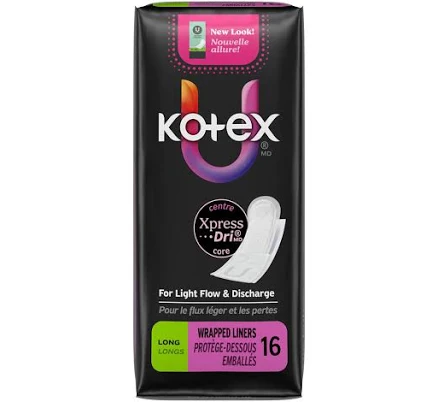
Kotex Wrapped Liners
Lower PFAS concern for this product type, but Kotex provides no transparency on coating materials.
These liners have an absorbent core without known water-repellent finishes that would trigger PFAS use. Kotex has not disclosed coating materials or PFAS status.
We flunk more products than we pass. This one earned its grade. How we grade
Material
Cellulose/cotton absorbent core with adhesive backing
Lab data
No public lab test
You may also be interested in
Top-graded picks in the categories readers replace first, every one scored on the same rubric.

- polypropylene filter housing, carbon/sediment cartridge
- We found no PFAS statement from the brand
- Bacterial growth in spent cartridges
3 hazards checked on this product, all on its full breakdown.

Aquasure
Premier Series 75 GPD Under Sink Reverse Osmosis Water Filtration System
- RO membrane, carbon filters, stainless steel housing
- We found no PFAS statement from the brand
- Bacterial and microbial growth in housing and filters
4 hazards checked on this product, all on its full breakdown.

Avocado
Vegan Mattress
- organic cotton, natural latex, coconut coir, recycled steel coils
- The brand calls it PFAS-free, which we have not verified
- Heavy metals
2 hazards checked on this product, all on its full breakdown.
What Kotex Wrapped Liners is made of, ingredients and materials
Kotex Wrapped Liners use a cellulose and cotton absorbent core, which are naturally biodegradable materials with minimal chemical processing risk compared to fully synthetic alternatives. The adhesive backing is typically acrylate-based, a standard low-volatility choice for personal care products. The wrapper is non-woven material designed to keep the product clean and intact during storage and use. This material combination poses no known leaching risk during normal use since the product does not contact heat sources or food.
What’s concerning
Category baseline
The starting point for this type of product, before anything specific to this product is counted.
No PFAS disclosure
No public statement from the brand about PFAS in this product.
Adhesive skin contact sensitization
Acrylate adhesives are generally non-toxic but can trigger localized contact dermatitis or allergic reactions in a small percentage of users with sensitive skin. Kotex does not disclose specific adhesive formulation, making individual risk assessment difficult.
Fragrance allergens (if present)
Kotex Wrapped Liners are sold in both fragrance and fragrance-free versions. Fragranced variants may contain synthetic fragrance compounds, some of which are known skin sensitizers; the full fragrance mixture is typically undisclosed on packaging.
What’s reassuring
Base material not linked to PFAS
The main material recorded for this product is not one associated with PFAS.
Dye or pigment skin contact
No documented cases of harmful dye migration from Kotex panty liners. Non-woven materials used are typically colorant-inert, and the product design (adhesive side to underwear) minimizes dye contact with skin.
Microplastic generation from degradation
Cellulose-cotton cores do not shed microplastics during normal use. The non-woven wrapper and adhesive backing may fragment if disposed improperly (e.g., flushed), but the product is not designed to be water-dispersible and poses no inherent microplastic release hazard during intended use.
Chlorine residues or bleach byproducts
Kotex does not disclose bleaching processes for cellulose, but absorbent hygiene products are generally bleached to acceptable safety limits by industry standards. No recall or complaint history suggests excessive chlorine or dioxin residues.
How is this PFAS grade calculated?
The brand's record and disclosure
Kotex (Kimberly-Clark subsidiary) has not published detailed ingredient lists or third-party safety certifications for this specific product line, which limits transparency but is not unusual in this category. The brand has faced no major product recalls or safety violations documented in FDA or CPSC records for panty liners. Kotex does not publicly disclose PFAS testing or management practices, leaving uncertainty around water-resistant coatings, though industry consensus suggests panty liners carry lower PFAS risk than menstrual pads due to minimal liquid barrier requirements.
How it compares in its category
Panty liners are generally lower-hazard than full menstrual pads because they contain less absorbent material and require fewer chemical additives. Kotex Wrapped Liners sit in the mainstream market tier, not the most transparent (some brands now publish PFAS pledges) but not flagged for quality issues. Organic cotton alternatives exist but command higher cost and offer marginal safety advantage for this low-contact product. The wrapped format is a mild plus for hygiene during storage but does not materially affect chemical safety.
If you buy it
Store in a cool, dry place to preserve adhesive integrity; panty liners do not degrade or leach from environmental stress the way cookware or containers might. Replace the product every 3-4 hours during use, or sooner if saturation occurs, to avoid microbial growth (a hygiene issue, not a manufacturing hazard). If you have sensitive skin or react to adhesives, test on a small area first; fragrance and dye sensitivities are rare but documented in some users. No special care or heating concerns apply to this product.
What is not known about PFAS in this product?
- Basis
- Model estimate, 72% confidence, not a lab result
- Lab test
- None on record for this exact product
- Brand statement
- Kotex has made a specific claim
Formulations change between production runs, so check the current label. How we grade.
More panty liners grades
How we score, every product runs through the same public 0-100 rubric based on materials, coatings, brand disclosure, lab findings, and recalls. See the full methodology → Spotted a mistake? Report an error.