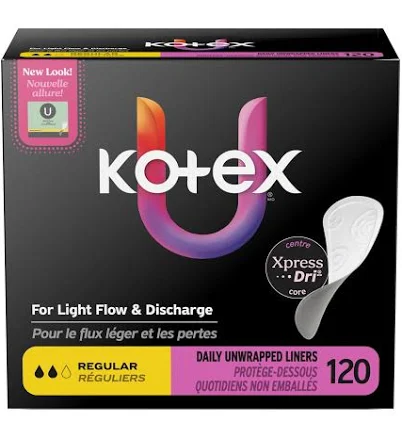
Kotex Regular Liners 120ct
Don't buy until the brand reveals the waterproof coating material.
These liners have a waterproof backing layer, a common spot for PFAS-based water-repellent treatments. Kotex won't disclose what's in that layer.
The better-graded swap
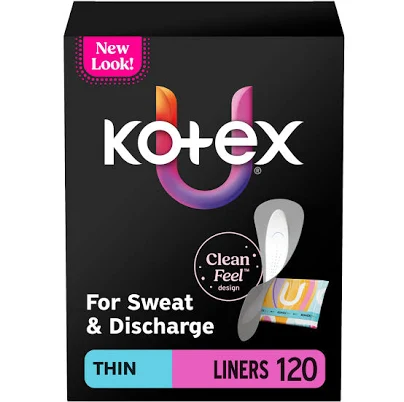
Kotex
Kotex Core Daily Wrapped Liners
70/100 safety
Same rubric that flunked this product. The swap earned Good.
Still want this one anyway? Check the price on Amazon. We’d swap it.
Material
Nonwoven synthetic blend with waterproof backing layer
Lab data
No public lab test
You may also be interested in
Top-graded picks in the categories readers replace first, every one scored on the same rubric.

- polypropylene filter housing, carbon/sediment cartridge
- We found no PFAS statement from the brand
- Bacterial growth in spent cartridges
3 hazards checked on this product, all on its full breakdown.

Aquasure
Premier Series 75 GPD Under Sink Reverse Osmosis Water Filtration System
- RO membrane, carbon filters, stainless steel housing
- We found no PFAS statement from the brand
- Bacterial and microbial growth in housing and filters
4 hazards checked on this product, all on its full breakdown.

Avocado
Vegan Mattress
- organic cotton, natural latex, coconut coir, recycled steel coils
- The brand calls it PFAS-free, which we have not verified
- Heavy metals
2 hazards checked on this product, all on its full breakdown.
What Kotex Regular Liners 120ct is made of, ingredients and materials
Kotex Regular Liners use a nonwoven synthetic blend (typically polypropylene or polyethylene fibers) with a waterproof backing layer to prevent leakage. The backing layer composition is not publicly disclosed by Kotex, which is the critical gap, waterproof coatings on menstrual products often rely on Teflon-type coating (Teflon), polyurethane, or fluorinated polymers to achieve water resistance. Without material transparency, users cannot assess PFAS exposure risk from direct contact with the vulva over hours of daily use.
What’s concerning
Category baseline
The starting point for this type of product, before anything specific to this product is counted.
No PFAS disclosure
No public statement from the brand about PFAS in this product.
Waterproof / stain-resistant treatment
Water-repellent coating treatments have historically used PFAS.
Teflon-type coating or fluorinated polymer fume/leaching (undisclosed waterproof coating)
Waterproof backing layer material is not disclosed by Kotex. Fluorinated coatings are common in this product category and create PFAS exposure risk during manufacturing, use, and disposal; vulvar contact over hours daily increases absorption potential relative to other textiles.
Synthetic fiber shedding or microfiber release
Nonwoven polypropylene blends can shed microfibers, especially with repeated folding or friction against skin. Direct vulvar contact with shed fibers is unlikely to cause acute harm but chronic exposure is not well-studied in menstrual product wearers.
Skin irritation from sizing agents or adhesives
Nonwoven textiles often use starch or acrylic-based sizing; adhesive strips may contain acrylics or silicone. Kotex does not publicly disclose adhesive or sizing chemistry. Individuals with sensitive vulvar skin, eczema, or contact dermatitis may experience irritation, particularly with prolonged wear.
What’s reassuring
Formaldehyde / VOCs
Nonwoven manufacturing sometimes involves formaldehyde-based binders to cross-link fibers, but Kotex products are not known to carry residual formaldehyde complaints or recalls. Standard industry processing typically removes or polymerizes residual formaldehyde below typical safety thresholds.
Source, ATSDR ↗Chlorine bleaching byproducts (dioxins)
Kotex liners are not white-bleached to the extent of some tampons, and dioxin contamination in menstrual products is not documented as a current concern in the United States or EU regulatory literature. This hazard class is low priority for this product.
How is this PFAS grade calculated?
The brand's record and disclosure
Kotex (Kimberly-Clark subsidiary) has not publicly committed to PFAS-free formulations or disclosed waterproof coating materials in product documentation. The brand has faced criticism from environmental and health advocates for silence on PFAS use in menstrual products, a category where prolonged vaginal contact creates unique exposure pathways. No major recalls or safety controversies specific to Kotex liners are documented in consumer safety databases, but the absence of proactive disclosure is a red flag in an increasingly scrutinized product category.
How it compares in its category
Kotex liners occupy the mainstream, mass-market tier. Brands like Seventh Generation and some private labels have explicitly committed to PFAS-free waterproof layers, while traditional competitors (Always, Kotex) remain opaque. On price and availability, Kotex is competitive and widely accessible, but transparency-focused consumers report preferring smaller brands or organic alternatives that disclose coating materials. The category itself has not faced mandatory disclosure rules, so silence is standard industry practice rather than unique to Kotex.
If you buy it
Change liners every 4-8 hours to minimize skin contact time, which reduces any potential PFAS or coating particle migration risk. Store in a cool, dry place; exposure to heat or moisture does not degrade the backing layer under normal use conditions. If you experience irritation, contact dermatitis, or unusual odor, discontinue and switch to a brand with disclosed materials. Monitor for any brand announcements about waterproof coating reformulation; request material safety data from Kotex customer service if you have health sensitivities.
What is not known about PFAS in this product?
- Basis
- Model estimate, 45% confidence, not a lab result
- Lab test
- None on record for this exact product
- Brand statement
- Kotex has made a specific claim
Formulations change between production runs, so check the current label. How we grade.
What are the PFAS-free alternatives to Kotex Regular Liners 120ct?
- cotton, rayon, adhesive (nonwoven blend)
- Synthetic adhesive leachables
4 hazards checked on this product, all on its full breakdown.
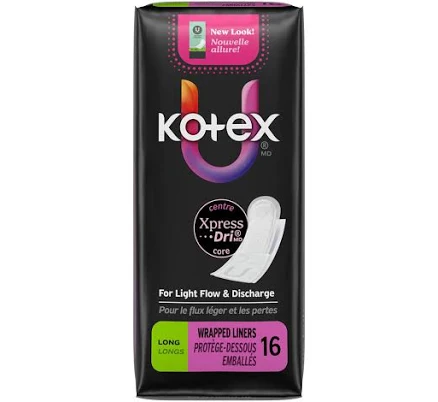
- Cellulose/cotton absorbent core with adhesive backing
- Adhesive skin contact sensitization
2 hazards checked on this product, all on its full breakdown.
More panty liners grades
How we score, every product runs through the same public 0-100 rubric based on materials, coatings, brand disclosure, lab findings, and recalls. See the full methodology → Spotted a mistake? Report an error.