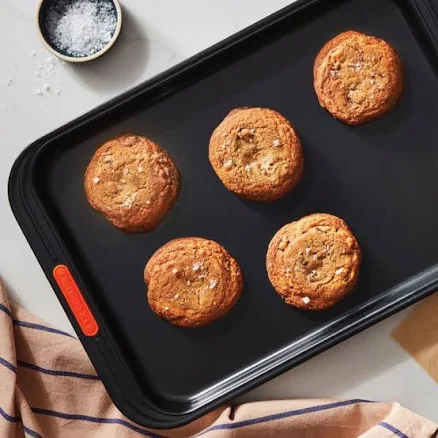
Le Creuset Jelly Roll/Large Pan, Is It Non-Toxic?
Good choice, enameled cast iron sidesteps PFAS nonstick coatings entirely.
Le Creuset's enameled cast iron uses a glass-based enamel, not Teflon-family coating nonstick. The brand stays quiet on PFAS, but the material itself carries far less risk than traditional nonstick cookware.
The better-graded swap
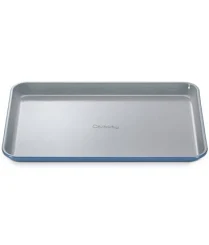
Caraway
Caraway Nonstick Ceramic Medium Baking Sheet
100/100 safety
Same rubric that flunked this product. The swap earned Excellent.
Still want this one anyway? Check the price on Amazon. We’d swap it.
Material
enameled cast iron
Lab data
No public lab test
You may also be interested in
Top-graded picks in the categories readers replace first, every one scored on the same rubric.

- polypropylene filter housing, carbon/sediment cartridge
- We found no PFAS statement from the brand
- Bacterial growth in spent cartridges
3 hazards checked on this product, all on its full breakdown.

Aquasure
Premier Series 75 GPD Under Sink Reverse Osmosis Water Filtration System
- RO membrane, carbon filters, stainless steel housing
- We found no PFAS statement from the brand
- Bacterial and microbial growth in housing and filters
4 hazards checked on this product, all on its full breakdown.

Avocado
Vegan Mattress
- organic cotton, natural latex, coconut coir, recycled steel coils
- The brand calls it PFAS-free, which we have not verified
- Heavy metals
2 hazards checked on this product, all on its full breakdown.
Is Le Creuset Jelly Roll/Large Pan non-toxic? What it is made of
Le Creuset's Jelly Roll is enameled cast iron, a steel mold coated in a fused glass-ceramic enamel layer. The enamel itself is inorganic silicate-based, not polymeric, so it does not off-gas volatile organics or PFOA/Teflon-type coating. Cast iron underneath provides heat retention; the enamel barrier prevents direct iron leaching into food under normal use. Durability depends entirely on enamel integrity, since cast iron will rust and leach if bare.
What’s concerning
No PFAS disclosure
No public statement from the brand about PFAS in this product.
Category baseline
The starting point for this type of product, before anything specific to this product is counted.
Enamel coating degradation and cast iron exposure
Chipped or cracked enamel exposes bare cast iron, which can leach iron into acidic foods (tomato sauce, vinegar) over time. Risk is low under normal storage and use but increases with mechanical damage or thermal stress.
Thermal shock cracking of enamel
User reports and product reviews document enamel crazing or chipping after rapid temperature changes or impacts. This is a known wear mode, not a toxicity hazard, but it can lead to rust and iron leaching if unaddressed.
What’s reassuring
Base material not linked to PFAS
The main material recorded for this product is not one associated with PFAS.
Lead
No documented lead or cadmium contamination in Le Creuset enameled cookware. EU regulations (which apply to Le Creuset, made in France) set strict limits on soluble lead in cookware; mass-market brands pass this standard.
Source, ATSDR ↗Aluminum leaching
This product is cast iron, not aluminum, so aluminum leaching is not a concern.
Teflon-type coating fume risk (nonstick degradation)
Enameled cast iron does not use Teflon-type coating or other nonstick polymers; fume risk from overheating is absent.
How is this PFAS grade calculated?
The brand's record and disclosure
Le Creuset has no documented safety recalls, manufacturing violations, or public controversies regarding heavy metals or coating toxins in their enameled cookware. The brand does not publish detailed chemical composition or third-party test reports on their website, which is typical for established European manufacturers but limits independent verification. Their silence on PFAS reflects confidence in their non-nonstick manufacturing; no PFAS was ever part of their enameled product line.
How it compares in its category
Enameled cast iron bakeware (Le Creuset, Staub, Lodge) is a gold standard in the bakeware category because it avoids synthetic coatings entirely. Non-stick alternatives (Teflon-type coating or ceramic-coated steel) carry fume risk if overheated or scratched; uncoated steel requires seasoning and has higher rust risk. Le Creuset commands a premium price but justifies it through lifetime durability and absence of coating-related failure modes.
If you buy it
Keep enamel dry after washing to prevent rust at rim seams; avoid sudden temperature shock (hot pan to cold water) which can crack enamel. Maximum safe oven temperature is typically 400-500F depending on lid; check your manual. If enamel chips or flakes visibly, the pan is still usable but monitor exposed cast iron for rust development. Enameled cast iron lasts decades if enamel stays intact; replacement is only necessary if cracks become widespread or handle hardware fails.
What is not known about PFAS in this product?
- Basis
- Model estimate, 82% confidence, not a lab result
- Lab test
- None on record for this exact product
- Brand statement
- Le Creuset has made a specific claim
Formulations change between production runs, so check the current label. How we grade.
What are the PFAS-free alternatives to Le Creuset Jelly Roll/Large Pan?
- ceramic nonstick coating
- A third party reports verifying it as PFAS-free
- Ceramic coating degradation over time
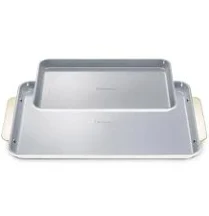
- ceramic nonstick coating
- A third party reports verifying it as PFAS-free
- Coating degradation and durability
2 hazards checked on this product, all on its full breakdown.
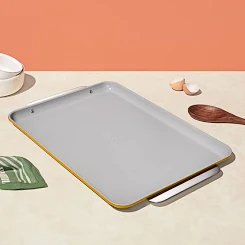
- ceramic nonstick coating
- The brand calls it PFAS-free, which we have not verified
- Ceramic coating degradation and particle shedding
3 hazards checked on this product, all on its full breakdown.
More bakeware grades
How we score, every product runs through the same public 0-100 rubric based on materials, coatings, brand disclosure, lab findings, and recalls. See the full methodology → Spotted a mistake? Report an error.