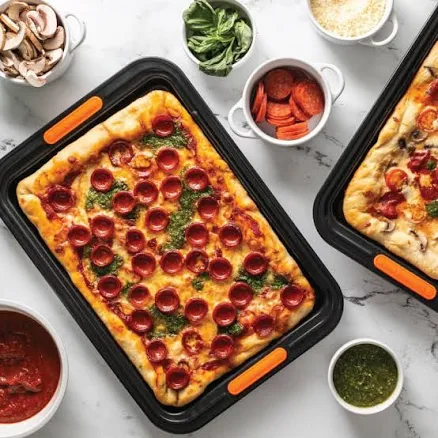
Le Creuset Non-Stick Bakeware Swiss Roll Tin, Is It Non-Toxic?
Avoid until Le Creuset reveals its nonstick coating chemistry.
Le Creuset's Swiss Roll Tin has a nonstick coating of unknown makeup. The brand doesn't specify Teflon-type coating use or claim PFAS-free status, leaving risk unclear.
The better-graded swap
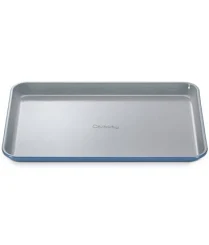
Caraway
Caraway Nonstick Ceramic Medium Baking Sheet
100/100 safety
Same rubric that flunked this product. The swap earned Excellent.
Still want this one anyway? Check the price on Amazon. We’d swap it.
Material
Enameled steel with non-stick coating (type unspecified)
Lab data
No public lab test
You may also be interested in
Top-graded picks in the categories readers replace first, every one scored on the same rubric.

- polypropylene filter housing, carbon/sediment cartridge
- We found no PFAS statement from the brand
- Bacterial growth in spent cartridges
3 hazards checked on this product, all on its full breakdown.

Aquasure
Premier Series 75 GPD Under Sink Reverse Osmosis Water Filtration System
- RO membrane, carbon filters, stainless steel housing
- We found no PFAS statement from the brand
- Bacterial and microbial growth in housing and filters
4 hazards checked on this product, all on its full breakdown.

Avocado
Vegan Mattress
- organic cotton, natural latex, coconut coir, recycled steel coils
- The brand calls it PFAS-free, which we have not verified
- Heavy metals
2 hazards checked on this product, all on its full breakdown.
Is Le Creuset Non-Stick Swiss Roll Tin non-toxic? What it is made of
This Swiss roll tin combines enameled steel (the base) with an unspecified non-stick surface coating. The enamel layer is typically a ceramic-fused glaze applied at high temperature, which is inherently stable. However, the non-stick coating composition remains undisclosed by Le Creuset, creating uncertainty about whether it contains PFAS or alternative fluorine-free chemistries. The enamel itself is unlikely to leach lead or cadmium in modern Le Creuset products, as the brand has faced no recalls for heavy metals in cookware enamels, but the mystery non-stick layer is the critical unknown.
What’s concerning
Category baseline
The starting point for this type of product, before anything specific to this product is counted.
No PFAS disclosure
No public statement from the brand about PFAS in this product.
Non-stick, chemistry undisclosed
Marketed as non-stick without stating the coating chemistry.
Non-stick coating fume inhalation (identity unconfirmed)
If the unidentified coating is Teflon-type coating-based, overheating above the smoke point (typically 500°F+) could release Teflon-type coating fumes; lower risk at normal baking temperatures under 400°F, but the absence of disclosed chemistry prevents precise assessment.
Coating degradation and microparticle shedding
Non-stick coatings on all bakeware degrade over time with use and heat cycling; flaking particles entering food is possible with any non-stick product if coating integrity fails, though incidence is low with careful handling.
PFAS
The unspecified non-stick coating may contain PFAS, but without disclosure, presence cannot be confirmed or ruled out; this ambiguity is the primary reason for the 'care' verdict.
Source, ATSDR ↗What’s reassuring
Lead
Le Creuset has no recorded recalls for heavy metal contamination in cookware enamels, and modern enamel formulations are regulated; this hazard is a known low-risk in the brand's product history.
Source, ATSDR ↗Aluminum substrate leaching (if applicable)
This product is enameled steel, not aluminum; aluminum leaching is not a concern for this specific item.
How is this PFAS grade calculated?
The brand's record and disclosure
Le Creuset has not published transparency statements about non-stick coating chemistry or PFAS presence in their bakeware lines. The brand maintains high manufacturing standards for enameled cast iron and cookware generally, with no established history of coating failure recalls affecting this product model. However, their silence on fluorinated versus non-fluorinated non-stick systems is notably inconsistent with competitors like Caraway and GreenPan, who explicitly market PFAS-free alternatives. This lack of disclosure is the primary concern, not evidence of actual harm.
How it compares in its category
Non-stick bakeware typically uses either Teflon-type coating-based coatings (higher durability, PFAS concerns) or ceramic or silicone alternatives (lower non-stick performance, fewer chemical concerns). Le Creuset's refusal to specify positions this product in an ambiguous middle ground, it carries the brand's reputation for durability but lacks the transparency competitors provide. Alternatives like silicone baking mats or ceramic-coated steel offer lower uncertainty at similar or lower price points, though they may require more careful handling.
If you buy it
Use this tin at temperatures below 400°F (204°C) to minimize any off-gassing risk from the non-stick coating, regardless of chemistry. Do not preheat empty; always place food in first. Hand wash to extend coating life; dishwasher use may accelerate degradation. Inspect the non-stick surface annually for flaking, discoloration, or wear; once coating integrity is compromised, discontinue use. Before purchase, contact Le Creuset customer service to request the specific non-stick coating type; their response will inform your decision.
What is not known about PFAS in this product?
- Basis
- Model estimate, 35% confidence, not a lab result
- Lab test
- None on record for this exact product
- Brand statement
- Le Creuset has made a specific claim
Formulations change between production runs, so check the current label. How we grade.
What are the PFAS-free alternatives to Le Creuset Non-Stick Bakeware Swiss Roll Tin?
- ceramic nonstick coating
- A third party reports verifying it as PFAS-free
- Ceramic coating degradation over time
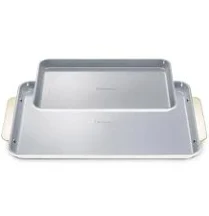
- ceramic nonstick coating
- A third party reports verifying it as PFAS-free
- Coating degradation and durability
2 hazards checked on this product, all on its full breakdown.
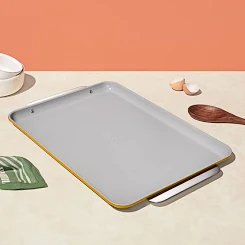
- ceramic nonstick coating
- The brand calls it PFAS-free, which we have not verified
- Ceramic coating degradation and particle shedding
3 hazards checked on this product, all on its full breakdown.
More bakeware grades
How we score, every product runs through the same public 0-100 rubric based on materials, coatings, brand disclosure, lab findings, and recalls. See the full methodology → Spotted a mistake? Report an error.