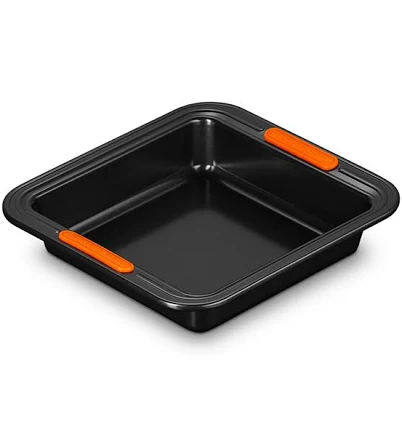
Le Creuset Non-stick Metal Bakeware Square Cake Pan, Is It Non-Toxic?
Avoid unless Le Creuset discloses its nonstick coating chemistry.
Le Creuset won't disclose the nonstick coating on this steel cake pan, leaving PFAS-based Teflon-family coating unruled out. No PFAS-free claim or verification exists.
The better-graded swap
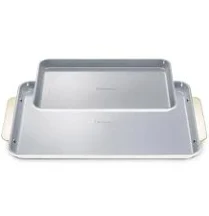
Caraway
Caraway Ceramic Nonstick Baking Sheet Duo
100/100 safety
Same rubric that flunked this product. The swap earned Excellent.
Still want this one anyway? Check the price on Amazon. We’d swap it.
Material
Steel with non-stick coating (type unspecified)
Lab data
No public lab test
You may also be interested in
Top-graded picks in the categories readers replace first, every one scored on the same rubric.

- polypropylene filter housing, carbon/sediment cartridge
- We found no PFAS statement from the brand
- Bacterial growth in spent cartridges
3 hazards checked on this product, all on its full breakdown.

Aquasure
Premier Series 75 GPD Under Sink Reverse Osmosis Water Filtration System
- RO membrane, carbon filters, stainless steel housing
- We found no PFAS statement from the brand
- Bacterial and microbial growth in housing and filters
4 hazards checked on this product, all on its full breakdown.

Avocado
Vegan Mattress
- organic cotton, natural latex, coconut coir, recycled steel coils
- The brand calls it PFAS-free, which we have not verified
- Heavy metals
2 hazards checked on this product, all on its full breakdown.
Is Le Creuset Non-stick Metal Square Cake Pan non-toxic? What it is made of
This pan is steel substrate with a proprietary non-stick coating. Le Creuset does not publicly specify whether the coating is Teflon-type coating-based (traditional Teflon-type), ceramic, silicone, or another chemistry. Steel itself is chemically inert and food-safe. The coating's composition is what determines safety hazards around fume release, leaching, and durability under heat and mechanical stress.
What’s concerning
Category baseline
The starting point for this type of product, before anything specific to this product is counted.
No PFAS disclosure
No public statement from the brand about PFAS in this product.
Non-stick, chemistry undisclosed
Marketed as non-stick without stating the coating chemistry.
Non-stick coating degradation and fume release
The unidentified non-stick coating may release gases if overheated (above manufacturer temperature limits) or if the coating is Teflon-type coating-based. Degraded or chipped coating increases risk of inhalation exposure. Without chemistry disclosure, the safe temperature ceiling cannot be independently verified.
Coating leaching into food
As the coating ages or flakes, microscopic particles or leached compounds from the coating matrix may transfer to baked foods, especially acidic or fat-rich items. Steel substrate underneath is not a material linked to PFAS, but the coating is the exposure pathway.
Thermal stress and coating adhesion loss
Non-stick coatings on thin steel can delaminate or wear unevenly with repeated heating cycles. Baking pans experience wider temperature swings than stovetop cookware, accelerating wear. Visible flaking or chipping has been noted in user reviews of similar non-stick bakeware after 2-3 years.
Dishwasher chemical interaction
Alkaline dishwasher detergents can degrade non-stick coatings faster than hand washing. Steel substrate will not corrode, but the coating bond may weaken, leading to earlier peeling and replacement need.
What’s reassuring
Lead
No recalls or documented contamination of Le Creuset non-stick coatings for heavy metals in pigments have been reported. Modern non-stick formulations do not typically rely on lead or cadmium colorants, but absence of public testing does not guarantee absence of trace impurities.
Source, ATSDR ↗How is this PFAS grade calculated?
The brand's record and disclosure
Le Creuset, a heritage cookware brand owned by Groupe SEB, has not published detailed composition or PFAS disclosure for this non-stick bakeware line. The company maintains a relatively quiet public stance on non-stick chemistry compared to competitors like GreenPan or Our Place, which voluntarily disclose Teflon-type coating-free formulations. No major recalls or safety controversies specific to this product line are on record, but the lack of transparency is notable for a premium brand.
How it compares in its category
Non-stick steel bakeware is common in this price range. Le Creuset's reputation for durability is justified for enameled cast iron, but non-stick metal pans from this brand are less differentiated than their iconic Dutch ovens. Competitors like Calphalon and Rachael Ray offer similar steel non-stick pans with more explicit Teflon-type coating-free or ceramic claims. Some premium brands now default to ceramic or silicone non-stick, which carry different (and potentially lower) PFAS exposure profiles.
If you buy it
Hand-wash only to preserve the coating; dishwasher use accelerates wear. Do not preheat empty or use at temperatures above 400F (verify in the manual). Stop using immediately if the coating shows visible flaking, scratching, or peeling, as compromised coating increases potential leaching. Replace every 3-5 years with regular use, sooner if damage appears. Store with soft liners to prevent contact with sharp utensils.
What is not known about PFAS in this product?
- Basis
- Model estimate, 45% confidence, not a lab result
- Lab test
- None on record for this exact product
- Brand statement
- Le Creuset has made a specific claim
Formulations change between production runs, so check the current label. How we grade.
What are the PFAS-free alternatives to Le Creuset Non-stick Metal Bakeware Square Cake Pan?
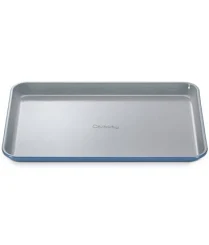
- ceramic nonstick coating
- A third party reports verifying it as PFAS-free
- Ceramic coating degradation over time
- ceramic nonstick coating
- A third party reports verifying it as PFAS-free
- Coating degradation and durability
2 hazards checked on this product, all on its full breakdown.
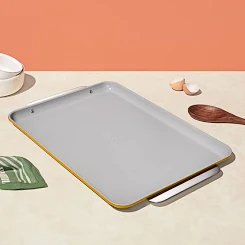
- ceramic nonstick coating
- The brand calls it PFAS-free, which we have not verified
- Ceramic coating degradation and particle shedding
3 hazards checked on this product, all on its full breakdown.
More bakeware grades
How we score, every product runs through the same public 0-100 rubric based on materials, coatings, brand disclosure, lab findings, and recalls. See the full methodology → Spotted a mistake? Report an error.