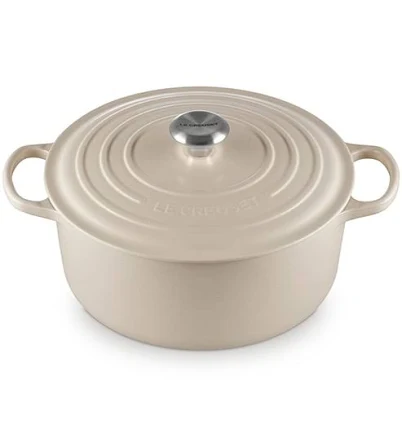
Le Creuset Round Signature Dutch Oven, Is It Non-Toxic?
Lower concern; enameled cast iron isn't a typical PFAS source, though brand silence persists.
Cast iron with a ceramic enamel finish, not a Teflon-family coating or nonstick layer. Le Creuset makes no PFAS claims, but the material itself avoids fluorinated risk.
Still want this one anyway? Check the price on Amazon. We’d swap it.
Material
enameled cast iron (enamel-coated cast iron base)
Lab data
No public lab test
You may also be interested in
Top-graded picks in the categories readers replace first, every one scored on the same rubric.

- polypropylene filter housing, carbon/sediment cartridge
- We found no PFAS statement from the brand
- Bacterial growth in spent cartridges
3 hazards checked on this product, all on its full breakdown.

Aquasure
Premier Series 75 GPD Under Sink Reverse Osmosis Water Filtration System
- RO membrane, carbon filters, stainless steel housing
- We found no PFAS statement from the brand
- Bacterial and microbial growth in housing and filters
4 hazards checked on this product, all on its full breakdown.

Avocado
Vegan Mattress
- organic cotton, natural latex, coconut coir, recycled steel coils
- The brand calls it PFAS-free, which we have not verified
- Heavy metals
2 hazards checked on this product, all on its full breakdown.
Is Le Creuset Round Signature Dutch Oven non-toxic? What it is made of
Le Creuset's signature Dutch oven is cast iron with a vitreous enamel (glass-like) coating applied by the manufacturer. The enamel layer is the food-contact surface and is designed to prevent direct contact between food and the iron base, eliminating iron leaching concerns. Vitreous enamel is chemically inert once cured and does not contain Teflon-type coating (Teflon) or other Teflon-family coating coatings that can off-gas under high heat.
What’s concerning
Category baseline
The starting point for this type of product, before anything specific to this product is counted.
No PFAS disclosure
No public statement from the brand about PFAS in this product.
Enamel degradation and chipping over time
Enameled cookware is durable but not indestructible. Le Creuset's enamel is resistant to normal wear, but thermal shock, dishwasher cycles, and abrasive cleaning can initiate crazing and flaking. Once chipped, exposure of the underlying iron base poses a food-contact risk.
Iron leaching from exposed base
If the enamel coating is compromised and food contacts bare cast iron, iron can leach into acidic or long-cooked dishes. This is a chemical leaching concern, not acute toxicity, but affects taste and can elevate iron intake in vulnerable populations.
Manufacturing transparency and third-party certification
Le Creuset does not provide third-party lab testing, NSF certification, or published safety data sheets for enamel composition. While no hazard has been documented, the lack of transparency limits verification of the brand's safety claims against modern standards.
What’s reassuring
Base material not linked to PFAS
The main material recorded for this product is not one associated with PFAS.
Lead
No documented cases of elevated lead or cadmium in Le Creuset enameled cookware. Modern vitreous enamel used by premium manufacturers typically does not contain these heavy metals, though the brand does not publish independent test results to confirm absence.
Source, ATSDR ↗Teflon-type coating fume risk
Enameled cast iron does not use Teflon-type coating (non-stick Teflon-family coating) coatings. Vitreous enamel is a different chemistry and does not emit fumes at normal cooking temperatures or even at temperatures well above typical stovetop use.
How is this PFAS grade calculated?
The brand's record and disclosure
Le Creuset does not publicly disclose detailed chemical composition of its enamel formulations or provide third-party safety certifications (e.g., NSF, FDA pre-approval documentation). The brand has no documented major product recalls related to cookware safety in the US market. Historically, Le Creuset has faced no widespread reports of enamel breakdown, lead contamination, or coating failure in normal home cooking conditions, though the company remains relatively silent on manufacturing standards and testing protocols.
How it compares in its category
Enameled cast iron Dutch ovens show lower concern for hazard profile compared to many cookware options. Le Creuset is a premium category leader; competitors like Staub (also enameled cast iron) and Lodge (enameled carbon steel and cast iron lines) follow similar material approaches. Unlike non-stick cookware (Teflon-type coating risk), ceramic-coated cookware (possible lead in glazes), or bare cast iron (iron leaching into acidic foods), enameled cast iron poses minimal chemical leaching risk if the enamel remains intact.
If you buy it
Avoid thermal shock, do not expose a hot pot directly to cold water, as this can crack the enamel. Hand wash rather than use a dishwasher if the enamel shows any wear; use soft sponges and avoid abrasive scrubbers that accelerate surface degradation. Once enamel chips or flakes noticeably, discontinue use for cooking to prevent iron particles from entering food. Le Creuset provides a lifetime warranty on manufacturing defects, but cosmetic enamel crazing (fine surface cracks) is cosmetic and not a safety trigger unless it progresses to active chipping.
What is not known about PFAS in this product?
- Basis
- Model estimate, 82% confidence, not a lab result
- Lab test
- None on record for this exact product
- Brand statement
- Le Creuset has made a specific claim
Formulations change between production runs, so check the current label. How we grade.
More dutch ovens grades
How we score, every product runs through the same public 0-100 rubric based on materials, coatings, brand disclosure, lab findings, and recalls. See the full methodology → Spotted a mistake? Report an error.