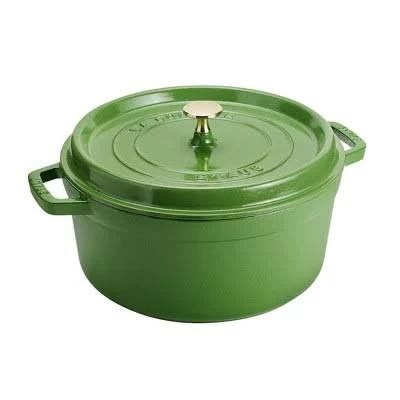
Staub Cast Iron 4-Qt Round Cocotte with Glass Lid, Is It Non-Toxic?
Enameled cast iron with a glass lid, and no non-stick coating on record.
Cast iron body with ceramic enamel coating and a glass lid. Neither cast iron nor enamel relies on Teflon-family coating, and the glass adds no PFAS exposure.
Still want this one anyway? Check the price on Amazon. We’d swap it.
Material
Cast iron with enamel coating; glass lid
Brand disclosure
Brand is silent on PFAS
Lab data
No public lab test
You may also be interested in
Top-graded picks in the categories readers replace first, every one scored on the same rubric.

- polypropylene filter housing, carbon/sediment cartridge
- We found no PFAS statement from the brand
- Bacterial growth in spent cartridges
3 hazards checked on this product, all on its full breakdown.

Aquasure
Premier Series 75 GPD Under Sink Reverse Osmosis Water Filtration System
- RO membrane, carbon filters, stainless steel housing
- We found no PFAS statement from the brand
- Bacterial and microbial growth in housing and filters
4 hazards checked on this product, all on its full breakdown.

Avocado
Vegan Mattress
- organic cotton, natural latex, coconut coir, recycled steel coils
- The brand calls it PFAS-free, which we have not verified
- Heavy metals
2 hazards checked on this product, all on its full breakdown.
Is Staub Cast Iron 4-Qt Round Glass Lid non-toxic? What it is made of
Staub cocotte bodies are cast iron, a chemically inert cookware base that does not leach metals into food under normal cooking conditions. The enamel coating (typically vitreous enamel fused to the iron surface) seals the iron and prevents rust while creating a non-reactive cooking surface. The glass lid is borosilicate, which is thermally stable and does not release harmful compounds at typical stovetop or oven temperatures. This combination has lower concern regarding PFAS-related risks compared to many cookware material profiles.
What’s concerning
Category baseline
The starting point for this type of product, before anything specific to this product is counted.
No PFAS disclosure
No public statement from the brand about PFAS in this product.
Enamel coating degradation and iron exposure
Over decades of use, enamel can chip, craze, or flake, exposing underlying cast iron. Small exposures pose minimal risk, but progressive damage could allow trace iron leaching. Thermal shock and acidic foods (tomato sauce, vinegar) accelerate degradation risk.
Borosilicate glass lid thermal failure
Borosilicate glass is heat-resistant but can crack if exposed to rapid temperature changes or impact. A failed lid creates burn risk and allows steam escape; it is a wear item and may need replacement after 5-10 years of heavy use.
Thermal shock from stovetop to cold water
User reports and product care guides warn that sudden cooling can cause both enamel cracking and glass lid fracture. This is a handling hazard rather than a material safety issue but reduces product longevity if common.
What’s reassuring
Base material not linked to PFAS
The main material recorded for this product is not one associated with PFAS.
Lead
Staub enamels are manufactured to European standards (stricter than U.S. FDA in some regards) and no lead or cadmium contamination has been documented in testing or recalls. Modern vitreous enamel formulations do not routinely include these metals.
Source, ATSDR ↗Aluminum leaching (if present in alloy or coating)
Cast iron cookware does not use aluminum in its structure; enamel coatings do not contain aluminum. This hazard is not applicable to this product class.
How is this PFAS grade calculated?
The brand's record and disclosure
Staub (owned by Zwilling J.A. Henckels) does not publicly disclose detailed manufacturing or PFAS testing protocols, which is typical for European cookware brands not subject to aggressive U.S. regulatory scrutiny. No recalls or safety incidents specific to chemical leaching or coating degradation have been documented for this product line. The brand carries strong reputation for quality control and durability, reducing risk of early enamel failure.
How it compares in its category
Dutch ovens in the enameled cast iron category (Le Creuset, Staub, Lodge) all use similar material foundations and carry comparable safety profiles. Staub is positioned at the premium end; its enamel finish is notably durable with fewer reported chipping incidents than some budget alternatives. Compared to non-enameled cast iron, the enamel eliminates seasoning oil buildup concerns but introduces a small degradation risk over decades of use.
If you buy it
Avoid sudden temperature shocks (e.g., transferring from stovetop directly to cold water), which can crack the enamel or glass lid and expose underlying iron. Hand-wash rather than dishwasher to preserve the enamel finish and extend product life. Monitor the enamel coating for chips or crazing; small chips do not create immediate hazard but should be watched to prevent rust formation at damage sites. Typical lifespan is 20-30+ years with proper care; the glass lid may need replacement sooner if it cracks or if the seal fails.
What is not known about PFAS in this product?
- Basis
- Model estimate, 82% confidence, not a lab result
- Lab test
- None on record for this exact product
- Brand statement
- Staub has made none
Formulations change between production runs, so check the current label. How we grade.
More dutch ovens grades
How we score, every product runs through the same public 0-100 rubric based on materials, coatings, brand disclosure, lab findings, and recalls. See the full methodology → Spotted a mistake? Report an error.