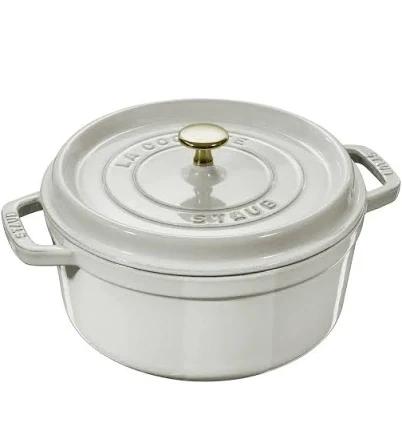
Staub Cast Iron 4-qt Round Cocotte, Is It Non-Toxic?
Lower PFAS concern; cast iron with standard enamel is not a recognized PFAS vector.
Cast iron with vitrified enamel surface, neither known as PFAS-risk materials. Staub makes no PFAS claims, but traditional enamel poses lower concern than nonstick cookware.
Still want this one anyway? Check the price on Amazon. We’d swap it.
Material
Cast iron with enamel coating
Brand disclosure
Brand is silent on PFAS
Lab data
No public lab test
You may also be interested in
Top-graded picks in the categories readers replace first, every one scored on the same rubric.

- polypropylene filter housing, carbon/sediment cartridge
- We found no PFAS statement from the brand
- Bacterial growth in spent cartridges
3 hazards checked on this product, all on its full breakdown.

Aquasure
Premier Series 75 GPD Under Sink Reverse Osmosis Water Filtration System
- RO membrane, carbon filters, stainless steel housing
- We found no PFAS statement from the brand
- Bacterial and microbial growth in housing and filters
4 hazards checked on this product, all on its full breakdown.

Avocado
Vegan Mattress
- organic cotton, natural latex, coconut coir, recycled steel coils
- The brand calls it PFAS-free, which we have not verified
- Heavy metals
2 hazards checked on this product, all on its full breakdown.
Is Staub Cast Iron 4-qt Round Cocotte non-toxic? What it is made of
This cocotte is cast iron with a vitreous enamel (glass-like) coating, typically dark matte on the exterior and light on the interior. The enamel is fused to the iron at high temperature, creating a stable barrier that prevents iron oxidation and rust while also preventing iron particles from leaching into food under normal use. Enameled cast iron is chemically distinct from non-stick cookware because the coating is not Teflon-type coating-based and does not release fumes at typical cooking temperatures (below 500°F for enameled ware).
What’s concerning
No PFAS disclosure
No public statement from the brand about PFAS in this product.
Category baseline
The starting point for this type of product, before anything specific to this product is counted.
Enamel coating degradation and exposure of cast iron
Enameled cast iron is susceptible to chipping, cracking, and peeling over years of use, especially with thermal shock or high heat. Once the enamel barrier is breached, bare cast iron can rust, and flaking enamel particles may enter food, though this is a mechanical rather than chemical hazard.
Iron leaching
Intact enamel provides a barrier to iron leaching, but acidic foods (tomatoes, vinegar, wine) can accelerate microscopic enamel degradation and increase iron dissolution over extended contact. For most users this poses no health risk; those with hemochromatosis or iron sensitivity should exercise caution.
What’s reassuring
Base material not linked to PFAS
The main material recorded for this product is not one associated with PFAS.
Lead
No published testing or recalls document lead/cadmium contamination in Staub enameled cookware. US and EU regulatory limits for cookware apply; absence of reported violations suggests compliance, but Staub does not voluntarily disclose enamel composition testing.
Source, ATSDR ↗Teflon-type coating off-gassing
Staub enameled cast iron does not use Teflon-type coating (Teflon) coatings. The enamel is a vitreous (glass-derived) ceramic, which does not release toxic fumes at normal cooking temperatures.
Nickel leaching from stainless steel components
The primary cooking surfaces (cast iron and enamel) do not contain stainless steel, so nickel exposure is not a concern with this product.
How is this PFAS grade calculated?
The brand's record and disclosure
Staub (owned by Zwilling J.A. Henckels since 2008) does not publicly disclose detailed enamel or materials safety testing results, nor does it have widely publicized certifications specific to lead or cadmium limits in cookware coatings. The brand has no established history of recall or regulatory action for hazardous coating composition. Staub cookware is sold in EU and US markets without noted compliance violations, suggesting it meets legal thresholds, but transparency on enamel composition is limited.
How it compares in its category
Enameled cast iron occupies a middle ground in Dutch oven safety. It avoids the Teflon-type coating off-gassing concern of some non-stick alternatives and the potential for bare iron leaching (though iron leaching is generally low-risk). Compared to unlined cast iron, the enamel adds a manufacturing step that introduces coating composition uncertainty; compared to stainless steel Dutch ovens, enameled cast iron eliminates nickel exposure but introduces enamel degradation as a use-life concern. Staub's dark enamel is typical for the premium enameled cast iron category (alongside Le Creuset).
If you buy it
Avoid thermal shock (don't immerse hot cookware in cold water) because enamel can crack and expose cast iron underneath, risking rust and particle shedding. Keep heat at medium-high or below; very high direct flame can stress enamel bonds over time. Inspect the interior regularly for chips or cracks; once compromised, the coating loses its protective function and the pot becomes a bare-iron vessel. Hand wash and dry promptly rather than using dishwasher, which can accelerate enamel degradation.
What is not known about PFAS in this product?
- Basis
- Model estimate, 88% confidence, not a lab result
- Lab test
- None on record for this exact product
- Brand statement
- Staub has made none
Formulations change between production runs, so check the current label. How we grade.
More dutch ovens grades
How we score, every product runs through the same public 0-100 rubric based on materials, coatings, brand disclosure, lab findings, and recalls. See the full methodology → Spotted a mistake? Report an error.