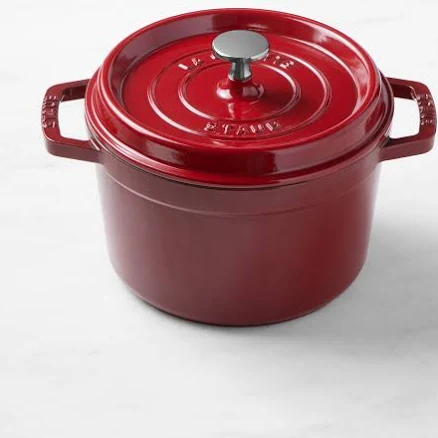
Staub Enameled Cast Iron Deep Oven 3-Qt., Is It Non-Toxic?
Enameled cast iron with no non-stick coating on record, and no PFAS statement from the brand.
Traditional enamel glaze over cast iron, a well-known construction with no Teflon-family coating involvement. Staub doesn't disclose PFAS, but enamel formulations skip fluorochemicals.
Still want this one anyway? Check the price on Amazon. We’d swap it.
Material
Enameled cast iron (cast iron base + enamel coating)
Brand disclosure
Brand is silent on PFAS
Lab data
No public lab test
You may also be interested in
Top-graded picks in the categories readers replace first, every one scored on the same rubric.

- polypropylene filter housing, carbon/sediment cartridge
- We found no PFAS statement from the brand
- Bacterial growth in spent cartridges
3 hazards checked on this product, all on its full breakdown.

Aquasure
Premier Series 75 GPD Under Sink Reverse Osmosis Water Filtration System
- RO membrane, carbon filters, stainless steel housing
- We found no PFAS statement from the brand
- Bacterial and microbial growth in housing and filters
4 hazards checked on this product, all on its full breakdown.

Avocado
Vegan Mattress
- organic cotton, natural latex, coconut coir, recycled steel coils
- The brand calls it PFAS-free, which we have not verified
- Heavy metals
2 hazards checked on this product, all on its full breakdown.
Is Staub Enameled Cast Iron Deep Oven 3-Qt. non-toxic? What it is made of
This Dutch oven consists of a cast iron body topped with a vitreous enamel coating (typically a glass-like glaze fused at high temperature). The enamel layer creates a non-reactive cooking surface that prevents iron and cast iron flavors from leaching into food, while the cast iron underneath provides heat retention and durability. Unlike non-stick coatings, enamel does not degrade into airborne particles at normal cooking temperatures and requires no Teflon-family coating.
What’s concerning
Category baseline
The starting point for this type of product, before anything specific to this product is counted.
No PFAS disclosure
No public statement from the brand about PFAS in this product.
Enamel coating degradation and chipping
Enamel can crack or chip over years of use, especially with thermal shock or impacts. Once exposed, bare cast iron beneath will rust and may impart metallic taste. This is a durability issue, not a toxicity hazard, but signals end-of-life.
Iron leaching from exposed cast iron
If the enamel coating is breached, cast iron can leach into acidic foods (tomatoes, vinegar, wine). For most people this is benign or beneficial (dietary iron), but individuals with iron overload disorders should be cautious.
Thermal shock and thermal stress
Rapid temperature changes (hot pot into cold water) can cause crazing (fine cracks) in the enamel. This is a mechanical failure, not a chemical hazard, but indicates improper care and may accelerate coating breakdown.
What’s reassuring
Base material not linked to PFAS
The main material recorded for this product is not one associated with PFAS.
Lead
No recalls or test failures reported for Staub enameled cookware. Modern enamel formulations and European manufacturing standards minimize heavy metal content. If you source vintage or unbranded cast iron Dutch ovens, lead risk is higher.
Source, ATSDR ↗Contamination during manufacturing or shipping
No reported instances of bacterial or mold contamination in new Staub cookware. Standard food-contact manufacturing hygiene applies.
How is this PFAS grade calculated?
The brand's record and disclosure
Staub (owned by Zwilling J.A. Henckels) does not publicly disclose PFAS testing data, but the company has not faced recalls or regulatory action related to lead, cadmium, or other heavy metals in its enameled cookware. Industry testing by third parties (including Cook's Illustrated and others) has not flagged Staub enamel for leaching concerns under normal use. The brand's enamel is manufactured to European standards, which historically include stricter lead limits than older US regulations, though modern US cookware is also tightly regulated.
How it compares in its category
Enameled cast iron Dutch ovens (Staub, Le Creuset, Tramontina) are among lower concern cookware categories because the enamel coating is chemically inert and does not release volatile compounds. They carry lower risk than ceramic-coated or traditional non-stick cookware. The main trade-off is cost and weight; enameled cast iron is heavier and more expensive than stainless steel or aluminum Dutch ovens, but offers superior longevity and no coating-related degradation risks.
If you buy it
Use on stovetop and oven up to the manufacturer's stated temperature (typically 350-500F depending on lid). Avoid sudden temperature swings to prevent thermal shock and crazing of the enamel. Inspect the interior enamel yearly for chips or cracks; if the metal underneath is exposed, the pot will gradually rust and may discolor food. Hand-wash or use low-heat dishwasher cycles; avoid abrasive scrubbers that can scratch the enamel coating.
What is not known about PFAS in this product?
- Basis
- Model estimate, 85% confidence, not a lab result
- Lab test
- None on record for this exact product
- Brand statement
- Staub has made none
Formulations change between production runs, so check the current label. How we grade.
More dutch ovens grades
How we score, every product runs through the same public 0-100 rubric based on materials, coatings, brand disclosure, lab findings, and recalls. See the full methodology → Spotted a mistake? Report an error.